Results Falling Short
Why do projects fall short, and what should you check first?
Executive Summary The project shipped. The result didn't follow. +
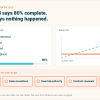
A completed project can leave the business with the same problem. Check what changed in the day-to-day work and whether that change produced the expected result.
Start with the target and the assumptions behind it. Then trace the work. An approval delay needs a different response from a missing assignment or an unrealistic forecast.
The scenarios and figures below are illustrations, not client results. Use them to choose a first check against your own records.
The project is marked complete, but month-end close still takes twelve days against a target of five. At the next review, you're asked whether the team needs more training or a better system. You haven't yet established what those twelve days contain.
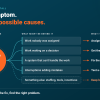
Perhaps people aren't using the new system. Perhaps it saves time on one task but leaves the main delay untouched. Or the work is faster, yet spending hasn't fallen. Each explanation points to a different next step.
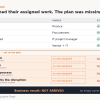
Start with the promised result. Find out where the actual work departed from the plan.
Ten examples of projects falling short
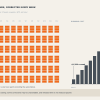
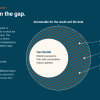
1. The 100-day plan delivered $900K of a promised $4M
Take the three largest savings lines. Compare the forecast assumptions with actual spending, then check the work and named owner behind each line. Was the forecast a cash reduction, avoided future spending, or employee time released?
Assign any work the records show was left unowned. If the forecast counted released time as cash savings without a spending change, correct the forecast. Naming an owner won't repair that calculation.
2. On-time delivery is stuck at 82% against a 95% target
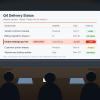
Pull a month's late orders and trace where they waited, returned for correction, or missed a delivery commitment. Compare them with on-time orders. Check stock availability and carrier performance alongside internal approvals.
If orders spend days waiting for approval, tackle that delay and check that picking and dispatch can handle the faster release. Review delivery performance over a comparable period to see whether the change helped.
3. Month-end close still takes 12 days
The project was meant to cut it to five. Reconstruct the last close: when did inputs arrive, reconciliations finish and approvals clear? Identify which unfinished items actually held up completion.
Focus on the work that determines the finish date. Saving two days on a reconciliation won't shorten the close if a late input still holds everything up. Move work earlier or automate where it will help, keeping the required controls.
4. New hires take 7 months to reach quota
The plan said four. Start with two recent hires: when did they get accounts, territories, system access and coaching? Compare their experience and sales opportunities with the assumptions in the plan, then check whether the same issues appear across more hires.
Fix setup delays you can document. Where setup went smoothly, look at coaching, selling skills and lead quality. The four-month forecast may also need revisiting.
5. Headcount grew 20% and output stayed flat
Check whether workload and task complexity changed, how much training the new hires need, and where completed work waits. Look for repeated reviews and corrections as well as queues at shared approvers.
An approval queue may call for delegation or revised approval limits. Repeated corrections need a closer look at the errors and what caused them.
6. First-call resolution dropped after the new support platform
Compare the call types agents could resolve before and after launch. Check permissions, available customer data, routing rules and training. Confirm that call mix and the definition of resolution haven't changed.
A missing customer field or permission may explain why agents now transfer calls they once resolved. Restore access where appropriate and check the result. If those calls also became more complex, the platform may not explain the decline.
7. Quotes take 6 days and competitors answer in 2
Trace several routine and complex quotes from request to send. Separate time spent preparing them from time waiting for information, pricing or engineering. Check whether the competitor comparison covers equivalent work.
Routine pricing approvals may be a good candidate for pre-approved price bands. Repeated requests for missing specifications point to an intake problem. Track pricing errors and margin as well as speed.
8. Cross-sell revenue is at 15% of the deal model
Can a rep from either company quote and book the other's product? Check product eligibility, customer demand, account ownership and commissions. Separate sales the operation couldn't process from offers customers didn't want.
Where a booking or commission problem is blocking sales, fix it for one product pair and see what happens. Where customers show little interest, revisit the demand forecast before extending the rollout.
9. Automation was meant to free 30% of the team's time
Overtime went up instead. Count rejected transactions, measure the effort to clear them, and check whether volumes changed. Find out why the manual process is still running and what control or fallback it provides.
Start with the exceptions consuming the most time. Find out why they occur and who handles them. Remove duplicate manual work once its control or fallback purpose is covered, then check whether overtime spending falls.
10. Days sales outstanding rose 11 days after billing was centralized
Compare invoice timing, errors, disputed balances, payment terms and customer mix before and after the change. Trace who receives a dispute, who can settle it, and how long each step takes.
Disputes may be sitting with people who can't settle them. If that explains the delay, change the handoff or settlement authority. Account for any changes in payment terms or customer mix before attributing the increase to centralization. Slower collection doesn't necessarily mean lost revenue.
Check the explanation before choosing the fix
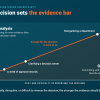
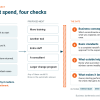
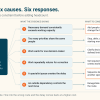
For each example, the starting question is the same: what had to happen for the project to produce its promised benefit?
Check that the result is still worth pursuing and the forecast still makes sense. Does the team have the skills, information, authority and money to deliver it? Is progress waiting on a supplier or another outside party?
Next, check who was assigned the operating work. Someone has to maintain the data, handle exceptions and decide when the old process can stop. Read the assignments and ask the people doing the work where responsibility sits.
Trace the waits and corrections. If interruptions or competing demands appear to be causing mistakes, look for when performance changed and whether others working under the same conditions show a similar pattern.
Test that explanation with a limited change to those conditions. Fewer errors and a better result with the same people would strengthen the case. Keep checking other explanations, including skills, staffing and tools.
Before you fund the fix, find the right problem.
Make the next step specific
Choose one shortfall. Write down the expected result, what happened and the evidence behind your explanation. Include what could change your mind. Give the next action an owner and a review date.
Keep the costs clear. Separate extra labor from elapsed delay and estimated missed revenue. Count each consequence once. Time saved becomes cash savings only when spending falls.
Your project manager or operations team may have enough evidence to make the correction now. If the business case no longer holds, reconsider the spending. Investigate further when the answer could change what you do.
Still unsure why the result fell short?
Emergent Skills is an operations consulting firm. We investigate why projects stall, results fall short, and problems keep coming back.
The Stalled Priority Snapshot focuses on one result. It costs $1,500 and includes a 90-minute session with up to three people and a written readout within 24 hours. You'll get the findings, remaining questions, costs we can establish and our recommended next step.
The next step may be a correction, a management decision or a specific question that needs more evidence. A Snapshot can't guarantee a confirmed cause or a recovered result. You decide separately whether to commission further work.