AI Strategic Decision-Making
Why AI Strategic Decision-Making Still Needs Human Judgment
AI can help you look at more possibilities and challenge the explanation already on the table. But weak evidence is still weak evidence.
A system can work as promised and still fail to deliver the business result. Faster answers, for example, may save little if every answer waits for review or needs correcting.
Before approving more training, another hire, or a replacement system, someone has to establish why the result is falling short. AI can help examine the possibilities. It can also produce a convincing explanation that nobody has checked.
In his Harvard Business Review article, AI Is Revolutionizing Strategic Decision-Making, Felipe A. Csaszar argues that AI changes three parts of strategic work: searching for alternatives, building a richer picture of the situation, and bringing more structured challenge into the decision process.
That matters well beyond a strategy offsite. The same problem appears when a project is late, a rollout is underused, or an operating result keeps missing its target. The first explanation can become the answer before anyone has established whether it fits the record.
What AI strategic decision-making changes
Csaszar makes an important distinction. A lot of decision-making happens before anyone says yes or no. AI can help with that work.
AI can help you look beyond the first explanation, generate credible alternatives, and compare them. It can pull together current records, operating data, and different accounts of what happened, so the analysis does not rest on an old summary.
It can also be used to challenge the answer everyone already prefers. Ask what evidence would make the current explanation weaker, what another explanation would predict, and what could go wrong if the proposed fix works exactly as intended.
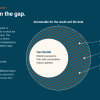
That can improve the quality of the questions. It does not settle whether the inputs are complete, whether two people are describing the same event, or whether a proposed cause is supported by the work record.
AI can give you more explanations to consider. You still need evidence to decide which one is right.
Where human judgment still matters
A useful AI review can organize records, surface contradictions, draft competing explanations, and show which questions have not been answered. Those are valuable jobs.
But the decision owner still has work to do. Someone has to decide which result matters and whether it is still worth pursuing. Someone has to judge which records can be trusted, which tradeoffs are acceptable, and who has authority to act. When accounts conflict, the people who know the work may have to resolve the record.
That distinction matters when a project is already in trouble. An AI-generated explanation is not evidence simply because it is coherent. Agreement among several AI reviews does not make the explanation true. A simulated customer reaction is not evidence of what a customer did.
The practical standard is simpler: what did we observe, what does that support, what remains uncertain, and what evidence would change the conclusion?
Challenge the explanation before funding the fix
Consider a hypothetical customer-service team using AI to draft answers. The expected time saving has not appeared. The manager believes people need more training and proposes another course.
Training may be the right answer. But it is still only one explanation. Do staff know how to use the system? How much time goes into checking and correcting its answers? Where do difficult cases wait? Did the original forecast include the review work? Does the old process still run beside the new one?
AI can help build that alternative set and compare it with the available records. It can ask what each explanation would predict. If training is the problem, for example, the errors should look different from a case where answers are accurate but sit in an approval queue.
The next step should follow the evidence. More training may be justified. So might a change to the review path, clarification of ownership, or a correction to the expected saving. The evidence may also support a decision to stop spending on a benefit that is no longer realistic.
The point is to keep the first plausible explanation from becoming the answer. You want to fix the problem the records support, not the one that was easiest to blame.
A practical way to investigate a result that is falling short
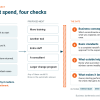
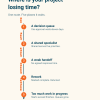
Emergent Skills starts with the result and works backward through what happened. Before blaming the process, the people, workload, or the system, we run four Initial Investigation Checks: whether the result is still worth pursuing, whether it is genuinely a priority, whether the required capability, information, authority, and funding are available, and whether an external dependency controls progress.
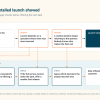
We then ask whether all the work needed for the result was identified and assigned. After that, we trace where the work waited, looped, reopened, or broke at a handoff, and we examine whether interruptions, switching, or competing demands are connected to observable errors, rework, reversals, or missed handoffs.
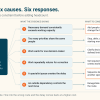
Those are explanations to test, not answers to assume. A business-case problem, a resource gap, or weak execution discipline may explain more than the work path or the demands on the people doing it. So may unclear authority, an outside dependency, or another cause.
If the cause remains unresolved, the assessment should say so. The useful output is then the specific evidence or management decision needed next, who owns that action when known, and the point at which the decision should be reviewed.
The goal is not certainty before acting. It is a better-supported next decision, with a clear reason to reconsider it if new evidence arrives.
Where the Stalled Priority Snapshot fits
The Stalled Priority Snapshot applies that discipline to one consequential result: a late project, an underused rollout, a repeated review cycle, or an operating problem that keeps returning.
The fixed fee is $1,500. The session runs 90 minutes for up to three participants. Written input is gathered from six to eight people involved in the work. The written readout follows within 24 hours of the session and states what the evidence supports, what remains uncertain, the costs that can be established, and the recommended next step.
A Snapshot does not require a second engagement. The recommendation may be an internal correction, a management decision, or a stop. It may also call for more evidence, a bounded test, or another specialist.
The Stalled Priority Snapshot is a new ES service. We have not yet delivered it in a client organization, so we do not have client results or references. The customer-service example above is hypothetical.
Better analysis should change the next decision
Csaszar's article makes a strong case for using AI to widen search, improve the representation of a situation, and challenge proposals more systematically. For an operating leader, the payoff is a better chance of seeing the alternatives before money and attention get committed to one of them.
AI can help ask better questions. The work record still has to answer them. Before you fund the fix, find the right problem.
Source: Felipe A. Csaszar, AI Is Revolutionizing Strategic Decision-Making, Harvard Business Review, September-October 2026.
Bring one result that is falling short.
One result. A 90-minute session. A written assessment within 24 hours of the session. $1,500 fixed scope, with no required follow-on engagement.