Resource Capacity Planning
Resource Capacity Planning: Why More Projects Can Reduce Throughput
A capacity plan that totals available hours will miss the shared experts, approval routes, operational work and timing that decide whether projects finish. Plan for usable capacity along the work route, not available hours.
Executive Summary Plan for usable capacity, not available hours +
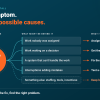
A portfolio plan can total every available hour, show nothing over capacity and still be wrong. The approved projects need the same security reviewer, architect or finance partner. A manager allocated for two hours becomes the decision point for six teams. Operational work interrupts the plan, and nobody counted the time to restart after each interruption. Throughput falls while the arithmetic still says there is room. That is execution drag reaching the result through the work path. Whether the interruptions also affect anyone's judgment is a separate question, and hours alone cannot answer it.
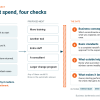
Build the plan from the constraints outward. For each shared capability, approval point or trusted manager, record the operational obligations, active commitments, expected timing of demand, work already queued and the rule for when two priorities arrive together. Most gaps are timing, not headcount: enough expertise across the quarter, not enough in the two weeks when four projects need the same review. Sequencing two projects can finish faster than starting all four. Before hiring, trace what is consuming the capacity already on the payroll.
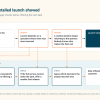
The Stalled Priority Snapshot is a $1,500, 90-minute session that traces where one important outcome is waiting and tests one fix in 14 days.
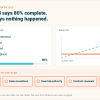
A portfolio plan can show enough capacity for every approved project and still be wrong.
The arithmetic may be correct. Ten people multiplied by their available hours produces a large number. Allocations add up. Nothing appears over capacity.
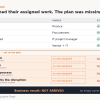
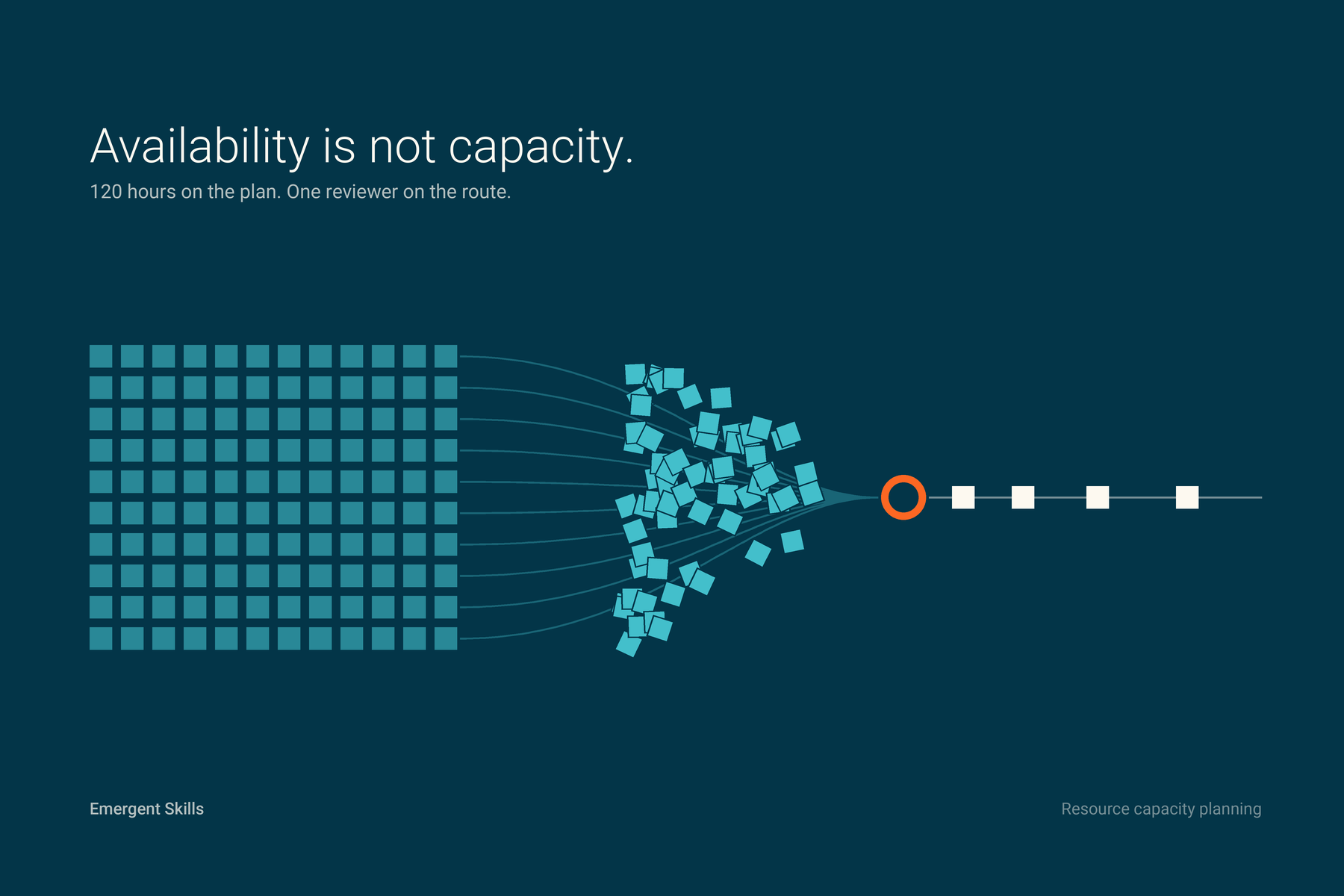
Then execution begins. The projects need the same security reviewer, finance partner or technical architect. A manager who was allocated for two hours becomes the decision point for six teams. Operational work interrupts the project plan, and nobody included the time required to restart work after each interruption.
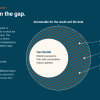
The plan counted availability. Delivery depends on usable capacity along the work route.
What resource capacity planning needs to answer
Resource capacity planning compares expected project demand with the people, time and capabilities available to meet it. It should help leadership decide what the organization can deliver, when it can deliver it and which commitments must move when demand exceeds capacity. That requires more than a headcount total.
A useful plan must show:
- Which capabilities each project needs, and when
- Which people are shared across projects
- What operational work those people still carry
- Where approval or review capacity constrains progress
- Which projects take priority when demand exceeds supply
A 2011 paper in PMI's research library warned that conventional single-project resource methods break down in a multiple-project environment. Each plan may appear feasible by itself even though the combined portfolio asks for more constrained capacity than the organization has.
What resource planning tools show, and what they can miss
Resource planning and project portfolio tools can show assignments, availability and utilization across projects. They also record milestones and resource allocation. That record is necessary. It can expose an obvious overload before work begins.
The record does not always explain why the work moved differently from the forecast. A person shown as available may be waiting for information, covering operational work or serving as the approval route for several teams. A utilization figure can show that demand is high without showing the queue, repeated handoff or decision path consuming the capacity.
The difference shows up when the plan says there are enough hours and project throughput keeps falling.
The scarce resource may not be the delivery team
Projects are commonly planned around the people doing the visible production work. The real capacity constraint may sit somewhere else.
A software implementation has enough developers and analysts. Every release still requires one enterprise architect and one security review. Adding another developer increases potential production, but it does not increase the rate at which completed work clears the constrained review.
The same pattern appears with managers. Difficult decisions, exceptions and rescue work accumulate around people the organization trusts.
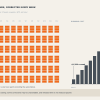
Harvard Business Review reported that 3% to 5% of employees generated 20% to 35% of value-adding collaboration in the organizations studied.
A capacity plan that spreads those employees evenly across projects may disguise the queue being built around them.
On paper, nothing is over capacity. The work waits anyway.
Do not plan people at 100%
Full resource utilization looks efficient only when demand and task duration are predictable. Knowledge work contains variation: a defect takes longer than expected, a client asks a new question or an urgent operational issue interrupts the week.
The Kanban Method focuses on limiting work in progress because fully utilized resources leave no slack and produce poor flow. The aim is not idle people. It is enough room for the system to absorb variation without pushing every other commitment into a queue.
Capacity also disappears into coordination. Microsoft's Work Trend research found that the average employee spent 57% of work time communicating and 43% creating, while 68% said they lacked sufficient uninterrupted focus time.
Execution drag reaches a result in two ways, and a capacity plan can miss both. The first is structural, and it is the one this page is about: the work path holds the work up. Completed work waits behind one architect and one security review. Six teams send decisions through a manager allocated for two hours. Everyone can be working at full stretch and the release still waits.
The second way goes through the people themselves. Interruptions, restarts and a queue of other teams' decisions add demand, and that demand can make judgment and focus harder to use consistently. That is a different loss from the hours coordination consumes, and a utilization figure will not show it either. The record can show where the work waited. It cannot show what the interruptions did to anyone's judgment. The second way needs its own evidence before it goes in the plan. The queue around the constrained review is a finding on its own.
Build the plan from constraints outward
Start with the projects leadership has genuinely chosen. Then identify the constrained capability, person or approval point each project needs next.
For every constrained resource, record:
- Existing operational obligations
- Active project commitments
- Expected timing of project demand
- Work already waiting in its queue
- The rule used when two priorities arrive together
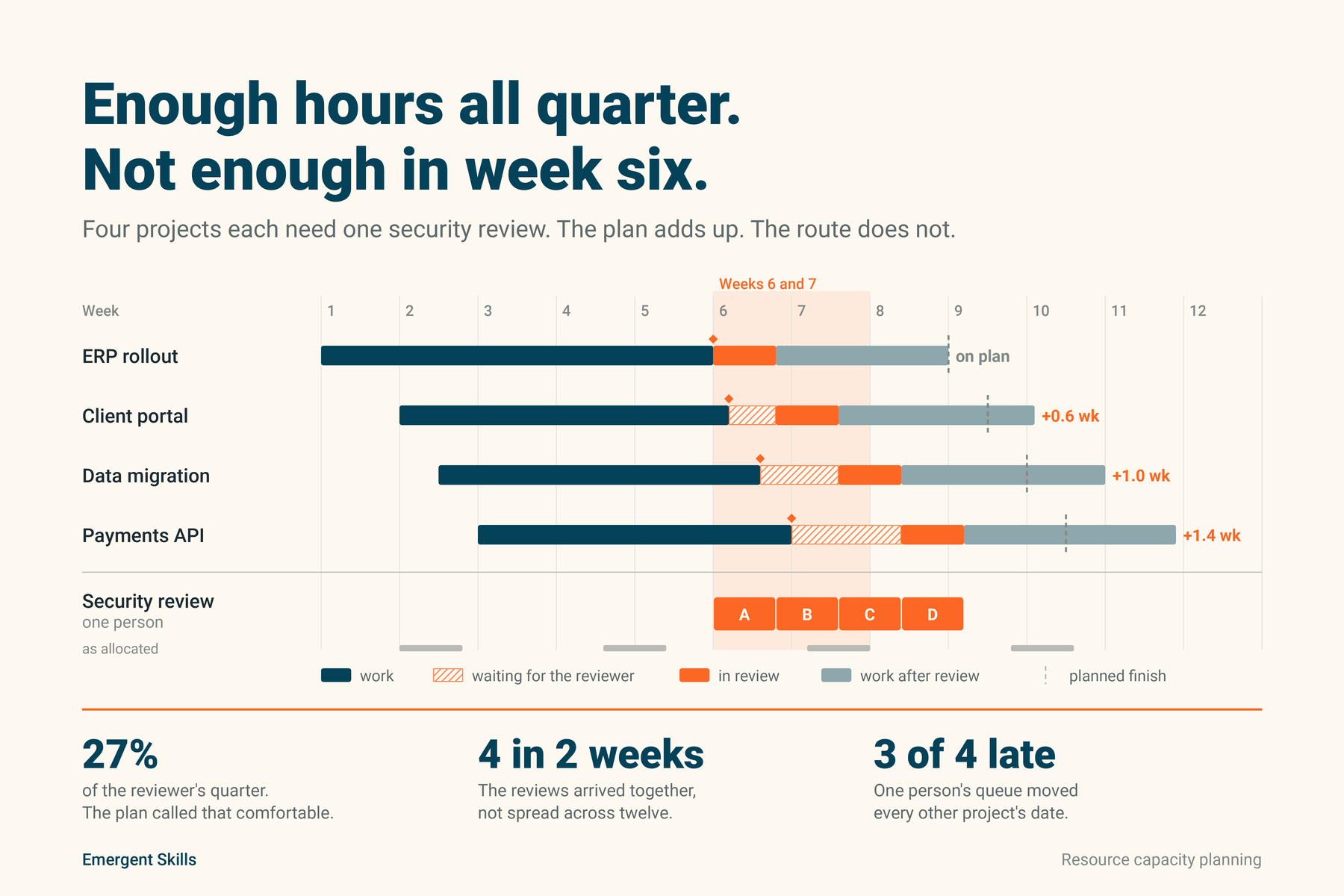
This often reveals a timing problem rather than a total headcount problem. The organization may have enough expertise across the quarter but not enough during the two weeks when four projects require the same review.
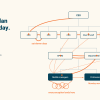
Sequencing two projects may produce faster overall delivery than starting all four and allowing each to wait. This is where resource capacity planning and workload planning meet: the portfolio decision has to account for the operational work people already carry.
Compare the forecast with the route the work took
A capacity plan improves when it learns from execution. After a milestone, compare planned demand with the record:
- When did the resource become necessary?
- How long did the work wait?
- How much person-time did the review consume?
- Did the work return because an input was missing?
- What unplanned operational work displaced the commitment?
This prevents a common mistake: moving the date while leaving the capacity assumptions unchanged.
More capacity is not always the first answer
Sometimes the evidence supports hiring, contracting or developing a missing capability. Those are genuine capacity responses. Before funding them, look at what is consuming the capacity already on the payroll: duplicate reviews, unclear authority and excessive work in progress. Requirements arrive late. Priorities stay open after leadership has moved on.
Resource capacity planning should show where demand exceeds supply. A trace of the work path can show why. Skip the trace and every gap defaults to the expensive answer: more people.
If one important project or milestone should have moved by now, the Stalled Priority Snapshot traces the waits, loops, queues and handoffs around it. When the same capacity pressure recurs across several priorities, the Work Demand Diagnostic examines where demand is entering the operation and what it is costing.
When one important milestone should have moved by now
The Stalled Priority Snapshot traces the waits, loops, queues and handoffs around it, names the constrained route and tests one change in 14 days.
Related reading from Emergent Skills