Failing Projects
Before You Spend More on a Project That Isn't Delivering
Four questions to answer before you approve more training, another tool, or a consultant.
Executive Summary Check the fit before funding the next fix. +
The project has slipped, the launched system gets bypassed, or the last fix faded. Another round of spending is now on the table.
Four checks come first. Size the business consequence. Confirm that the basic standards are clear, workable, and followed. Name what an outside provider would add beyond what your team or current advisers can readily provide. Decide in advance how the gain will hold once the extra attention goes away.
The right answer may turn out to be an internal repair, a different specialist, or stopping the project.
The Stalled Priority Snapshot is a 90 minute working session on one project, with a written report within 24 hours. Recommendations follow the evidence. The fee is $1,500.
You have already put time, money, and credibility into a project. The deadline has moved. A system has launched, but people still work around it. An earlier fix helped for a few weeks, then the old pattern returned.
Now someone is proposing the next intervention. It might be more training, another tool, or extra staff. It might be a consultant or a larger change program.
Before approving it, you need a reason to believe it fits the problem. That starts with the business consequence and the work that should be happening. Then it turns to the help you need and what would make an improvement last.
What business consequence would justify the next step?
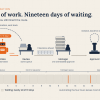
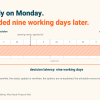
Imagine a customer onboarding project that keeps missing its promised dates. Customers wait to start using the service. Employees spend time chasing approvals and repeating work. Leaders intervene to move individual cases along.
You can examine which commitments were missed, where work waited, and what had to be repeated. Then look at what happened to customers as a result.
Start there. Establish the result that matters, the size and frequency of the shortfall, and what happens if it continues. Confirm that the intended result is still worth pursuing.
Keep different consequences separate. Rework consumes time. A delayed payment affects timing. A lost customer affects future business. They require different evidence, and counting the same consequence twice will inflate the case for action.
Then compare the likely value of the next step with its fee, internal effort, and implementation burden. A short investigation may be worthwhile if it can resolve uncertainty before an expensive decision. A larger intervention needs a stronger case.
Money already spent explains why the situation matters to people. Justify the next commitment by what it can still accomplish.
Are the basic standards clear, workable, and followed?
In "On Execution", Paul Stansik argues that leaders should examine whether basic work is being done consistently. Standards can erode as inspection, training, and reinforcement fade.
Apply that question to the work itself. In the onboarding example, is there an agreed definition of a complete handoff? Does someone own the approval? Is the expected response time clear? Can the team detect a missed commitment and act on it?
A workable standard that has stopped being followed may call for renewed ownership and instruction, backed by review and feedback. A capable manager may already have everything needed to make that change.
Also check whether the standard is achievable under current conditions. An approval rule that sends every decision to an unavailable executive creates a practical constraint. So does a deadline that depends on information nobody can obtain.
People need the skills and information to do the work, plus the authority and time to act on it. Where those conditions are missing, the response must address them. Where a sensible practice has simply drifted, restore it and check the result.
What would outside help add?
Stansik's "Count the Wolves" recommends getting close to the work, measuring the problem, and seeking an outside perspective when useful.
Use that to decide whether to bring someone in. Name the gap the engagement would fill.
Perhaps each department has a plausible explanation, but nobody has reconstructed the full sequence. Perhaps an earlier fix failed and the team needs to understand why. Perhaps the organization needs dedicated time, a particular method, or an independent facilitator to reach a finding it can act on.
Ask what the provider will establish that you cannot readily establish with your current team or advisers. What evidence will they use? What decision will become possible? Who has the authority to act on the finding?
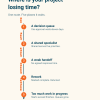
For the onboarding problem, a useful contribution might be showing where the delay comes from:
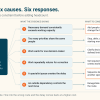
- Incomplete inputs.
- An approval queue.
- Repeated changes.
- A practice people have stopped following.
Those explanations suggest different actions.
If your team can establish the cause, make the change, and monitor the result, an internal fix may be sufficient.
Outside help earns its place through the additional contribution it can make.
What would make the improvement last?
Before starting a change, agree how it will become part of ordinary work.
In "What Does an Operating Partner Do?", Stansik connects standards with agreement, measurement, and practical support. The work includes helping people implement and maintain the practice.
For your intervention, specify:
- What will change and who owns it.
- The starting performance and the result you expect.
- The support people need to make the change.
- When you will review progress and what would trigger an adjustment.
- How you will check whether gains hold as extra support decreases.
In the onboarding example, faster approvals during a week of executive attention would be encouraging. You would still want to know whether the new process works under normal demand, whether errors have increased, and whether another team has inherited the delay.
Record other changes that could explain the result, such as lower volume or extra staffing. Agree what would justify continuing or expanding the intervention, and what would justify changing or stopping it.
An ongoing service needs an ongoing job. That might include maintaining a useful practice, helping another connected team adopt it, or detecting and correcting drift. Those benefits should remain visible enough to review.
Where Emergent Skills fits
These questions apply to Emergent Skills as much as to any other provider.
ES investigates how work moves and where it waits, loops, or returns for rework. Those workflow bottlenecks are one source of what ES calls execution drag. When the evidence warrants it, ES also examines whether demand conditions are affecting people's access to skills they already have, such as judgment, focus, and communication. The investigation considers other explanations. Priorities may be unclear or resources missing. The work may depend on an outside party, or execution may be inconsistent.
The Stalled Priority Snapshot starts with one result and the decision about what to do next. When the evidence points to a recurring pattern, the Work Demand Diagnostic workshop examines that pattern and its likely significance before recommending whether a Capacity Audit is warranted. Direct Audit entry can make sense when the need for deeper measurement is already established.
Where further work is justified, ES connects changes to work design, manager practice, and private individual support with a measured Pilot. Findings must distinguish an improved operating result from what the evidence establishes about its cause. A continuing License must earn its place by helping the organization reproduce and sustain what worked.
The appropriate outcome may also be an internal repair, a different kind of specialist, or a decision to stop the project.
Put the decision on one page
Before approving another intervention, write down:
- The result that is falling short.
- Its business consequence.
- What you have already tried.
- What remains uncertain.
- The decision you need to make next.
Then ask the proposed owner or provider to explain how the next step will help you make that decision or improve that result, what it will require from your team, and how you will judge its value.
That page is a practical place to start a conversation with ES. It is also a useful standard for deciding whether you need that conversation at all.
Bring one project that is not delivering.
The Stalled Priority Snapshot takes 90 minutes and covers one project. You leave with a written report inside 24 hours. It may point to the workflow, the priorities, or the resources. It may say more investigation is needed first.