Operational Payoff · Operations consulting for stalled projects and recurring operational problems.
We investigate why important work falls short.
A project stalls. A recurring problem keeps coming back. The work gets delivered, but the expected business result never follows. Emergent Skills is an operations consulting firm that conducts focused operational investigations into why important work falls short.
Most shortfalls already have explanations: the process, the people, training, priorities, workload, the system, or something else. Any one could be right. We test those explanations against what actually happened in the work and what the evidence supports.
Before you fund the fix, find the right problem.
Jim Wilde founded Emergent Skills after decades of enterprise systems work led to a practical question.
What was supposed to happen, what happened instead, and what does the evidence say we should do next?
Start with the result. Check the explanations.
Start here
Check the result and the necessary work
Check whether the outcome is still valid, the priority is chosen, the team has the capability, information, authority, and funding it needs, and an external dependency controls progress. Then check whether necessary work was identified and assigned.
Route 1
Where work gets stuck
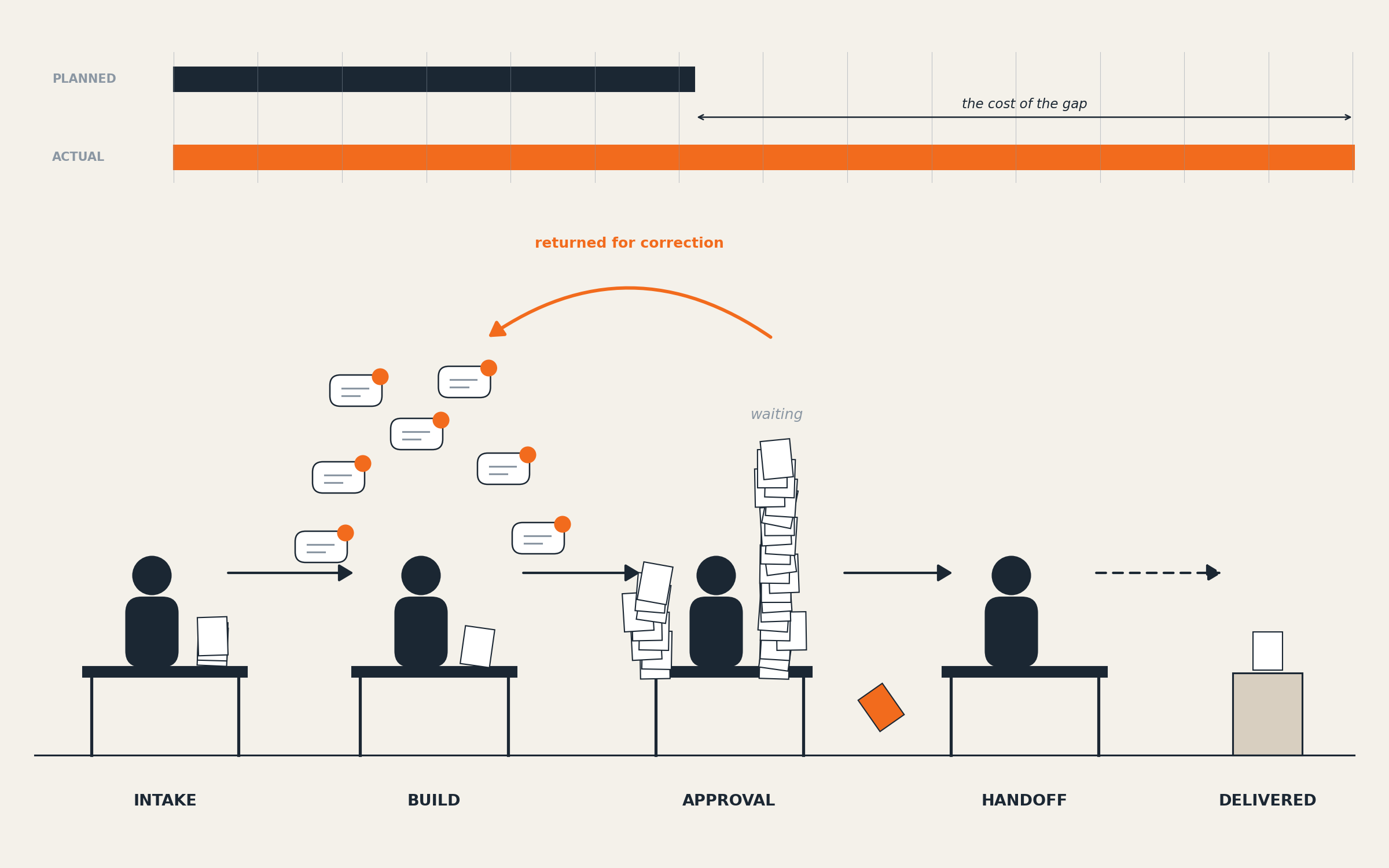
Queues, approval loops, and unclear handoffs that keep work waiting or send it back.
Route 2
When work demands disrupt execution
Whether interruptions, constant switching, and competing decisions contribute to errors, rework, or missed handoffs, even when people have the skills.
The two execution routes are part of the investigation, not the whole investigation. They can occur together, and other explanations remain open throughout. Fixing an approval queue can leave interruptions and competing demands unresolved.
Operational Payoff connects the findings to the business consequences, costs we can establish, and the next decision. That may mean a management decision, a straightforward correction, more evidence, or a change worth testing.
For operations managers, project managers, division leaders, and others accountable for the business result in organizations of any size.
What Emergent Skills Does
Emergent Skills helps companies make sound business commitments and get the results they expect from their investments.
We work at two points: before a company commits money and resources to an important decision, and when a project or operation isn't delivering the expected results.
What You Get
Before you make an expensive commitment or spend more money trying to fix a problem, we help you find out what you might have missed.
We independently examine the available evidence, question assumptions, and identify what still needs to be checked.
You get findings you can examine for yourself, a clearer understanding of the risks, and a practical next step.
You don't have to take our word for it. We show you what supports our findings—and what doesn't.

Jim Wilde
Founder & Chief Architect, Investigator, Emergent Skills
Enterprise systems background: Jim has spent decades building and supporting systems where reliability, scale, and consequence matter, including nine years as lead consultant at the MTA on mta.info and the NYC subway countdown clocks. On a snowy day, the countdown clocks had to be right for 5 to 7 million people in a hurry. That background shapes the ES approach: examine the work and its operating conditions before choosing a fix.
The operating question: What should have happened, and what happened instead? A completed project can still leave necessary work unassigned. A capable team can still be held up by approvals or repeat work under conflicting demands. ES investigates those possibilities alongside skills, information, authority, funding, dependencies, and whether a known, workable standard is being followed.
How Emergent Skills Works
We start with the business result, check whether the necessary work was assigned, and reconstruct what happened. We test competing explanations, estimate costs where the records support them, and recommend the next justified step.
Your own project manager, operations leader, or analyst may be able to resolve the problem using existing records and tools. Outside help becomes useful when the issue crosses teams, people give conflicting accounts, previous fixes have not held, or the sponsor needs an independent finding they can take back across the organization. ES brings together questions that can otherwise be examined separately: was necessary work assigned, where did work get stuck, did surrounding demands contribute to errors or rework, and what other explanation fits the evidence better? The findings determine what happens next.
Organization: Assign the work and improve how it moves
Depending on the findings, the next action may be to assign missing work, clarify decision rights, limit work in progress, improve intake, or redesign an approval or handoff. Any proposed change needs an owner with the authority and resources to act.
Manager: Adjust the demands on the team
Managers use observable workload, work records, and constraints employees choose to share to decide what proceeds, waits, gets support, or moves. They consider the consequences of an error and how easily a decision can be reversed. Before moving work, they check the receiving person's commitments. Decisions beyond the manager's authority go to the sponsor or other responsible owner.
Individual: Prepare for the next decision or handoff
Where individual support belongs in the agreed change, the ES app provides private tools for considering current capacity and the work ahead. Managers and employers do not receive private app activity, individual Zone history, or live individual-state data. Use of the app does not establish what caused an operating problem.
Judge changes by what happens in the work. When a test is warranted, agree the owner, baseline, measure, and review point. Measures may include errors, rework, handoff reliability, or delivery time. Faster flow alone does not establish that a change addressed a capacity effect; that explanation needs separate evidence.

What the evidence supports, and what it does not
The readout separates what the operating record establishes, what remains a hypothesis, and what decision the evidence supports.
Queues, broken handoffs, unclear approvals, and rework loops can be established from operating evidence. When the evidence raises the narrower question of reduced access to existing skill, ES uses four tests: baseline shift, load signature, shared conditions, and reversibility. The first three can strengthen or weaken that hypothesis. Reversibility requires improvement in the agreed operating metric and associated capacity pattern after relevant conditions change, without replacing the people. A working session alone cannot establish it.
If the capacity hypothesis is weak or unresolved, we say so. That does not erase a supported work-path finding or establish another cause. Capability, role fit, accountability, resourcing, technology, incentives, strategy, or leadership may explain more; each needs its own evidence.
We keep directly traceable extra labor, elapsed delay, and client-supplied opportunity value separate. Any cost estimate states its assumptions and limits. Released time is not automatically cash savings, and potential benefits remain distinct from measured results. The value at stake should justify the investigation and any proposed change.
For a rollout with low use, the result owner defines the expected adoption and business benefit, the actual shortfall, and the review period. ES traces the work needed to achieve that result. Low use alone does not establish either route.
External research can inform the questions we ask. It does not validate the ES framework or establish a client result. Any intervention claim must stay within the measured findings, including mixed results, no improvement, or an unresolved explanation.
Choose the Starting Point That Fits the Problem
One defined shortfall can start with a Snapshot. A recurring problem across a team or category of work can start with a Diagnostic. The starting point depends on the question, the evidence already available, and what further investigation would add.
The Stalled Priority Snapshot costs $1,500 USD. The 90 minutes is the working session, not the whole investigation. Written input from typically 6–8 people and available records are reviewed around that session. Within 24 hours, you receive a work-path map, findings and unresolved questions, cost estimates where supported, and the recommended next step with a responsible owner or role. A 15-minute walkthrough with the result owner follows.
The next step may be a management decision, a straightforward correction, more evidence, or an optional test. If a test is warranted, its duration and review point are agreed around the work cycle. If the cause remains unresolved, the readout names the specific evidence or decision needed next, its owner, and the review point. Follow-up comes after an agreed test or evidence review. No further engagement is required.
Situations a Snapshot can examine
- Stalled work: Choose one late decision or deliverable and examine where it waited, returned, or stopped, along with the demands surrounding the work.
- Partial delivery: Choose one missing deliverable or location and examine what is preventing completion.
- Launched but underused: Name the expected and actual use at a review date, then trace one attempt to switch, including access, approvals, and the move from the old process.
- Delivered, no result: The project closed, but the expected business result did not follow. Check whether work such as handling real data and exceptions, agreeing handoffs, or retiring the old process was omitted or left unassigned.
- Repeated errors or missed handoffs: Choose one defined operating case, such as a customer handoff or an invoice batch within a specific period. Examine the work path and whether interruptions, switching, or competing decisions contributed to the shortfall.
What Each Engagement Helps You Decide
- Stalled Priority Snapshot: Investigate one defined shortfall, including the result and prerequisites, necessary work and ownership, the two execution routes, and competing explanations. State what is supported, what remains unresolved, and the next decision.
- Work Demand Diagnostic: Examine recurring work-path problems, work-demand patterns, or both across a team or category of work, and decide whether deeper investigation or a bounded test is justified.
- Capacity Audit: Deepen the operating evidence, establish supported costs, and rank the next actions. A Pilot plan is included where a measured intervention is justified.
- Capacity Pilot: Implement one or two supported changes and measure the agreed operating result. Duration and follow-up timing depend on the work cycle and evidence needed. Any capacity-effect hypothesis is tested separately from direct flow improvement.
- License: Where results and continuing need justify it, a separately scoped license can support continued practice and test whether improvements repeat in connected work. Measures, support, and review are agreed for that scope.
Each engagement needs its own business case. The findings may support a local fix, more evidence, stopping or redirecting the work, or another engagement. There is no automatic commitment to the next service.
Jim Wilde leads every Snapshot and owns the ES methodology. For broader engagements, the proposal names the delivery lead and defines Jim's involvement in scoping, findings review, and executive readouts.
2026 Design Partners: Organizations can apply to help refine the method in real operating conditions. Design Partners receive closer founder involvement and 15% off the first engagement. Scope and availability are confirmed during the initial discussion. Case-study use requires measured support, client permission, and agreed confidentiality and attribution terms.
What should have happened? What happened instead?
Bring one stalled project, recurring problem, or result you are not getting. Tell us what was expected, what actually happened, and why the difference matters. The Snapshot tests the competing explanations against the work and the evidence, then gives you findings, costs we can establish, what remains uncertain, and the next step we recommend in writing within 24 hours of the session.
