Human in the loop sounds safe, but an AI review often can't catch the errors that matter. Four checks before you add a reviewer or buy a better model.
Articles & analysis
Operational Payoff · Operations consulting + Proprietary AI Tools
Articles & analysis
Why projects stall, results fall short and problems keep coming back, and what to check before you spend more.
Most stalled projects already have an explanation. Usually several: the process, the people, the priorities, the workload, the system. Any one of them could be right. Fund the wrong one and you pay twice.
Most teams pick the likeliest explanation and fix that. Some ask the people closest to the work, or bring in a consultant, or ask an AI chat. Each can be the right call. What they rarely do is test each explanation against the record before the money moves. And a chat only answers the question you thought to ask.
Before you fund the fix, find the right problem.
That means checking each explanation against the evidence, being clear about what's still uncertain, and taking a next step you can justify.
What Emergent Skills does
Emergent Skills is an operations consulting firm that builds its own AI tools to do that checking. We run it: we ask the questions, redo the arithmetic, check the evidence and chase the answers. You bring the documents and make the decision. Here's what we investigate.
For operations leaders, chiefs of staff, project managers and anyone responsible for important projects or day-to-day operations, from customer onboarding and service delivery to finance and internal systems.
This process saves you time and money.
You find the problem before you fund the fix, not after. We work at two points.
Know before you commit.
Before you commit money to a big decision, the Decision Review checks the business case: the evidence, the alternatives, the arithmetic and the work it'll take. It shows the proof behind each finding, and checks back at 30 and 90 days to see what happened.
Find out what's wrong. 
When the commitment's made and the result is falling short, the Stalled Priority Snapshot finds out what happened. It tests each explanation against the evidence and tells you what the evidence supports doing next.
You don't have to take our word for it. Every finding shows what supports it and what doesn't.
Browse by topic
Written with AI assistance.
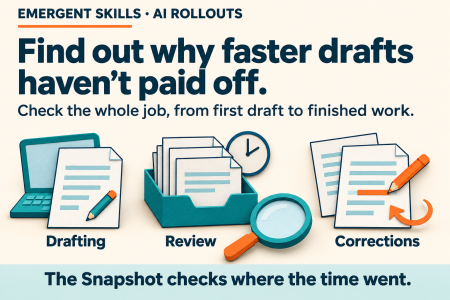
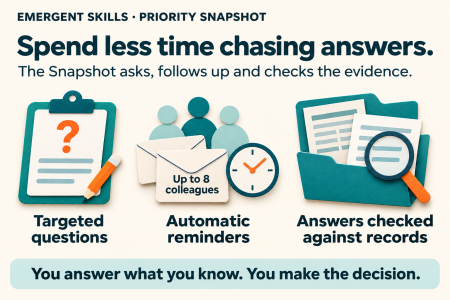
When an important project stalls, the first explanation is often wrong. Test it against the evidence before you hire, retrain or buy a fix.
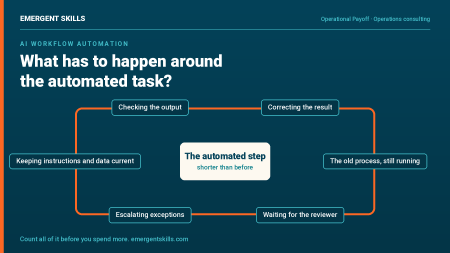
AI workflow automation can shorten a task while adding checking and rework around it. Count the work around the automated step before you spend more.
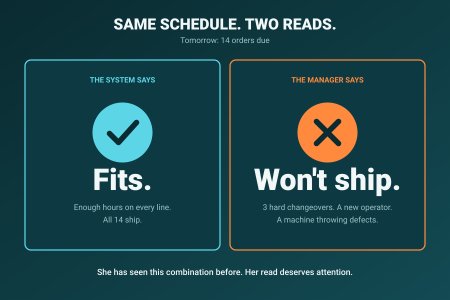
When should you trust your gut in business? Two conditions decide whether experienced judgment is reliable, and how to check a hunch before you act.
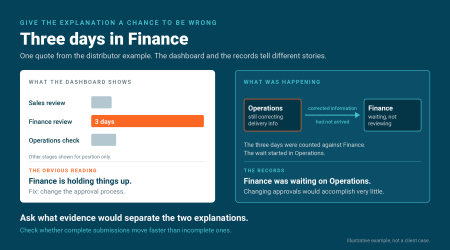
Your new system works, but the savings haven’t shown up. Trace the work it was meant to change, test the explanation, and decide the next step.
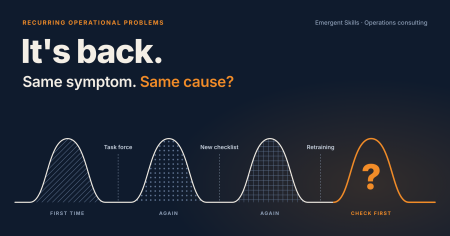
Explore ten recurring operational problems, what to check before repeating a fix, and how to choose the next action based on evidence.
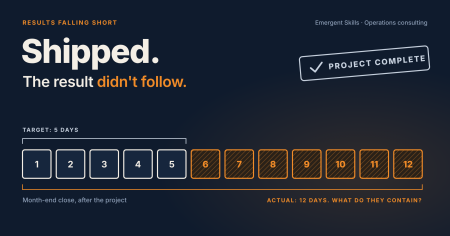
Why do projects fall short? Review 10 examples, check the evidence behind missed results, and decide what to fix before committing more time or money.
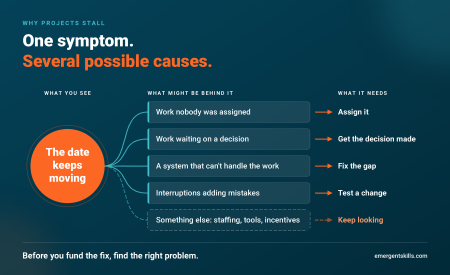
Why do projects stall? Ten examples of stalled projects show what to check first, from approval delays to unassigned work, before you fund a fix.
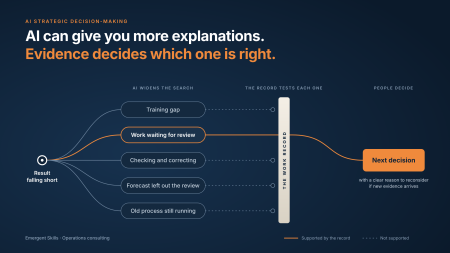
AI can help examine why a business result is falling short. It can also produce an explanation nobody has checked. Test it before funding the fix.
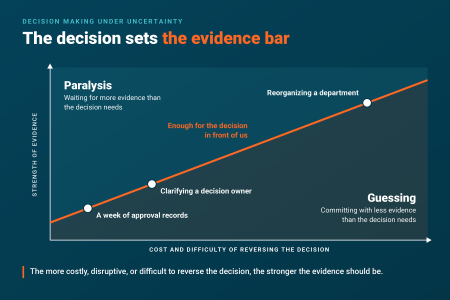
How To Make Decisions Under Uncertainty: when a stalled project has several plausible causes, you can decide what the evidence justifies doing next.
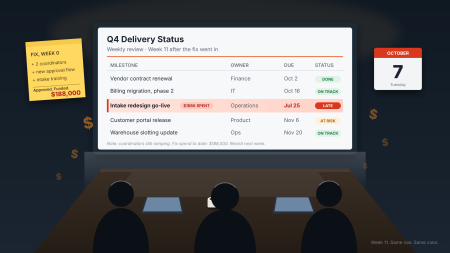
You funded the fix, but the problem came back. Learn why fixes fail when the explanation was never tested and what to check before spending again.
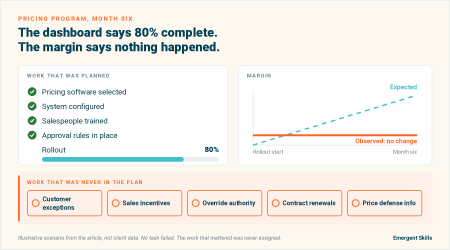
Private equity value creation can stall when required work is missing from the plan. Check ownership, execution and the assumptions behind the return.