Learn how competing priorities create project delays, overload managers, and increase work in progress, then identify the bottleneck to fix first.
Articles & analysis
Operational Payoff
Operations consulting for consequential decisions, stalled projects, recurring operational problems, and results that fall short.
Articles on losing money, business process improvement, workload, decisions, project delivery, strategy execution, necessary work and ownership, and AI.
For operations leaders, chiefs of staff, project managers, and others responsible for important projects and day-to-day operations—from customer onboarding and service delivery to finance and internal systems.
Emergent Skills works on two sides of an important commitment. Before the decision, the Decision Challenge examines whether the evidence supports the proposed commitment and whether the work needed to produce the expected result is feasible. After a project stalls or a result falls short, ES investigates what happened between the intended result and the work that was supposed to produce it.
Most shortfalls already have explanations: the process, the people, priorities, workload, training, the system, or something else. Any one could be right. We start with the result and the Initial Investigation Checks, then examine necessary work and ownership, where work gets stuck, whether conditions around execution contribute to errors or rework, and other competing explanations.
Before you fund the fix, find the right problem. The aim is to help leaders distinguish what the evidence supports, what remains uncertain, and what next step is justified.
Before the commitment or after the result falls short
If the decision has not been made, the Decision Challenge examines the evidence, alternatives, economics, required work, and material uncertainties before you commit. If the commitment has already been made and the expected result is falling short, the Stalled Priority Snapshot investigates what happened and what the evidence supports doing next. Download the white paper: Why Important Work Falls Short
Written with AI assistance.
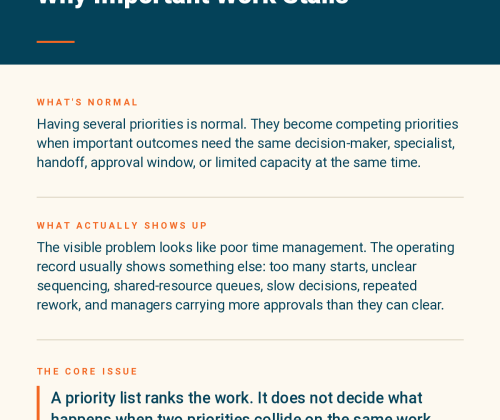
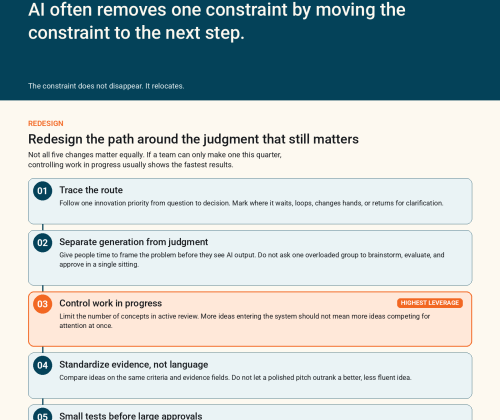
Faster ideas do not fix workflow bottlenecks. They just move the delay from ideation to approval.
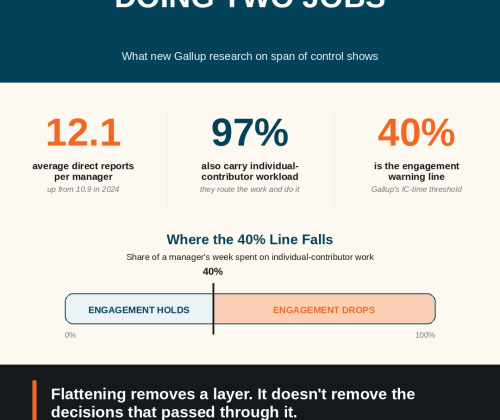
"97% of managers now do two jobs. See how that creates workflow bottlenecks, per new Gallup span-of-control research.
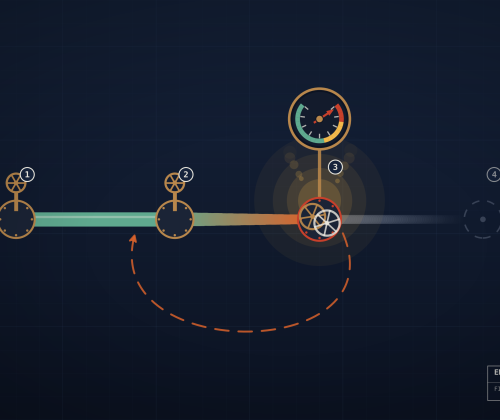
Use root cause analysis to find why a priority is stalled by approval delays, rework, missed handoffs or unclear ownership, then test one real change.
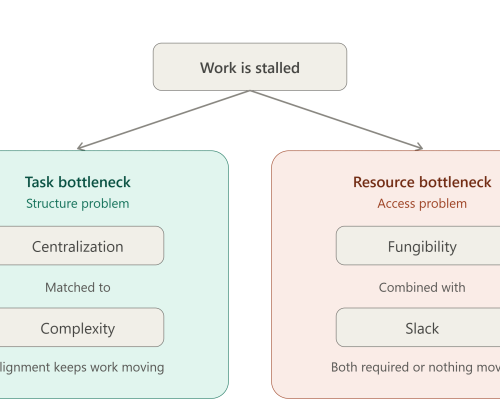
Learn how task and resource bottlenecks stall workflows, how to identify both types, and how to test the right fix before adding more people or tools.
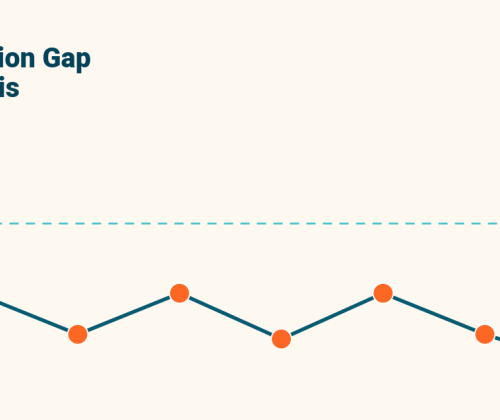
Learn how gap analysis can uncover why projects stall, trace workflow bottlenecks and project delays, and identify one practical change to test.