Business Process Mapping for Operations Leaders
Business Process Mapping: How to Map the Work That Actually Happens
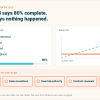
A map can document how work is intended to move without establishing how it moves in practice.
Executive summary What a process map can prove, where it goes wrong, and how to build one from evidence.+
A process map can show how work is intended to move without establishing how it moves in practice. Staffing models, automation projects and service-level agreements are then built on that map. A wrong map means the redesign, the staffing plan and the automation spec all target a process nobody runs.
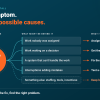
Emergent Skills reviews an existing map with three working labels. Shelfware was produced and never used. Drift was accurate once, then the work changed underneath it. Fiction never matched practice, because it was assembled from policy, memory or a future-state design presented as current state. Shelfware is easy to spot. Drift and fiction stay in circulation, and continued use gives them authority as their connection to the work weakens.
When the map and the work disagree, that difference is something to investigate before anyone is accused of skipping steps. Some deviations are careless. Others are holding the operation together. A current-state map has to come from real cases and the people doing the work, checked against timestamps, approval records and document histories wherever they exist. Memory smooths over the waits and repeat trips that usually control the finish date.
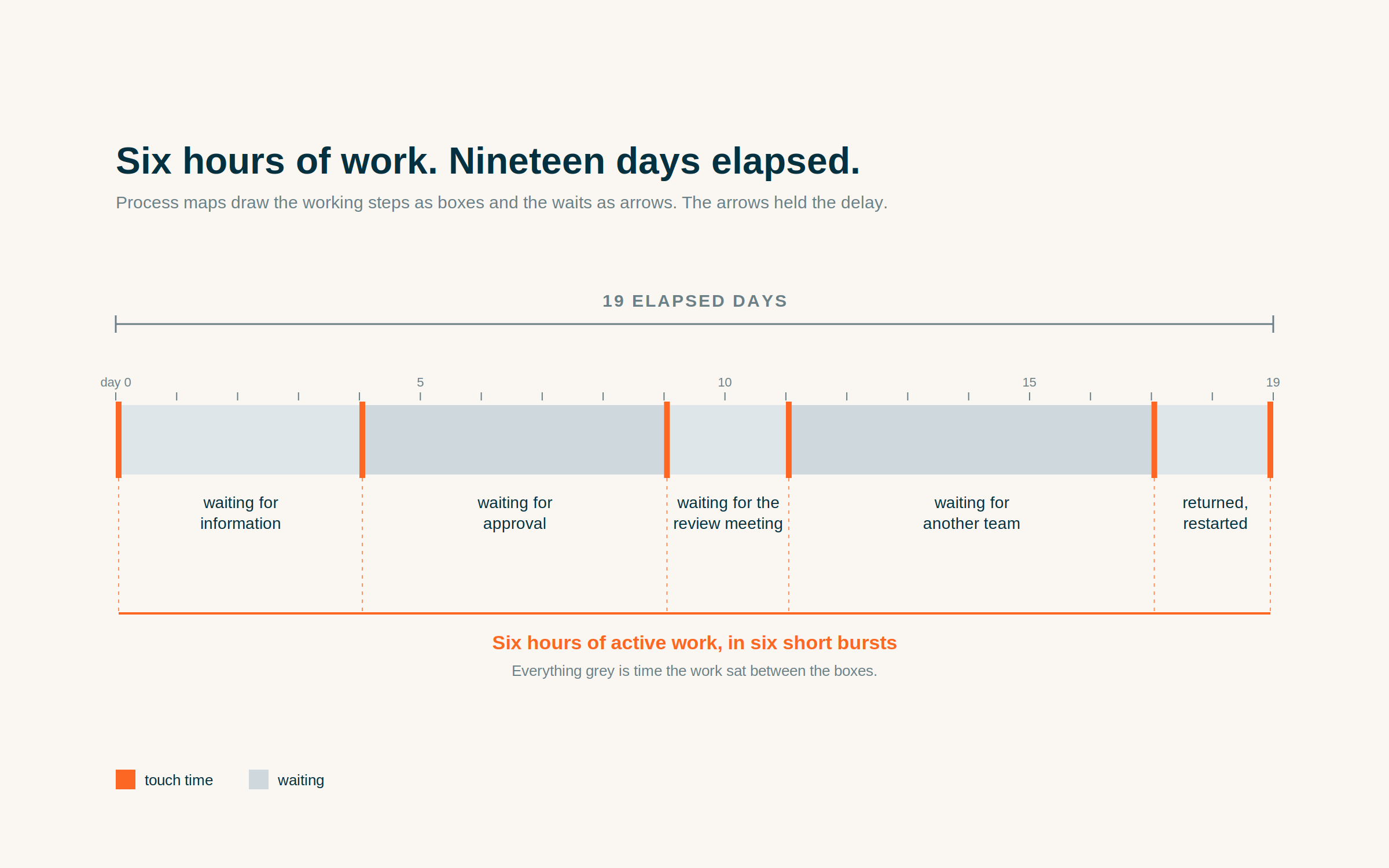
Building one starts with a single concrete outcome and several real cases, including a delayed one. Separate working time from waiting, because the arrows between working steps may hold most of the delay. Those waits are execution drag through the work path. Whether the workarounds also wear on the judgment of the people running them is a separate question, and no map answers it. Examine the workarounds before removing any of them. Then test the map against additional cases and assign someone to keep it current.
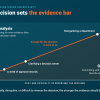
Finish the current-state evidence before improvement begins. Combining the two too early turns the current state into a softened preview of the proposed future. The right change may be much smaller than a redesign: an approval threshold, a second weekly review, a stable definition of complete at one handoff. Measure each one by approval age, queue size or reopenings rather than by whether the process feels better.
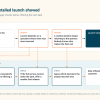
If a priority is already late, mapping the whole department is unnecessary. Start with the deliverable that should exist by now, reconstruct its route and find where it waited or returned to the same overloaded person. Emergent Skills applies this method to one stalled priority at a time. The Stalled Priority Snapshot does that in 90 minutes.
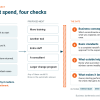
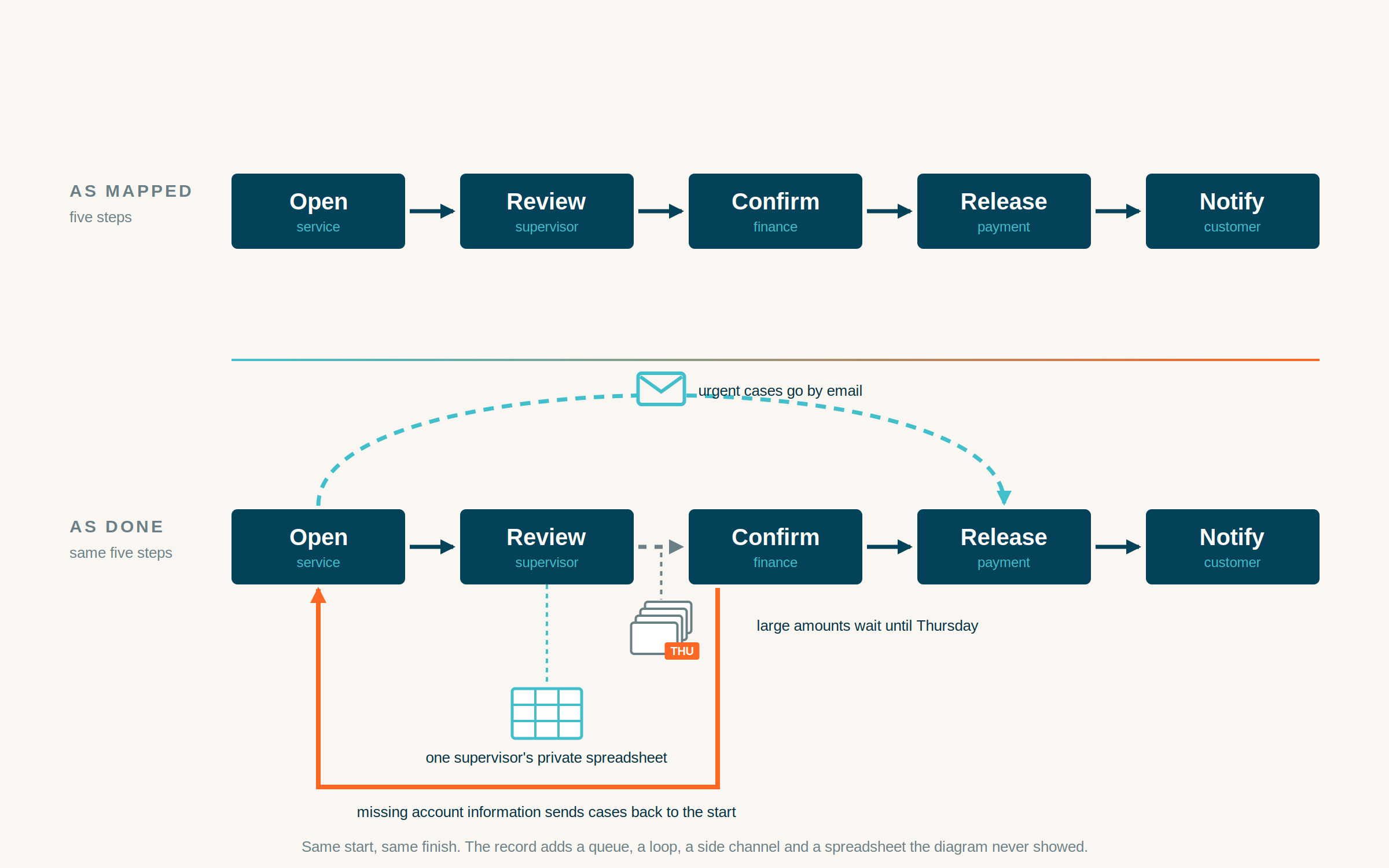
The service representative opens the request. A supervisor reviews it. Finance confirms the amount. The payment is released. The customer receives notice.
That is what the process map shows.
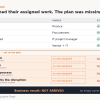
Ask the people doing the work and another route appears. Requests above a certain amount sit until Thursday because that is when the finance manager reviews exceptions. Missing account information sends some cases back to service. One experienced supervisor keeps a private spreadsheet because the system does not show which refunds are waiting for a customer response. Urgent cases move through email, outside the recorded workflow.
The official process has five steps. The actual process has waits, repeat trips and workarounds the diagram never captured.
This is the central problem in business process mapping. A map can document how work is intended to move without establishing how it moves in practice. If the difference is ignored, the organization may redesign, staff or automate a process that does not exist.
What is business process mapping?
Business process mapping is the visual documentation of how work moves from a starting request to a defined result. A useful map identifies the steps, decisions and handoffs involved in producing that result, and who owns each one.
Different mapping methods answer different questions:
- A basic flowchart shows the sequence of steps and decisions.
- A swimlane diagram shows which person, team or function performs each part.
- SIPOC defines the suppliers, inputs, process, outputs and customers at a high level.
- Value stream mapping separates value-producing activity from delay, inventory and other waste.
- Business Process Model and Notation, usually called BPMN, provides a formal language for modeling more complicated processes and events.
The choice matters, but not as much as the evidence behind the map. A precise BPMN diagram can still describe the wrong process. A rough swimlane drawn from real cases can be more useful than a technically perfect model assembled from policy documents and conference-room memory.
Start with the question the map must answer. If the problem is that customer onboarding takes 26 days, the map needs to expose the route controlling those 26 days. It does not need to capture every administrative action performed by everyone who touches the customer account.
What business process mapping can deliver
Process mapping gives a team a shared object to examine. It can expose workflow bottlenecks: unnecessary approvals, unclear ownership and handoffs that repeatedly fail. It also provides a foundation for training, automation and business process improvement.
Research supports several of those uses, with limits.
A global Delphi study by Marta Indulska, Peter Green, Jan Recker and Michael Rosemann identified 19 perceived benefits of business process modeling. Practitioners and academics ranked them in a different order, and that split is the more useful result. What a model is worth depends on who is judging it and what they wanted from it.
Another study examined business process management and service-oriented architecture across 157 German service firms. It found positive relationships with several dimensions of process quality, including straight-through processing, standardization and process consolidation. That is evidence about BPM and related information technology, not proof that producing a diagram by itself improves performance.
A map becomes useful when the organization uses it to decide what to change and then measures whether the process improves.
Why process maps become unreliable
Process-mapping efforts can go wrong well before someone opens the diagramming software.
The team may not agree on the purpose. One leader expects documentation for an audit. Another wants an automation specification. The people doing the work expect relief from a broken approval route. They can all approve the same diagram while believing it will be used for different things.
The project may also begin with the desired future process. That is tempting because the future state is cleaner and easier to present. But it removes the evidence needed to understand the current delay. When the current route is skipped, the team cannot tell whether the proposed change removes a real constraint or merely redraws the boxes.
Notation creates another trap. A specialized modeling language can be necessary for implementation, integration or control design. Used too early, it can make the model inaccessible to the people whose knowledge is required to correct it. The room begins debating symbols while the undocumented workaround remains in somebody's inbox.
In practice, choosing the notation is usually easier than getting an honest account of the route. People remember the formal process first. The exceptions come out later, once someone mentions the spreadsheet or the approval meeting everyone has learned to work around.
Then there is maintenance. Processes change as customers, systems and staffing change. Informal operating agreements shift and nobody records the change. A map that was accurate six months ago can become misleading without anyone making an explicit decision to replace it.
Michael Rosemann's two-part discussion of process-modeling pitfalls organizes 22 recurring problems, running from strategy and governance through modeling practice to long-term maintenance. Rosemann is explicit that the papers present a personal viewpoint rather than findings from a structured qualitative study. They are best used as an experienced practitioner's warning list, not as evidence of how frequently each problem occurs.
Shelfware, drift and fiction
Emergent Skills uses three working labels when reviewing an existing process map.
Shelfware
The map was created and never used. The organization loses the time and money spent producing it.
Drift
The map represented the process when it was created, but the work later changed. Training, staffing and automation begin targeting an outdated process.
Fiction
The map never represented actual practice. It may have been built from policy, memory or a future-state design presented as current state. Decisions are made using an invented account of how the operation works.
Shelfware is usually easy to spot because the map simply stops being used.
Drift and fiction are harder to detect because the map remains in circulation. It appears in onboarding, audit preparation and software requirements. Its continued use gives it authority even as its connection to the work weakens.
That is where the cost spreads. A staffing model assigns capacity to the documented steps while unrecorded exception handling consumes the specialists. An automation project encodes the standard route while the cases that matter most still require judgment outside it. A service-level agreement starts its clock after an intake delay the official process never acknowledged.
The organization then asks why people are not following the process. Sometimes that is the correct question. Sometimes the workers are the only reason the process still functions.
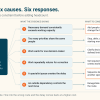
A map that misses the waits misses the first of two ways execution drag reaches a result: the work path holds things up. Refunds above the threshold sit until Thursday. Cases with missing account information go back to service. Nobody in that route has to be doing poor work for the customer to wait, and none of it is on the five-step diagram.
The second way goes through the people holding the process together. Running a private spreadsheet, moving urgent cases through email and handling the exceptions the map never recorded all add demand, and that demand can make judgment and focus harder to use consistently. That is a possibility to check, not a conclusion to draw from the workaround. The records show where the refund waited. They do not show what the extra handling did to anyone's judgment. That takes evidence of its own. Map the waits first. They are the part a redesign can change, whether or not the second way is present.
Work-as-Imagined and Work-as-Done
Safety science distinguishes Work-as-Imagined from Work-as-Done.
Work-as-Imagined is the process as described in policies, procedures and management expectations. Work-as-Done is how people adapt the work to the conditions in front of them.
The two will not match perfectly in a complex operation. Customers send incomplete information. Systems go down. A promised resource is not available. A specialist knows which formal step can be combined safely with another. People adjust so the result can still be produced.
A difference between the map and actual practice is evidence to investigate. It does not establish whether the worker or the model is wrong.
Some deviations are careless, unsafe or noncompliant. Others are necessary adaptations to conditions the formal process did not anticipate. If every difference is treated as misconduct, people learn to hide the workarounds that keep the operation running. The organization loses the chance to learn which parts of its process are incomplete, unrealistic or badly supported.
This is why a current-state map cannot be built from the procedure manual alone. It must include the people doing the work and evidence from actual cases.
Compare the model with the record
Process mining provides a more formal way to test the relationship between a process model and recorded behavior. Conformance checking compares a model with event logs and identifies where they agree or diverge.
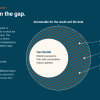
Not every operation has clean event data, and not every important handoff produces a usable log. Knowledge work often moves through email, meetings and conversations that were never recorded. Still, the underlying principle travels well: test the map against what happened. That comparison is an operational gap analysis: the documented route on one side, the record on the other.
For a knowledge-work process, the evidence may include:
- Ticket transitions, approval records and system timestamps
- Document histories and reopened versions
- Calendar entries for recurring reviews
- Email or message records for specific decisions
- Several completed, delayed and exceptional cases
Interviews remain necessary because records rarely explain why someone chose a workaround or what information was missing at a handoff. But interviews should be checked against dates and artifacts wherever possible. Memory tends to smooth over pauses, repeat trips and informal routing. Those are often the parts controlling the finish date.
How to build a current-state process map
1. Choose a concrete outcome
Name what the process is supposed to produce, for whom and by when. "Customer onboarding" is a domain. "A new enterprise customer can use the contracted service" is an outcome you can trace.
Confirm that the outcome is still valid and still wanted. A perfectly mapped process cannot repair an initiative that leadership has abandoned or never funded.
2. Select real cases
Use more than the cleanest example. Include a routine case, a delayed case and an exception if the volume permits it. One case can reveal a condition worth investigating, but it cannot establish that the condition controls the process generally.
3. Reconstruct the route
Record what happened. Mark each decision, handoff and wait. Mark every return and every change of direction. Keep the official process nearby, but do not use it to fill gaps in the evidence.
4. Separate touch time from waiting
A six-hour deliverable can take 19 elapsed days. Process maps often give working steps plenty of space while compressing the waits between them into arrows. For an operations leader, those arrows may contain most of the delay. Finding which wait controls the finish date is the job of bottleneck analysis.
Record how long someone was working on it and how long it waited for information, an approval or another team.
5. Mark the decisions and handoffs
For each consequential decision, ask who could make it, what evidence they needed and how the work reached them. For each handoff, ask what had to move with the work and whether the recipient received it.
An owner named in a project system may not have the authority required to move the work. A handoff can be recorded as complete while the context needed for the next step remains with the previous team.
6. Examine the workarounds
Identify the spreadsheets, side channels and informal approvals that keep the process functioning. Do not celebrate them automatically, and do not remove them automatically. Determine what condition made each workaround necessary.
7. Test the map
Walk additional cases through the completed map. If the route repeatedly disagrees with the model, determine whether the model is incomplete, required controls are failing, or recurring exceptions need a formal route. Resolve that difference before using the map as the basis for redesign, automation or compliance.
Then assign responsibility for keeping it current. A map without an owner and a review trigger begins drifting as soon as the workshop ends.
Business process mapping is not business process improvement
Current-state mapping should be finished before improvement begins. Once the route is supported by evidence, the team can decide what to change.
Those activities are connected, but combining them too early creates pressure to make the current state look more rational than it is. People begin correcting the map while they are still discovering the work. The awkward repeat trip disappears. The unofficial spreadsheet is omitted. The current state becomes a softened version of the proposed future.
Finish the evidence first. Then decide what to remove, what to reroute and what to leave alone.
The best improvement may be much smaller than a full redesign. A weekly approval meeting becomes twice weekly. Routine decisions receive a threshold that keeps them out of an executive queue. Intake stops work at the door until the field that usually goes missing is filled in. One handoff receives a stable definition of complete.
Each change should have a measure close to the suspected constraint. Approval age, queue size and reopenings are more useful than a general impression that the process feels better.
Start with the outcome that should have moved
If an important priority is already late, mapping an entire department may be unnecessary. Begin with the milestone, decision or deliverable that should exist by now.
Reconstruct its actual route, which is the first step of root cause analysis for a stalled priority. Find where it waited, reopened or returned to the same overloaded person. Check whether funding, authority or an external dependency explains the delay better than the work path does. If the work path remains the strongest explanation, change one condition and measure what happens.
Emergent Skills applies this method narrowly to one stalled priority, decision, milestone or deliverable. The purpose is to identify what is controlling that result, not to document every process across the operation.
Bring the priority people are tired of explaining.
The Emergent Skills Stalled Priority Snapshot applies that approach to one outcome. In a 90-minute working session, we trace the route from records, separate working time from defensible delay and design one 14-day operating change with an owner, a measure and a condition that would weaken the explanation.
Sources
- Indulska, M., Green, P., Recker, J., and Rosemann, M. (2009). Business Process Modeling: Perceived Benefits.
- Beimborn, D., and Joachim, N. (2011). The joint impact of service-oriented architectures and business process management on business process quality: an empirical evaluation and comparison. Information Systems and e-Business Management, 9(3), 333-362.
- Rosemann, M. (2006). Potential pitfalls of process modeling: part A.
- Rosemann, M. (2006). Potential pitfalls of process modeling: part B.
- Rozinat, A., and van der Aalst, W. M. P. (2008). Conformance checking of processes based on monitoring real behavior.
- Hollnagel, E., and Clay-Williams, R. (2022). Work-as-Imagined and Work-as-Done.