
The Real Reason Workplace Training Doesn't Work (And What Brain Science Says About It

When the NYT Accidentally Explains Your Entire Framework

Reading David Brooks at 10:47pm. Yellow 6, maybe edging toward 7. Brain's doing that thing where it keeps rereading the same paragraph because it's good but I'm not quite landing it.

The NYTimes piece is "What Are You Thinking" Standard Brooks - philosophy meets neuroscience meets cultural commentary. But three paragraphs in, I had to put my phone down.

Not because it was wrong.

Because he just articulated the entire theoretical foundation for why Capacity Intelligence™ works, using completely different language.

The Starling Thing

Brooks opens with murmurations - those massive flocks of starlings that move like liquid smoke across the sky. No leader. No plan. Just thousands of birds responding to their immediate neighbors, creating patterns too complex to predict but too organized to be random.

His point: your brain works like that. Not modules. Not systems. Swirls.

And I'm sitting here thinking: that's what The Zones Framework™ measures.

Actually, hang on. Email just came in. Ignoring it.

Where was I. Right - zones aren't personality types. They're not fixed states. 🟢Green, 🟡Yellow, 🔴Red, ⚫Can't-Even aren't boxes you live in. They're snapshots of a swirl in motion. Your capacity right now, in this context, with this stress load and these resources.

The whole framework exists because we are starlings - constantly shifting based on what's happening around us and inside us.

What Brooks Describes, We Operationalize

He writes: "You'd want personalized education, personalized medicine, personalized management techniques."

That's... literally the two routes. ND Route and NT Route aren't about labeling people as broken or fixed. They're about matching tools to how your specific brain actually processes information when you're under stress.

Brooks rejects the "charioteer" metaphor - reason sitting on top controlling dumb emotions like horses. He quotes Lisa Feldman Barrett (whose emotion construction work is foundational to our research backing) saying emotions aren't primitive. They're constructed from interoceptive signals, context, past experience.

This is why you can't logic your way out of burnout.

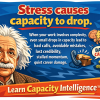
You already know meditation helps. You already know you should take breaks. Stress doesn't block knowledge. It blocks access.

Fragment there. Intentional.

That access-versus-acquisition distinction is the whole game. Brooks describes it philosophically. We built operational tools around it.

The Body Knows Before You Do

There's a section where Brooks talks about how "the body can be more rational than the brain" - cortisol spikes, adrenaline dumps, autonomic nervous system doing its thing while you're still telling yourself you're fine.

Yellow 7 now. Writing this in short paragraphs because longer ones aren't happening.

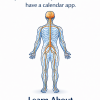
This is polyvagal theory in practice. Your body is giving you capacity data in real time. Tight jaw. Shallow breathing. That jittery feeling in your legs during a meeting.

Traditional productivity advice says push through. Green Zone thinking applied to Red Zone reality.

We say: read the signal. Match the tool. A 30-minute reset in Green Zone becomes a 30-second Pressure Breath in Can't-Even. Same principle, scaled to actual available capacity.

Slack notification. Not checking it. That's relevant - I'm demonstrating zone-matching while writing about it. Recognize (Yellow 7, attention fragmenting) → Act (shorter paragraphs, ignore Slack) → Validate (still tracking, still coherent).

That's Operationalized Self-Awareness™ without calling it that.

Where This Actually Matters

Here's what makes this more than an interesting philosophical alignment:

Brooks is writing in the New York Times. Mainstream source. Making sophisticated neuroscience accessible to people who would never read a clinical psychology journal.

We do the same thing with workplace language. When someone searches "why does my brain feel foggy at work" or "can't focus after lunch meeting," they're describing capacity loss. They just don't have the framework to name it yet.

The starling metaphor gives us accessible language for a complex truth: you're not a broken computer that needs rebooting. You're a dynamic system that needs context-appropriate support.

Which is the entire point of having zone-specific tools instead of one-size-fits-all productivity hacks. When your focus and self-management capacity shifts throughout the day, your tools need to shift with it.

The Messy Part

There's a cleaner version of this post. Not today.

What keeps hitting me about the Brooks piece is this: he's describing the why. The philosophical case for seeing people as ever-changing swirls instead of empty vats to fill with training modules.

We built the how. 1,400 pages of clinical-grade content organized by routes and zones. Tools that scale. Frameworks that adapt.

He critiques standardization. We built differentiated paths.
He says body and emotions contain wisdom. We integrated that as capacity signals.
He notes context-dependency. We created interventions matched to that.

The gap between "this should exist" and "here's how it works" is where most workplace wellness initiatives die. They get the philosophy right and the implementation wrong.

Or they optimize for Green Zone people and wonder why everyone else struggles.

That's the Green Zone Trap in action - assuming everyone has the same access to their skills regardless of their current state.

If This Landed

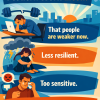
You're not imagining the mismatch between what workplace training assumes you can do and what you can actually access when you're depleted.

The swirl is real. The capacity shifts are real. The need for tools that meet you where you actually are - not where you "should" be - is real.

More on this soon. Maybe when I'm less tired and can write the cleaner version.

Or maybe the messy version is the point.

Start With Your Actual Capacity

Not where you think you should be. Where you actually are right now.

Try a Free 30-Minute Reset

Learn how Capacity Intelligence™ works

Writing this at Yellow 7. There's definitely a sharper version of this argument. But the tired version might actually demonstrate the framework better than a polished one would. Tools require resources you don't always have. Including the tool of writing coherently about your own system.
Start Free 30-Minute Reset 

Capacity Intelligence™ - The Foundation for everything you learn.

The Emergent Skills Program (Yeah, There's Actually a Method to This)

Look, I get it. Another program. Another system. But here's the thing — these 10 pillars? They're literally everything that's been kicking my ass for years, organized into something that actually makes sense. Especially when you're stuck in 🟡 Yellow Zone at 2 PM wondering why basic tasks feel like calculus.

Here's what nobody tells you: tools require resources you don't always have. That's not a character flaw. That's capacity depletion. And it's why we built everything around Capacity Intelligence™ — the ability to recognize what you actually have to work with and match tools accordingly.

Thirty minutes to stop the spiral. Thirty days to start the fix. Stick around longer if you want to actually master it. Works even when you're 🔴 Red Zone. Maybe especially then.

So I discovered something at 3 AM last Tuesday. Every single panic spiral, every frozen presentation moment, every "why can't I just DO THE THING" — it all fits into one of these 10 categories. And apparently LinkedIn says these are the exact skills that get people promoted? Wild.

The kicker: We use AI coaches exclusively. No awkward video calls with Brad the life coach at 7 AM. Just you, your brain, and an AI that remembers your specific flavor of panic. Plus it scales to whatever Zone you're in — full version when you're 🟢 Green, tiny version when you're Red and just trying not to cry in the bathroom.

That's Capacity Intelligence™ in action: recognizing your actual resources in real-time and using capacity-matched tools instead of forcing Green Zone solutions on a Red Zone brain.

OK So Here's What Nobody Tells You

Every single one of these skills? Connected. Fix your sleep, suddenly you can focus. Manage stress, confidence goes up. It's like your brain has been playing life on hard mode and someone finally showed you the settings menu.

The real secret? All these skills are about moving up through the Zones. Spending more time in 🟢 Green, less time in 🔴 Red, knowing what to do when you're stuck in 🟡 Yellow.

That's Capacity Intelligence™: operationalized self-awareness. Not just watching yourself struggle — doing something about it.

The Zones Framework™ — Your Capacity Intelligence™ Operating Manual

Here's what most productivity advice gets wrong: it assumes you're always at peak capacity. Morning routines, meditation apps, time management systems — all designed for Green Zone brains with cognitive resources to spare.

But 44% of professionals report daily stress at work. That means nearly half the workforce is regularly operating in Yellow or Red Zone. Tools designed for Green Zone fail exactly when you need them.

  • 🟢 Green Zone (7-9): Capacity mode — focus, empathy, creativity all online. Full tools work here.
  • 🟡 Yellow Zone (4-6): Strain mode — high effort, diminishing returns. Need simpler, right-sized tools.
  • 🔴 Red Zone (1-3): Survival mode — executive function offline, body-first tools only.
  • Can't-Even Zone (0🪫): Shutdown — system offline. Rest is the only intervention.

Every tool in Emergent Skills scales to your Zone. Because "just do better" doesn't work when your nervous system's in survival mode. That's not motivation failure — that's asking Yellow/Red Zone people to use Green Zone solutions. Capacity Intelligence™ breaks the cycle.

What Is Capacity Intelligence™?

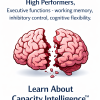
It's the meta-skill that makes every other skill accessible. The ability to:

  1. Recognize your actual resources in real-time (Zone awareness)
  2. Match tools to your current state, not where you "should" be
  3. Measure if it worked (the feedback loop everyone skips)

This isn't self-awareness. It's operationalized self-awareness — observation + strategic action + validation. Not a thermometer (tells you the temperature). A thermostat (tells you the temperature AND does something about it).

The Emotional Intelligence Part

  • Finally understanding WTF you're feeling. Red? Yellow? Green? Changes everything. That's Zone awareness.
  • Not letting emotions hijack your whole day. Recognizing Red Zone spirals before they eat your afternoon.
  • Reading rooms without being creepy. Sensing other people's Zones equals social intelligence.
  • Navigating office politics like an adult. Requires Yellow/Green minimum.

The Career ROI Part

  • Showing up consistently. Bare minimum, still counts. Yellow Zone reliability beats Red Zone heroics.
  • Speaking without your voice shaking. Yellow/Green vocal control equals executive presence.
  • Being the calm one when shit hits fan. Staying Green while everyone else goes Red. That's Capacity Intelligence™.
  • Actually collaborating, not just cc'ing.

The Science-y Part

  • Your patterns aren't your personality. They're just Red Zone survival habits that stuck.
  • Interrupting spirals before they start. Catching Yellow before it crashes into Red. Operationalized self-awareness.
  • Techniques based on actual research. Polyvagal theory equals Zones Framework™ in fancy language.
  • Building new neural pathways. Teaching your nervous system Green exists.

McKinsey says improving workplace health could unlock $3.7–11.7 trillion in global value. For you? More energy, better focus, being the one who gets tapped for opportunities while everyone else is burning out.

You're in Green/Yellow while the competition's stuck in Red. That's not talent. That's Capacity Intelligence™.

The AI coach doesn't judge when you practice the same anxiety technique 47 times at 3 AM. No awkward "how does that make you feel" conversations. Just you, figuring out how to stop self-sabotaging, one 30-minute session at a time.

And it scales to your Zone. Full coaching in Green, bite-sized basics in Yellow, survival mode scripts in Red. Because you can't "think positive" your way out of a nervous system state, but you can give it capacity-matched tools.

Pick Your Biggest Problem & Start Fixing It

Thirty minutes to stop the spiral. Thirty days to start the fix. Stick around longer to master it. 
(Works in any Zone. Especially the bad ones.)

Learn the Zones Framework™ →  |  Explore Capacity Intelligence™ →  |  See the Research →

Start Free 30-Minute Reset