When your brain decides every meeting is a bear attack
11:58 a.m., stand-up runs long. I can feel my voice thinning out before it's my turn. Not "anxious" exactly — just hot, jaw tight, words stuck somewhere between my brain and mouth. Two breaths down. Eyes on the task not the people. I ship my update without apologizing for existing.
That's 🔴 Red Zone nervous system doing its thing. Your chest gets tight because of interoception stuff and your body genuinely thinks you're dying. The breathing thing that actually works? It signals your vagus nerve that you're safe. Even when your brain's too fried to remember complex instructions.
Capacity Intelligence™ in practice:
Being the one who doesn't visibly panic equals leadership material. But here's what changes everything: learning to recognize when you're sliding from Yellow to Red and using the right-sized intervention before you're in full survival mode. That "executive presence" thing everyone talks about? It's Capacity Intelligence™ — staying 🟢 Green when everyone else goes Red. That's it. That's the whole secret.
For when everything feels pointless but rent still exists
Rock Bottom Looks Like:
Can't get out of bed. Rejection hitting different. That "what's the point" feeling. Sunday scaries turning into everyday scaries. This is what happens when you spend too long in 🔴 Red — your nervous system literally stops believing things can get better. 76% of workers report experiencing burnout. You're not weak. You're depleted.
What Changes:
- Finding motivation without the fake positivity BS. Because "just think positive" doesn't work in Red Zone and everyone knows it. That requires Green Zone cognitive capacity you don't have.
- Bouncing back faster. Or at least bouncing. Climbing from Red to 🟡 Yellow to Green instead of living in the basement.
- That emotion construction thing Lisa Feldman Barrett talks about. Which is way easier to do in Yellow/Green than Red, if you were wondering. The Zones Framework™ helps you know when to even try.
Companies care because: consistent performance is promotable. Not burning out means actually finishing projects. Red Zone can't sustain anything long-term. Initiative when others are fried gets noticed. You're Green while everyone else is Red.
Because 3 AM anxiety spirals aren't a personality trait
Q: Why won't my brain shut up at night?
A: Your nervous system's still in 🟡 Yellow/Red even though the work day ended six hours ago. It thinks it's still Tuesday. Stuck in vigilance mode. 44% of professionals report daily workplace stress — your body doesn't know the difference between "deadline tomorrow" and "tiger nearby."
Q: What actually helps?
A: Some counting pattern. 4-7-8 breathing or whatever. It signals "safe to power down" to your nervous system. Actually falling asleep without substances means teaching your body how to drop from Yellow to Green naturally. Takes practice. Doesn't always work the first week. Capacity Intelligence™ means knowing which sleep tool matches your current zone — elaborate wind-down rituals require Green Zone executive function you don't have at midnight.
Q: Does this affect work performance?
A: Can't access 🟢 Green Zone problem-solving on Red Zone sleep. Also Red Zone exhaustion reads as "not leadership material" in meetings. Plus you need energy to actually network after 5 PM — socializing requires Yellow/Green capacity minimum.
Stop letting work colonize your entire existence
Slack notifications at 11 PM. Weekend equals catch up time. Vacation equals working from beach. "Quick sync" becoming your villain origin story.
Living in permanent Yellow/Red means you never actually recover. Your nervous system forgot what Green feels like. And here's what nobody tells you — you can't set boundaries from Red. Advocating for yourself requires Yellow Zone minimum. Which means you're trapped: too burnt out to advocate, can't recover without advocating. That's a capacity trap, not a character flaw.
What actually helps:
- Setting boundaries without career suicide (requires being in Yellow first, see the problem) — Capacity Intelligence™ teaches you to recognize when you have the resources to even try
- Understanding the planning fallacy — why everything takes 3x longer, especially in Yellow Zone when executive function is cooked
- Knowing the difference: Green Zone challenge versus Red Zone survival mode
Low engagement costs the global economy $8.8 trillion each year. Your share? That missed raise because you were too fried to interview. Consistent Green/Yellow performance beats Red Zone heroics every time.
For when your brain has 47 tabs open and all of them are buffering
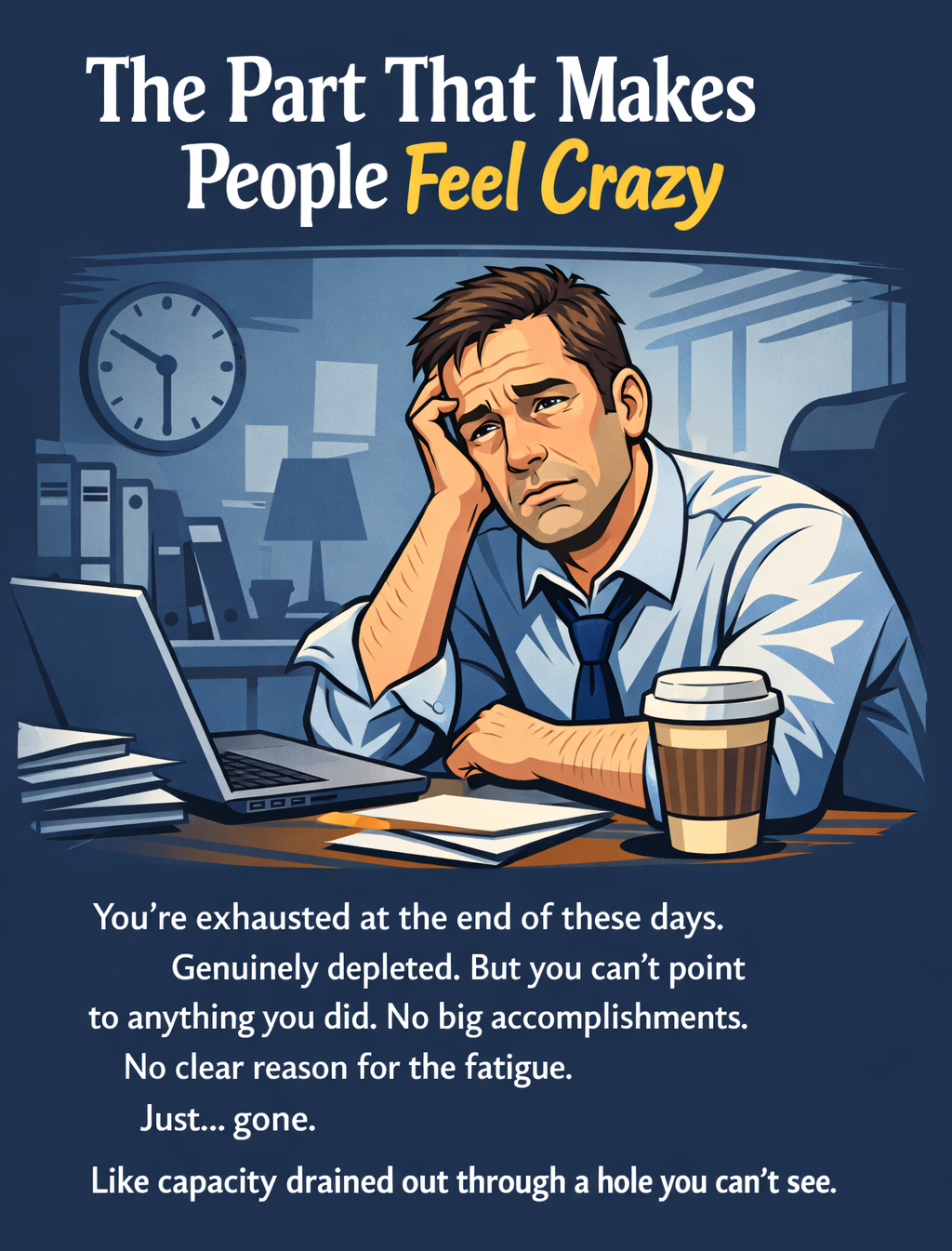
Started 6 things, finished none. Can't remember what you're supposed to be doing. Time blindness hitting. Email open for 20 minutes, still on first line. 🟡 Yellow Zone executive function equals effort visible, results questionable.
Capacity-matched tools that work:
- Task management that doesn't require Green Zone brain to maintain — because most productivity systems are designed for people who aren't depleted
- Why dopamine is lying to you about what's important
- Harnessing hyperfocus instead of fighting it
- Finishing what you start equals reliability
- Time management equals trusted with bigger projects
- Self-direction equals leadership potential
That's it. That's the list. Works even when you're Yellow/Red. 85% of job success depends on human skills, not technical skills. Staying in Yellow/Green long enough to actually ship something is the entire game. The Zones Framework™ helps you know when you can push and when you're borrowing from tomorrow.
Getting things done without destroying yourself in the process
Working 12 hours, accomplishing 2 hours worth. Busy doesn't equal productive. Exhausted but nothing to show for it. Goals that sound good but never happen. 🔴 Red Zone hustle equals maximum effort, minimum results. That's capacity depletion, not laziness.
And look, I'm not gonna pretend I have this figured out. Some weeks I'm still doing the Red Zone thing. But here's what works when I remember to actually use it:
- Leveraging 🟢 Green Zone clarity for planning, Yellow Zone momentum for execution — that's Capacity Intelligence™
- Knowing when to push versus when you're Red Zone spiraling
- Understanding that perfectionism tanks productivity — it's a Red Zone defense mechanism masquerading as standards
They pay for Green Zone output, not Red Zone suffering. Results equal promotions. Consistent delivery means opportunities find you. Strategic work equals leadership track.
Because change is inevitable and your nervous system hates it
New job panic. Layoff recovery. Major life change. That thing that happened that changed everything. Transitions slam you into Red Zone and your nervous system thinks it'll never be safe again.
Resilience isn't "toughen up." It's literally nervous system regulation. Red to Yellow to Green. Handling uncertainty without spiraling means staying Yellow instead of dropping Red. Recovery patterns work even from Red Zone starting point. Capacity Intelligence™ gives you the map.
Green Zone during chaos equals executive presence. Staying functional during crisis gets noticed and remembered. Adaptability equals survived the layoffs. Every $1 invested in mental health intervention returns $4 in productivity — because it's really about restoring access to capacity you already have.
Stop outsourcing your self-worth to your inbox
Email from boss: "Can we talk?" Instant stomach drop. Heart rate spikes. Brain immediately runs through every mistake from the past three months. This is Red Zone self-worth. Everything's a threat to your survival.
The email was about a new project. Not a performance issue. But my body didn't know that for 20 solid minutes.
What helps:
- Understanding your worth isn't conditional on perfect performance. Red Zone lie: "safe" equals flawless. Capacity Intelligence™ teaches you that self-worth fluctuates with zone, not actual competence.
- Building confidence from 🟡 Yellow/Green states instead of Red Zone fear
- Shame resilience. That whole Brené Brown thing. Works better when you're not survival-mode depleted.
Executives have self-worth that survives mistakes. Green Zone self doesn't collapse in Yellow. Taking up space equals leadership. Can't lead from Red Zone self-doubt.
When emotions run the show and you're just along for the ride
Rage at minor inconveniences. Guilt about everything. Can't let go of that thing from 2019. Professional shame spiral artist. Red Zone emotions equal threat response, not useful information. 76% say stress negatively affects their mental or physical health.
Lisa Feldman Barrett was right about emotions being predictions. And they're way less accurate in Red Zone. Anger management that isn't "just breathe" means actually regulating from Red to Yellow. Self-compassion works better from Yellow/Green. This is measurable stuff, not woo-woo. Capacity Intelligence™ helps you know which emotional tools even work at which zone.
Not losing it in meetings equals leadership material. Staying Yellow while others go Red gets noticed. Handling feedback requires Yellow/Green — can only hear critique when you're not in survival mode. Emotional control equals C-suite potential. Green Zone regulation equals executive temperament.
Turns out humans need other humans. Annoying but true.
Working remote equals forgetting how to human. Network events equal nightmare. Small talk equals rather die. Feeling alone in a full office. Red Zone equals everyone's a threat. Yellow Zone equals too much effort. Green Zone equals oh right, people. That's capacity at work.
What the AI coach shows you:
- Authentic connection, not LinkedIn fake. Requires Yellow/Green minimum to access empathy. Trying to connect from Red Zone just looks weird.
- Navigating conflict without burning bridges. Impossible from Red Zone defensive mode. The Zones Framework™ helps you know when to have that difficult conversation.
- Actually listening. Harder than it sounds. Can't hear others when you're Red Zone self-protecting.
LinkedIn's number one skill for 2025: communication. Green Zone relating equals leadership presence. Relationship building means opportunities find you. Networking requires Yellow/Green social capacity. Conflict resolution equals trusted with teams. Staying Yellow during tension equals management material.