
When Your Coworker Snapped (And You Spent Three Days Thinking About It)
That one sharp email. Three days of replaying it. The spiral you couldn't stop. Here's what actually happened - and the one tool that breaks the pattern.
(Wednesday, 2:47pm. Yellow 5. Writing this between meetings.)
Sarah sent a one-line response to my three-paragraph update.
"This could have been an email."
Except... it was an email.
I stared at it for maybe two minutes. Then closed Slack. Then reopened it to make sure I'd read it right. Then spent the rest of the afternoon trying to figure out what I'd done wrong.
By Thursday I was avoiding her in the kitchen.
By Friday I'd convinced myself she hated me, or thought I was incompetent, or both.
None of that was rational. All of it felt true.
That weekend I mentioned it to a friend who works in HR. She didn't even look surprised.
"Yeah," she said. "Everyone's just... meaner now."
The Story I Told Myself First
I went through the usual interpretations:
Maybe I actually did something wrong.
I reread the email six times. It was fine. Thorough, even. Not too long.
Maybe she's just like that.
Except she wasn't, usually. We'd worked together for two years. This was new.
Maybe I'm too sensitive.
Possibly. But also: why did this one sentence land like a slap?
None of these explanations felt quite right. But they were the only ones I had.
So I defaulted to the most available story:
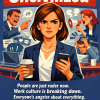
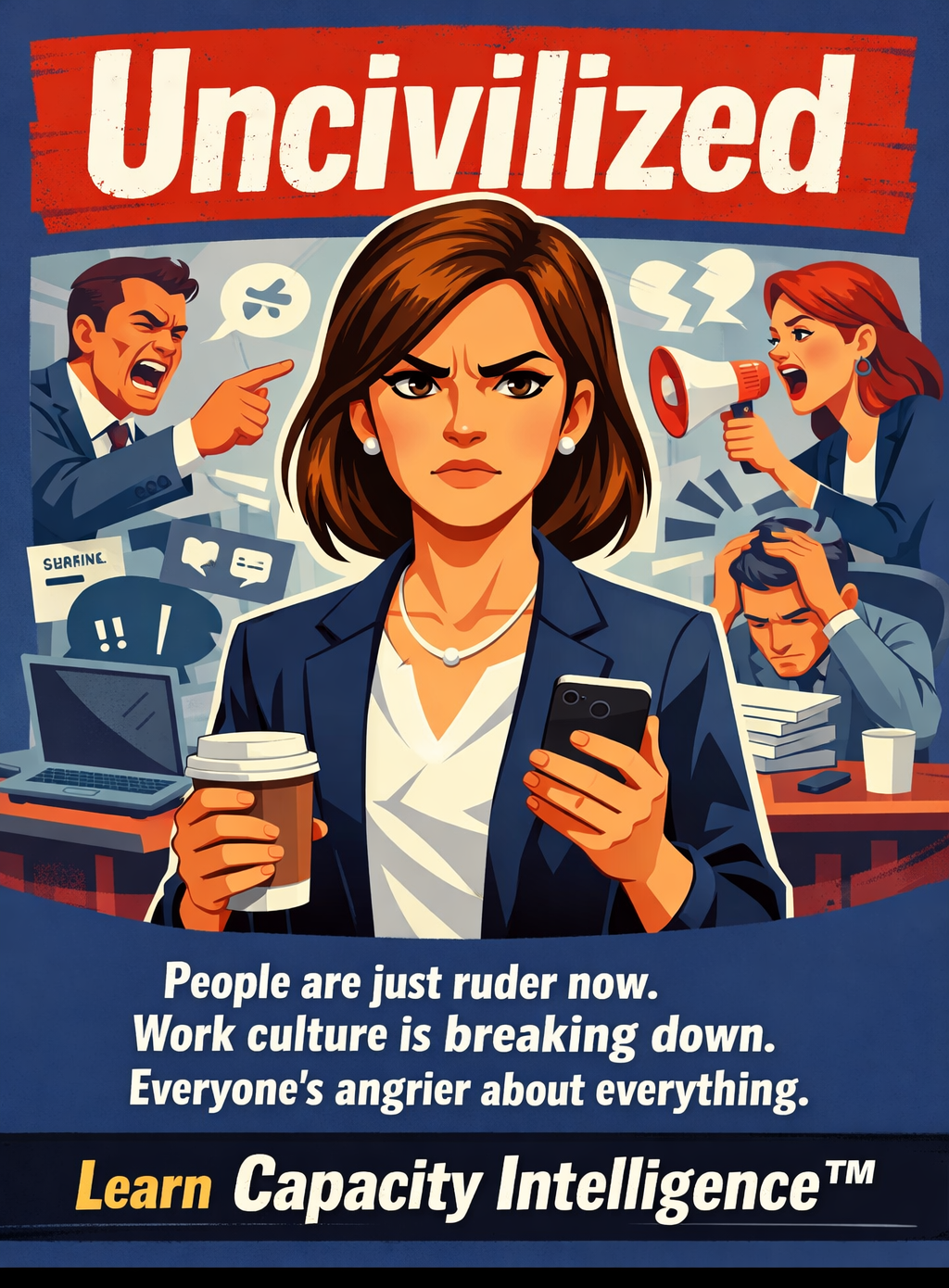
"People are just ruder now. Work culture is breaking down. Everyone's angrier about everything."
That explanation showed up everywhere. Articles about generational conflict. Threads about post-pandemic incivility. LinkedIn posts about how nobody respects professionalism anymore.
It felt true because everyone was saying it.
Then I Saw The Numbers
The Society for Human Resource Management (SHRM) tracks workplace civility quarterly.
Their latest data:
- 75% of U.S. workers experienced or witnessed incivility in the previous month
- 14% report daily exposure
- Workers experience more than one uncivil act per day on average
- Each incident costs about 34 minutes of productivity - over $1.3 billion per day across the U.S. workforce
That's not anecdotal. That's systematic.
Inc. Magazine ran a piece in January 2026 called "5 Ways Your Company Can Fight Rising Hostility in the Workplace" - citing the same research.
The framing was predictable:
Politics. Generational differences. Social polarization.
All true. All present. All... incomplete.
Because here's what kept nagging at me:
Those topics have existed for decades.
What changed wasn't what people disagree about.
What changed was how little tolerance remains during disagreement.
Fragment. Like something else shifted first.

The Reframe (That Actually Fit The Pattern)
Sarah didn't snap at me because she's rude.
She snapped because her capacity was low at the moment I needed her attention.
That's Capacity Intelligence™ - recognizing that behavior changes when cognitive and emotional resources drop, even when skills and intentions don't.
The SHRM data doesn't actually show that people became meaner.
It shows that work now routinely demands high-stakes interaction from people whose capacity is already compromised.
When capacity drops:
- Neutral feedback feels hostile
- Ambiguity feels threatening
- Minor friction escalates fast
Sarah probably didn't even register her response as sharp. She was in 🟡Yellow Zone - functional, but strained. Everything required more effort than it should.
I was probably in Yellow too. Which is why I couldn't let it go.
Two capable professionals. Both depleted. Both interpreting the other through a capacity lens neither of us had language for.
This is access vs. acquisition in real time:
She already knows how to communicate professionally. Stress just blocked access to patience and nuance in that exact moment.
Writing this at Yellow 5, by the way. Can feel the fog.
What I Did (Without Knowing I Was Doing It)
I didn't have the framework then. But I did something that fits the Operationalized Self-Awareness™ pattern:
Recognized: This reaction feels too big for the trigger.
Acted: Stepped away from Slack. Went for a walk. Didn't respond immediately.
Validated: Noticed I felt clearer after 20 minutes. The sting faded. I could see other explanations.
That's the micro loop.
Wait. Lost my train of thought. Notification just came through. That's... actually relevant.
The interruption itself is data. My capacity just dropped mid-sentence, and I had to choose: push through or adapt.
I'm adapting. Switching to shorter paragraphs.
One Tool, Scaled By Zone: Civility Circuit Breaker
This is the thing I wish I'd had that Wednesday.
A way to interrupt the incivility spiral before it costs you three days.
Here's how it scales:
🟢 Green Zone (Full Capacity)
When you notice incivility - yours or theirs:
- Pause before responding
- Ask: "Is this about the content, or about capacity?"
- Offer yourself the same question
- Adjust timing or tone accordingly
You have space for nuance. Use it.
🟡Yellow Zone (Functional But Strained)
You probably can't do the full analysis. So:
- Notice the sting
- Don't respond for 10 minutes
- If it still feels sharp after that, flag it for later
You're protecting yourself from decisions made in depletion.
This is where I actually was. The walk worked because it bought time.
🔴 Red Zone (Survival Mode)
Everything feels hostile. You can't tell what's real.
Don't analyze. Just exit.
- Close the app
- Step away from the screen
- Return only when you've physically reset
You don't have the capacity to evaluate tone accurately. That's fine. You will later.
⚫ Can't-Even Zone (System Offline)
You get to stop.
If you're here, civility isn't your job right now. Surviving is.
Mute the thread. Close the laptop. Permission granted.
Where this breaks: This tool assumes you have just enough capacity to notice the pattern. If you're too deep in Red or Can't-Even, you won't catch it in time.
That's okay. The goal isn't perfect execution.
The goal is one fewer three-day spiral because you had a framework that matched your actual state.
What I Know Now (That I Didn't Then)
Sarah apologized two weeks later.
"Sorry I was short," she said. "That week was a nightmare."
I believed her. Because I'd been there too.
Civility isn't deteriorating because professionals stopped caring about professionalism.
It's deteriorating because work keeps demanding regulated behavior from people whose regulatory capacity is offline.
You can't policy someone back into executive function.
You can't train patience into someone who's already overloaded.
What you can do is recognize the pattern - in yourself and others - and adjust accordingly.
That's what The Zones Framework™ makes visible. That's what the 30-Minute Reset is designed to restore.
Not because you're broken.
Because capacity fluctuates, and most workplace systems still assume it doesn't.
There's a cleaner version of this argument. Not today.
But if this pattern feels familiar - if you've spent days replaying one sharp comment, or watched good people become unrecognizable under pressure - you're seeing the same thing SHRM's data shows.
If this hit, you're not alone.
Ready to Stop the Spiral?
The 30-Minute Reset helps you restore capacity when you're already depleted - no willpower required.