
What Science Actually Says About High Performers (And Why I Keep Losing Access to My Own Brain)
Writing this at 🟡Yellow Zone. Maybe 5. The kind of tired where you know you can still think but every paragraph takes longer than it should.
Here's the thing about high performers that nobody tells you: the science says they're not smarter or more motivated. They're better at regulating and shifting their thinking. Which is great. Except.
Except that ability disappears exactly when you need it most.
I had a name for this - something clever about the disappearing brain - but lost it somewhere between the second coffee and that Slack notification. Currently proving my own point in real time.
The Science Part (Stay With Me)
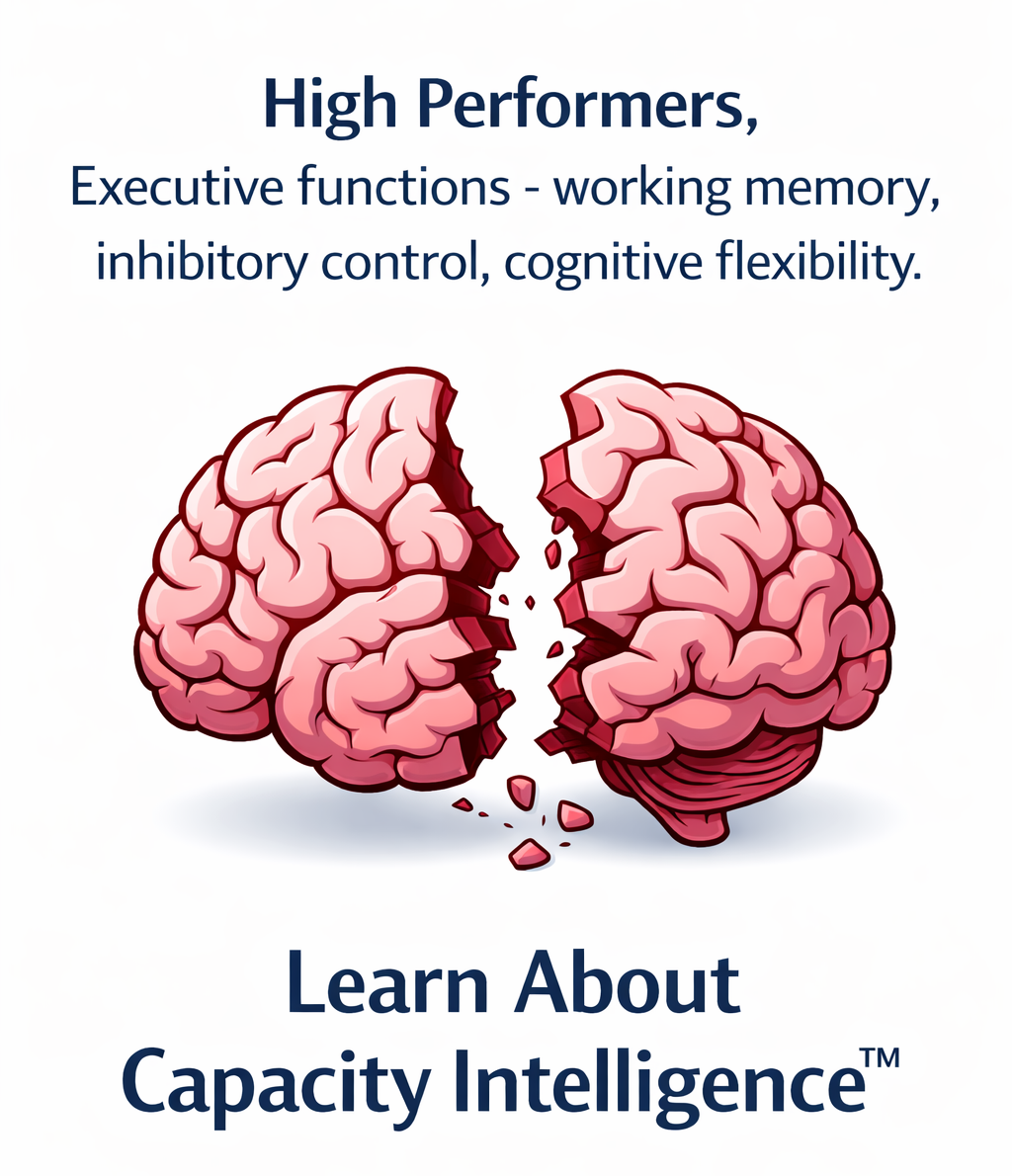
High performance isn't about raw intelligence. Research shows it comes down to executive functions - the brain processes that regulate goal-directed behavior. We're talking working memory, inhibitory control, cognitive flexibility.
A widely cited review in Developmental Cognitive Neuroscience describes cognitive flexibility as a core component of executive function, essential for adapting behavior to changing demands.
👉 Read the research on executive function and cognitive flexibility
These abilities live in your prefrontal cortex - the region responsible for planning, decisions, adaptive control.
👉 Learn more about the prefrontal cortex
Translation: high performers aren't built different. They're better at the mental shifting thing.
Which. Would be useful information. If that mental shifting thing actually stayed available when you needed it.
The Part Where I Tell You It Actually Works (In The Lab)
Studies comparing elite and non-elite athletes show higher-level performers score better on executive function tasks, including flexibility and inhibitory control.
👉 See the research on elite athletes and executive function
Research shows working memory and cognitive flexibility explain meaningful variance in problem-solving ability, even controlling for intelligence.
👉 Read about problem solving, working memory, and flexibility
So the science is clear. Cognitive flexibility matters. It predicts actual performance in actual domains.
Great.
Now here's the part they leave out of the LinkedIn posts.
The Part They Leave Out
A large meta-analysis in Psychological Bulletin found that acute stress reliably impairs working memory and cognitive flexibility, even in healthy adults.
👉 Read the meta-analysis on stress and executive function
Under stress: task switching slows, mental set-shifting gets harder, people default to habitual or rigid responses.
Additional reviews confirm that both acute and chronic stress negatively affect executive functions, particularly flexibility.
👉 See the review on stress and executive cognition
This is the part that got me. That explains why I can be brilliant in a brainstorm on a Tuesday when I slept well and catastrophically rigid on a Wednesday when I didn't.
Same person. Same brain. Different access.
Having cognitive flexibility ≠ having access to cognitive flexibility.
Where was I going with this. Right. The capacity thing.
Why "Just Reframe It" Stops Working
Here's what gets me about most performance advice. All those productivity systems, all those mindset techniques - they assume you have the cognitive resources to implement them.
Research on continuous partial attention shows that sustained cognitive load degrades working memory and flexibility over time.
👉 Learn about continuous partial attention
In practical terms: constant interruptions, high information load, emotional pressure - they erode the very mental resources you need to "shift perspective."
It's like a life jacket that only works if you're not drowning.
That's not a design flaw in you. That's a design flaw in the advice. This is exactly what we mean by the Green Zone Trap - advice designed for people at full capacity, delivered to people running on empty.
Why High Performers Struggle Silently
This hits high performers hardest because their identity is tied to being adaptable. Flexibility has always been their edge. So when it goes offline, it feels like personal failure.
But the science says something else is happening.
Research from the World Economic Forum shows that high performers - who make up a small percentage of the workforce - contribute a disproportionate share of output, but also experience sharper performance drops when support and recovery are missing. In other words, the very people organizations rely on most are the ones most affected by sustained cognitive load. 👉 Read the World Economic Forum on high performers
Under stress, the brain reallocates resources away from prefrontal executive systems toward threat-management systems. This is documented.
👉 See the research on stress and brain resource allocation
The result: narrower thinking, reduced flexibility, increased reactivity. Not because you forgot how to be flexible. Because your brain is busy doing something else right now.
This is what happens in the 🔴Red Zone - your prefrontal cortex goes partially offline. The tools that worked yesterday become inaccessible today. Not gone. Just... locked behind a door you can't reach.
This isn't a motivation problem.
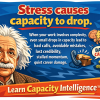
It's a capacity problem.
(Getting more scattered as I write this. 🟡Yellow Zone for sure. Tools still work here but take more effort. Which is... the point. Right.)
The Capacity Intelligence™ Part
Most performance advice starts with behavior or mindset.
What if we started one layer deeper? The availability of executive resources themselves.
This aligns with everything the research shows: executive functions are dynamic and resource-dependent. Stress reduces access. Restoring internal conditions improves cognitive control.
Instead of asking "why aren't you being flexible?"
The better question: "what conditions make flexibility accessible again?"
That's Capacity Intelligence™
Not acquiring skills you don't have. Regaining access to skills you already own but temporarily can't reach.
You already know how to think flexibly. Stress just blocks access. The work is removing the block.
This is why The Zones Framework™ matters. It gives you language for your current state - 🟢Green Zone, 🟡Yellow Zone, 🔴Red Zone, ⚫Can't-Even Zone - and then matches interventions to what's actually available to you right now.
What This Actually Means
Science supports a more realistic definition of high performance:
It's not about being at your best all the time.
It's about regaining access to your best thinking when conditions degrade.
The research is clear: cognitive flexibility is central to performance, it fluctuates with internal capacity, stress impairs it, and traditional models ignore this dynamic.
A system that acknowledges these realities isn't lowering the bar. It's aligning performance with how the brain actually works.
I could wrap this up more elegantly but honestly I've been staring at this paragraph for three minutes trying to remember my closing thought. Which is. Kind of the point.
Progress not perfection. Or whatever that saying is.
References
Ready to Work With Your Brain Instead of Against It?
Capacity Intelligence™ isn't about trying harder. It's about understanding what's actually available - and building from there.