Master Emotional Intelligence for Career Success
Because nobody teaches you how to handle the people part of work
I used to think emotional intelligence was corporate BS. You know, one of those buzzwords HR throws around. Then I watched a brilliant engineer—let's call him Mike—completely tank his career because he couldn't read a room. Guy could code circles around everyone but somehow managed to piss off every single stakeholder in a meeting about API documentation. API documentation!
Meanwhile, Sarah from marketing (who definitely didn't understand what an API was) got promoted twice that year. Why? She knew when to shut up, when to speak up, and how to make the CEO feel heard. Turns out that's worth more than being right.
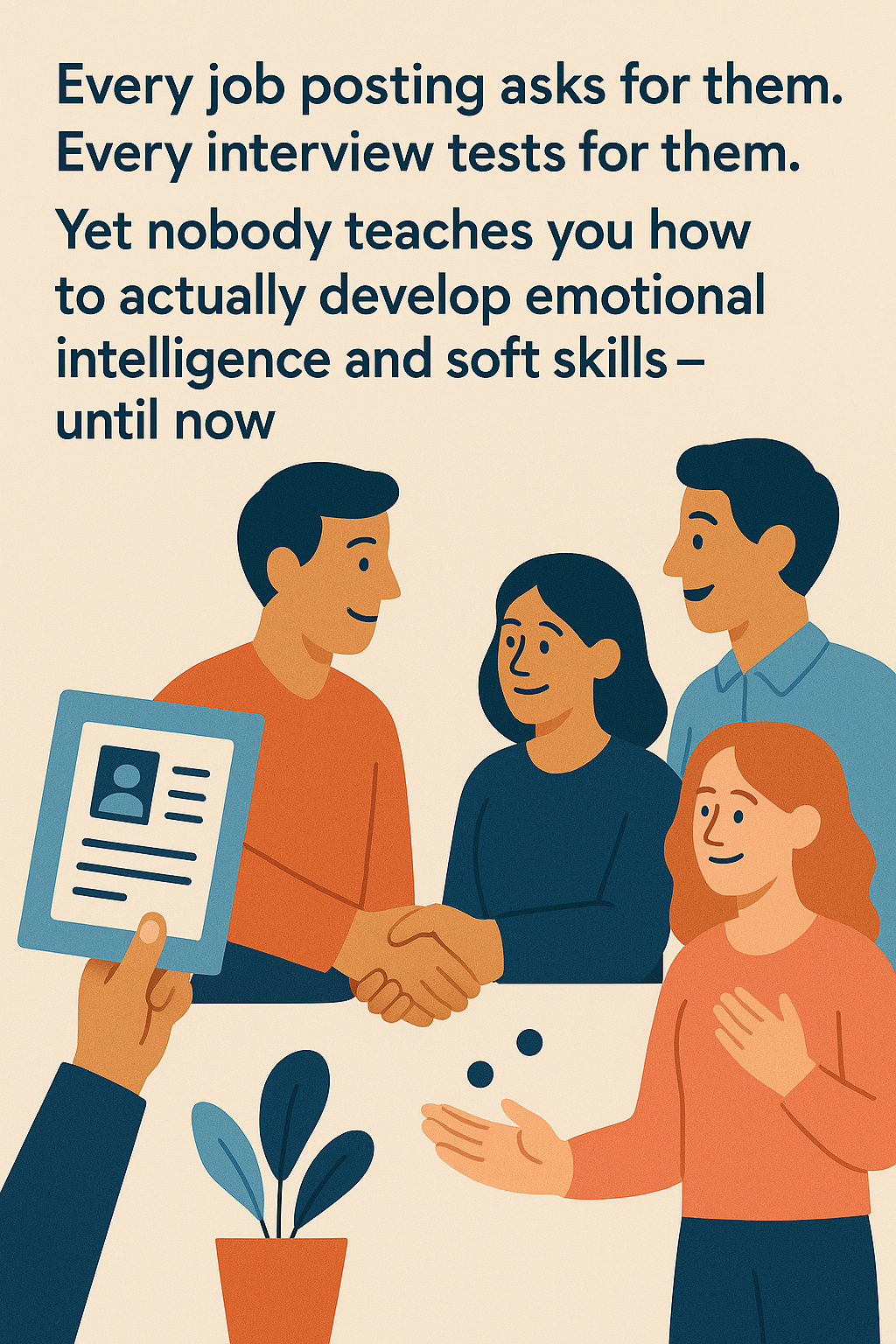
Here's what nobody tells you: Every job posting that asks for "communication skills" or "team player" is really asking if you know how to deal with humans without making them want to quit. And when your Connection & Communication skills are shot, you end up googling "how to network without being weird" at 2 AM. Don't pretend you haven't.
The Five Parts Nobody Explains Properly
OK so emotional intelligence supposedly has five components. I'm going to explain them the way I wish someone had explained them to me before I embarrassed myself in that all-hands meeting in 2019.
1. Self-Awareness (Or: Knowing You're About to Do Something Stupid)
This is that split second before you hit "reply all" with your thoughts about the new expense policy. It's recognizing when your face is doing that thing that screams "I think you're an idiot" while your boss is talking.
The Center-Breath + Label technique is basically just catching yourself and going "oh, I'm about to be an asshole" before you actually are one. Revolutionary, I know.
2. Self-Regulation (The Art of Not Sending That Email)
True story: I once wrote a resignation email that included the phrase "incompetent parade of mediocrity." Felt amazing. Then I used the 2-Minute Reframe—which is literally just waiting two minutes before hitting send. Deleted it. Still have a job.
This isn't about being fake or suppressing your feelings. It's about not letting your amygdala make career decisions for you.
3. Motivation (When Your Only Motivation Is "Rent's Due")
Look, not everyone's passionate about optimizing supply chain logistics. Sometimes you're just trying to make it to Friday. But here's the thing—even boring work connects to something you care about. Maybe it's stability. Maybe it's proving your ex wrong. Maybe it's just not moving back in with your parents.
Find that connection. It makes the TPS reports slightly less soul-crushing.
Actually, you know what? Speaking of TPS reports—why do they always have that one field that nobody knows what it's for? Like, I've been filling out "Project Classification Code" for three years and I'm 90% sure it goes nowhere. Someone in 1987 probably thought it was important and now we're all just... stuck with it. But I digress.
4. Empathy (Your Coworker Isn't Evil, They're Just Scared)
That guy who shoots down every idea in brainstorming? He's not trying to be a dick. He's probably terrified of change because the last three "innovations" got his friends laid off. The micromanager checking in every hour? She's drowning and doesn't know how to ask for help without looking weak.
Once you see the fear behind the behavior, everything changes. You stop taking it personally. You start solving actual problems instead of just bitching about Dave from accounting.
5. Social Skills (The Stuff That Actually Gets You Promoted)
This is the brutal truth: Being good at your job is like being good at homework. Nice, but not enough. You need to navigate the unwritten rules. Build alliances without being a brown-noser. Disagree without being disagreeable.
LinkedIn's data shows companies that focus on these "soft skills" see 40% higher retention. Probably because people stop rage-quitting after meetings.
That Interview Question Everyone Bombs
"Tell me about a time you dealt with a difficult colleague."
The honest answer for most of us? "I avoided them until one of us quit." But here's what they're really asking: Can you work with other humans when those humans are being... human? Can you handle when Steve microwaves fish in the office kitchen for the third time this week without going nuclear?
They want to know if you'll make their life harder or easier. That's it. That's the whole interview.
Your Brain Hates You (Especially in Interviews)
Picture this: You're in the interview. They ask about your experience with project management. You've literally managed projects for five years. Your brain's response? Complete static. Nothing. Zip. Suddenly you're talking about your cat's diabetes.
This isn't because you're dumb. Your amygdala thinks you're being attacked by a predator and shuts down your prefrontal cortex. The If-Then Meeting Plan is just pre-planning responses so your panicked brain has something to grab onto. If they ask about experience, then talk about the Johnson account. Simple. Boring. Works.
Be Honest: Which One's You?
- Brain turns to soup in big meetings
- Can't say no, then secretly hate everyone
- Would rather eat glass than network
- Convinced they hired you by mistake
- Still thinking about that dumb thing you said in 2015
OK But Does This Actually Work?
I get it. Another website promising to fix your life. Next they'll tell you to journal and practice gratitude, right?
But here's the thing—this isn't about becoming a different person. It's about having actual tools for actual situations. Like Sarah (remember bathroom-hiding Sarah?). She learned the Boundary Script: Yes-With-Tradeoff technique. Next networking event, she didn't become an extrovert. She just had a system. Met three people, got two follow-up meetings, only hid in the bathroom once (progress!).
Or Marcus. Sweet, helpful Marcus who did everyone's work and wondered why he never got promoted. Turns out "team player" doesn't mean "doormat." Who knew?
This is skills training, not medical or mental-health treatment.
You Know What You Need to Work On
You've read this far. Something resonated. So what's it gonna be—another year of awkward meetings and missed promotions? Or 30 minutes to actually fix it?