
AI Isn't Taking Their Jobs. It's Hollowing Them Out.
While everyone debates displacement, something quieter and more dangerous is happening to the people who keep their jobs.
Writing this at 🟡Yellow Zone 5. Which you'll be able to tell.
Three articles landed in 24 hours this week and I've been trying to write about them for two days. Jaw's been tight since Tuesday. Fourth coffee is not helping. But the pattern here is too important to wait until I feel sharper, because honestly - I might not feel sharper for a while. That's kind of the whole point.
Here's what hit, in order:
Siddhant Khare, a software engineer, wrote in Business Insider about shipping more code than any quarter in his career while feeling more drained than ever. He didn't lose his job. He lost the ability to care about it.
A TechCrunch piece covered UC Berkeley research: when a 200-person tech company embraced AI, nobody was told to do more. People just... did more. Work bled into lunch breaks. To-do lists expanded past every hour AI freed up.
And Josh Tyrangiel wrote a 10,000-word cover story in The Atlantic asking economists, CEOs, and politicians: does anyone have a plan for what happens next?
I do. But it doesn't start where anyone else is looking.
Everyone's Debating the Wrong Crisis
Tyrangiel's piece is almost entirely about job loss. Displacement. The speed. Economists arguing about whether the labor market adjusts fast enough. It's the right conversation. It's also not the most urgent one.
Because while everyone debates whether AI will take people's jobs, something is already happening to the people who keep them.
Khare still has his job. The Berkeley engineers still have their jobs. Nobody got fired. They got hollowed out. The work changed shape faster than their nervous systems could adapt, and nobody gave them language for what was happening.
Here's what Khare actually wrote: he just stopped caring. Code reviews became rubber stamps. Design decisions became "whatever AI suggests." Producing more than ever. Feeling less than ever.
If this sounds like something you've felt - the output is fine, but something underneath is flattening - you're not imagining it. That gap between performance and engagement is exactly what Capacity Intelligence™ is designed to make visible.
The Governor Is Gone
This is the part I keep circling back to. Before AI, there was a natural ceiling on daily output. Typing speed, thinking speed, the time it takes to look things up. Frustrating sometimes, but also a governor. You couldn't work past your limits because the work itself imposed limits.
AI removed the governor. Now the only limit is cognitive endurance. And most people don't know their cognitive limits until they've blown past them.
The Berkeley researchers confirmed this organizationally. Nobody was told to do more. AI just made more feel doable, so people did more. Then organizations noticed the output and recalibrated expectations around it. The ratchet tightened.
No mechanism to loosen it. Because nobody had language for what was happening.
That sentence is doing a lot of work and I'm too tired to unpack it better. But it's the whole thing, really. The capacity shifted. The access dropped. The skills didn't go anywhere - you already know how to do this work. Stress just blocks access. And nobody has a framework for recognizing that in real time.
This is the Green Zone Trap at organizational scale. Systems designed for people at full capacity, deployed into environments where capacity is systematically being eroded. The tools work. The people using them are running out of bandwidth to use them well.
What Actually Breaks First
Here's what concerns me most. When you operate above sustainable capacity for months, judgment degrades before output drops. You're still shipping. Still answering emails. Still in meetings. But your pattern recognition is compromised. Your empathy is on autopilot. You're making decisions that look productive but are actually the product of a depleted brain doing its best impression of a functional one.
In knowledge work, a bad decision made efficiently is worse than no decision at all.
There's a cleaner version of this argument. More data, tighter structure. Not tonight.
This won't show up in employment data. Won't show up in productivity dashboards. It'll show up in medical visits, prescription numbers, and a general flattening of creativity across entire organizations. The people who embrace AI hardest will be hit first. Because they're the ones voluntarily removing their own governors.
If you're a leader watching your team's output climb while something intangible declines, you're seeing the early stages of what we call a capacity collision. The hidden economics of workplace capacity explain why this pattern costs organizations far more than turnover alone.
Why Reskilling Is the Wrong First Response
Every reskilling proposal - from Reid Hoffman, Gina Raimondo, all of them - shares the same hidden assumption: that the person engaging with it has the cognitive resources to learn. Working memory available. Sustained attention accessible. Executive function online.
Those are exactly the resources that chronic capacity depletion destroys first.
The Sequence Problem
Telling a depleted professional to upskill is like telling someone with a broken leg to run a marathon. The prescription isn't wrong in principle. It's wrong in sequence. Before we can reskill the workforce, we have to restabilize the workforce.
This is why integrated skills training works better than single-method approaches. You can't bolt on new capability when the foundation is cracked. You have to address stress mastery and rest and recovery before cognitive upskilling has anywhere to land.
Switching to shorter paragraphs. Brain's starting to fragment.
What We Actually Built
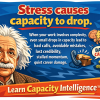
At Emergent Skills, we built a system around Capacity Intelligence™ - the ability to recognize which cognitive zone you're operating in and match your tools to your actual state, not the state you wish you had.
Four zones. 🟢Green Zone: full access to your skills. 🟡Yellow Zone: functional but compensating. 🔴Red Zone: survival mode, where "I just stopped caring" lives. ⚫Can't-Even Zone: system offline.
Khare's essay is a textbook journey through all four. Started 🟢Green Zone - building, shipping, creative. Moved to 🟡Yellow Zone - context-switching six tasks a day, weekends evaluating tools. Landed in 🔴Red Zone - rubber-stamping reviews, going through motions. The Berkeley study documents the same trajectory across an entire company.
Not one person in any of these stories had language for what was happening to them.
We built the language. And the tools that scale to wherever you actually are - not where you think you should be. The Capacity Coach meets you in 🔴Red Zone, when cognition is offline. The Full Reset runs you from nervous-system dysregulation back to functional in four phases. The 90-day curriculum builds the skill over time - but only after your system can handle cognitive work, which is a gate most professional development programs don't even know exists.
Capacity-Aware Design
Every tool scales to four capacity levels. The same intervention that takes five minutes in 🟢Green Zone has a 30-second 🔴Red Zone version and a one-line ⚫Can't-Even Zone version. Because the person who needs it most has the least resources to use it. That's the design problem nobody else is solving.
This approach - neurodivergent-first design - builds for the hardest use case first. Tools that work when you're depleted work even better when you're not.
The Question Nobody's Answering
Tyrangiel ends where he started: with counting. The BLS counts jobs. It doesn't count capacity. Nobody is measuring how many professionals are technically employed and quietly losing access to the cognitive resources that made them good at their jobs.
AI is creating a massive, invisible population of these professionals. They won't show up in BLS data. They won't show up in productivity dashboards. They'll show up in emergency rooms and resignation letters - or worse, they'll never leave. Just slowly flatten into a version of themselves that clocks in, performs, and has stopped caring.
Tyrangiel's asking about the people who lose their jobs. We built for the ones who keep them.
The coach meets you in 🔴Red Zone. The curriculum builds in 🟢Green Zone. The Zones Framework™ tells you which one you're in so you stop guessing.
That's where it starts.
This is more common than people admit.
Before You Can Reskill, You Have to Restabilize
Emergent Skills builds professional development for how your brain actually works - not how it works on your best day.
Start with a free Full Reset or see how it works.
Sources
- Business Insider: "AI fatigue is real and nobody talks about it" - Siddhant Khare
- TechCrunch: "The first signs of burnout are coming from the people who embrace AI the most" - Connie Loizos
- The Atlantic: "America Isn't Ready for What AI Will Do to Jobs" - Josh Tyrangiel
- Harvard Business Review: "AI Doesn't Reduce Work - It Intensifies It"