
20 Stress Strategies That Assume You're Already Fine
A Capacity-Aware Reality Check
Most stress advice assumes you have capacity you don't have. Here's what actually works when your executive function is offline—and why traditional tips fail exactly when you need them.
It's 2:47 PM and I just read twenty stress strategies from Forbes Business Council.
Successful executives. Polished headshots. Advice like "reframe stress as opportunity" and "embrace optimism."
Meanwhile, 44% of us report daily workplace stress—a record high according to Gallup. The other 56% are either lying, in management, or have somehow achieved a level of detachment I can only aspire to.
Here's the thing nobody mentions:
Every single one of those strategies was written by someone reflecting on stress from a calm, resourced state. That's not where you are when you actually need the advice.
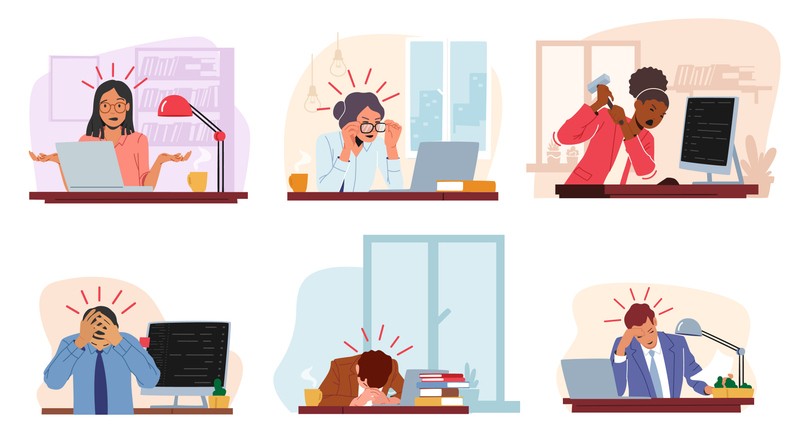
Your ability to implement any strategy depends on your current capacity. And when you're depleted, "pause with intention to reconnect to your purpose" isn't helpful—it's insulting.
That's not a productivity problem. That's a capacity depletion problem.
And nobody's talking about it.
The Problem With Most Stress Advice
I went through all twenty strategies. Rated each one for real-world usefulness. The results are... instructive.
Out of twenty strategies from Forbes Business Council members:
- 3 were actually useful
- 2 work with modification
- 8 have decent principles but wrong timing
- 7 are actively unhelpful
That's a 15% success rate. For advice from successful business leaders specifically about managing stress.
Why?
Because they all share the same fundamental design flaw: they assume you have the cognitive resources to implement them.
These require sophisticated cognitive work. Strategic thinking. The ability to zoom out and analyze patterns. This is all 🟢green zone work
Those are the first things stress takes away.
What Capacity Intelligence™ Reveals
77% of workers have experienced burnout at their current job. Not historically. Not once. At their current job. (Deloitte's been tracking this. It's getting worse, not better.)
This means most employees regularly hit what we call 🔴Red Zone or ⚫Can't-Even Zone🪫 - states where executive function is offline, survival mode kicks in, and "embrace optimism" becomes genuinely funny.
Capacity Intelligence™
Starts with a simple recognition: tools require resources.
Every productivity technique, every stress management strategy, every workplace wellness intervention assumes a certain level of cognitive capacity to implement.
When that assumption is wrong—when you're actually depleted—the tools don't just fail. They make you feel worse. Because now you've failed at the thing that was supposed to help you stop failing.
If this resonates, you might benefit from exploring our approach to motivation and emotional resilience—it's designed for people who are already running on empty.
The Zones Framework™
Or: Why Tuesday Afternoon You Needs Different Tools
Here's how we think about it:
🟢 Green Zone (7-9)
Capacity mode. Focus, empathy, creativity all available. This is where all that Forbes advice works great. This is also maybe 20% of your week if you're lucky.
🟡 Yellow Zone (4-6)
Strain mode. High effort, diminishing returns. You can still think, but it takes more energy. Complex tasks feel harder than they should. This is probably where you spend most of your time.
🔴 Red Zone (1-3)
Survival mode. Just trying not to make mistakes. Executive function largely offline. "Reframe stress as opportunity" might actually make you laugh out loud at this point.
⚫ Can't-Even Zone (0🪫)
System offline. "What's for lunch" feels like calculus. The only appropriate tool is permission to stop.
The problem isn't the strategies. The problem is applying Green Zone strategies to 🟡Yellow/🔴Red/⚫Can't-Even Zone🪫 situations.
The 🟢Green Zone Trap
Why Everything Else Fails
Here's what nobody tells you:
Every productivity system is designed for 🟢Green Zone.
- Morning routines that take 90 minutes of focus
- Meditation apps that require sustained attention
- Time management systems that need executive function to implement
- Stress reframing techniques that require cognitive resources
But most of us live in 🟡Yellow Zone. High effort, diminishing returns. Functional but stretched.
And we regularly hit 🔴Red Zone. Survival mode. Body-first only.
Sometimes we crash into ⚫Can't-Even🪫.
The workplace performance industry has a fundamental design flaw: it assumes consistent capacity.
Result? Tools fail exactly when you need them, creating a vicious cycle:
Depleted capacity → can't use coping strategies → more stress → less capacity → repeat.
This is why wellness programs show 5% utilization. This is why meditation apps have 95% abandonment rates. This is why performance coaching only works for people who aren't burned out.
They're all 🟢Green Zone solutions for 🟡Yellow/🔴Red Zone problems.
When you're ready to break this cycle, our stress mastery approach meets you where you actually are—not where productivity gurus think you should be.
What Actually Works
The 3 Strategies That Survived
From all twenty Forbes strategies, three actually held up under capacity-aware scrutiny:
Get Help Navigating Issues
The advice: Shift from "I have to handle everything" to "who can help?"
Why it works: Recognizing you need help is the first real step. You're offloading cognitive load to someone else. This works in 🟡Yellow and even 🔴Red Zone because you're not trying to solve the problem—you're trying to identify who can.
Capacity-aware enhancement: Build your "who to call" list when you're calm. Include what each person is good for. When stressed, check the list instead of suffering alone. The list-checking is a Smaller tool that works at lower capacity.
Adopt A Stress Budget
The advice: Run a 15-minute premortem when pressure spikes. Ask what might fail, what can be cut, what can be automated.
Why it works: It's specific, actionable, time-boxed, and focused on reduction. It treats stress as a resource to be allocated, not a feeling to overcome.
Capacity-aware enhancement: Make this a team ritual with a trigger: "When X happens, we do the 15-minute premortem." Removing the decision to start is crucial—decision fatigue is real and it hits in 🟡Yellow Zone.
Embrace Imperfection
The advice: Stop chasing perfection. Experiment. Let things fail.
Why it works: Perfectionism is a major stress driver. This is a real psychological shift, not just reframing. Lowering standards is a form of capacity restoration.
Capacity-aware enhancement: Lower standards deliberately when stressed. Decide in advance: "Under pressure, done beats perfect." Give yourself permission in writing. The permission slip is a Tiny tool that works even in 🔴Red Zone.
The Timing Problem
Decent Advice, Wrong Moment
Eight of the twenty strategies fell into this category. Things like:
- "Reframe stress as a signal for opportunity"
- "View stress as a design challenge"
- "Engage in scenario planning"
- "Take action to identify and fix root issues"
These are great for retrospectives. After the crisis. When you're back in 🟢Green Zone and can actually analyze what happened.
During the crisis? They're useless at best, harmful at worst. Trying to do strategic analysis while your nervous system is in threat response is like trying to solve calculus during a fire drill.
Capacity Intelligence says: In chaos, don't analyze. Stabilize. Get safe. The lessons will be there after.
What's In It For You
Immediate Benefit
Stop wasting energy on tools that can't work at your current capacity level. The meta-skill is knowing which tool matches which state.
Tactical Benefit
Know which tools match your Tuesday-afternoon brain versus your Saturday-morning brain. Different capacity states need different interventions.
Strategic Benefit
Capacity Intelligence™ is the meta-skill that makes every other skill accessible. Can't use emotional regulation techniques? That's not failure—that's 🔴Red Zone. Recognize it, use a body-first tool, get back to 🟡Yellow, then use regulation.
The WHO says every $1 invested in mental health intervention returns $4 in productivity. But what you really get back is access to skills you already have.
You already know how to communicate clearly, manage time, set boundaries. Stress just blocks access. Capacity Intelligence™ removes the block.
That's the difference between a thermometer (tells you the temperature) and a thermostat (tells you the temperature and does something about it).
If you're struggling with the communication part specifically, our connection and communication skills pillar is designed to work even when your social battery is drained.
The Part Where I Get Mad
Low engagement costs the global economy $8.8 trillion annually. That's not a typo. Trillion with a T. About 9% of global GDP.
And the solution? Twenty Forbes executives telling depleted workers to "embrace optimism" and "reframe stress as opportunity."
That's not a wellness problem. That's a capacity crisis being treated with 🟢Green Zone advice.
The workplace performance industry has been selling solutions designed for people who don't need them.
The people who can implement sophisticated stress reframing techniques are not the people struggling with stress.
It's like selling running shoes to people with broken legs and then blaming them for not running.
The Bias Nobody Mentions
All twenty of those Forbes executives fell into the same trap: survivorship bias.
They're successful. They managed stress. Therefore their strategies work.
But we don't hear from the people who tried "reframe stress as opportunity" and burned out anyway. We don't hear from the people who "embraced optimism" and crashed. We only hear from survivors.
And survivors tend to attribute their success to their strategies rather than their capacity.
Maybe they succeeded despite those strategies. Maybe they had capacity reserves - 🟢Green Zone time, support systems, resources—that allowed them to implement sophisticated cognitive work under pressure. That's not a replicable strategy. That's privilege dressed up as productivity advice.
The Real Question
Every strategy assumes you have the cognitive resources to implement it.
But what do you do when you don't?
That's not a failure of willpower. That's a design problem.
Stress depletes the very resources you need to manage stress. Any strategy that ignores this is built for people who don't actually need it.
The first question isn't "How do I reframe stress?"
It's "What's my actual capacity right now - and what can I realistically do with it?"
Start there.
The Part Where I Demonstrate What I Just Said
I could end this with something inspirational. A neat bow. "You've got this."
But I just got a Slack notification mid-paragraph and completely forgot where I was going. Classic 🟡Yellow Zone moment. Brain's stretched. Complex conclusions feel harder than they should.
Which is... actually the point?
Capacity Intelligence™ isn't about being perfect. It's about recognizing "I just got derailed" as a zone signal, using a capacity-appropriate tool, and continuing.
Most people would beat themselves up for losing focus. That takes you from 🟡Yellow to 🔴Red.
[30 seconds later]
Cold water on wrists. Three breaths. Quick walk to kitchen. Back at 🟡Yellow 4. Can finish this now.
That's operationalized self-awareness™.
Not watching yourself struggle. Doing something about it.
Start Here
→ 30-Minute Crisis Reset (Free, unlimited, works at 3 AM)
→ Learn The Zones Framework™ (The foundation for Capacity Intelligence™)
→ Full Subscription (All 10 Life Skills Pillars + AI coaching)
Or just type "reset" when you need it.