
Why "Just Focus Harder" Is the Cruelest Advice You Can Give an Exhausted Person
The productivity tips everyone shares assume you have capacity you've already told them you don't have. Here's what actually helps when you're running on empty.
A Reddit post stopped me mid-scroll last week. Not because it was profound. Because I recognized it.
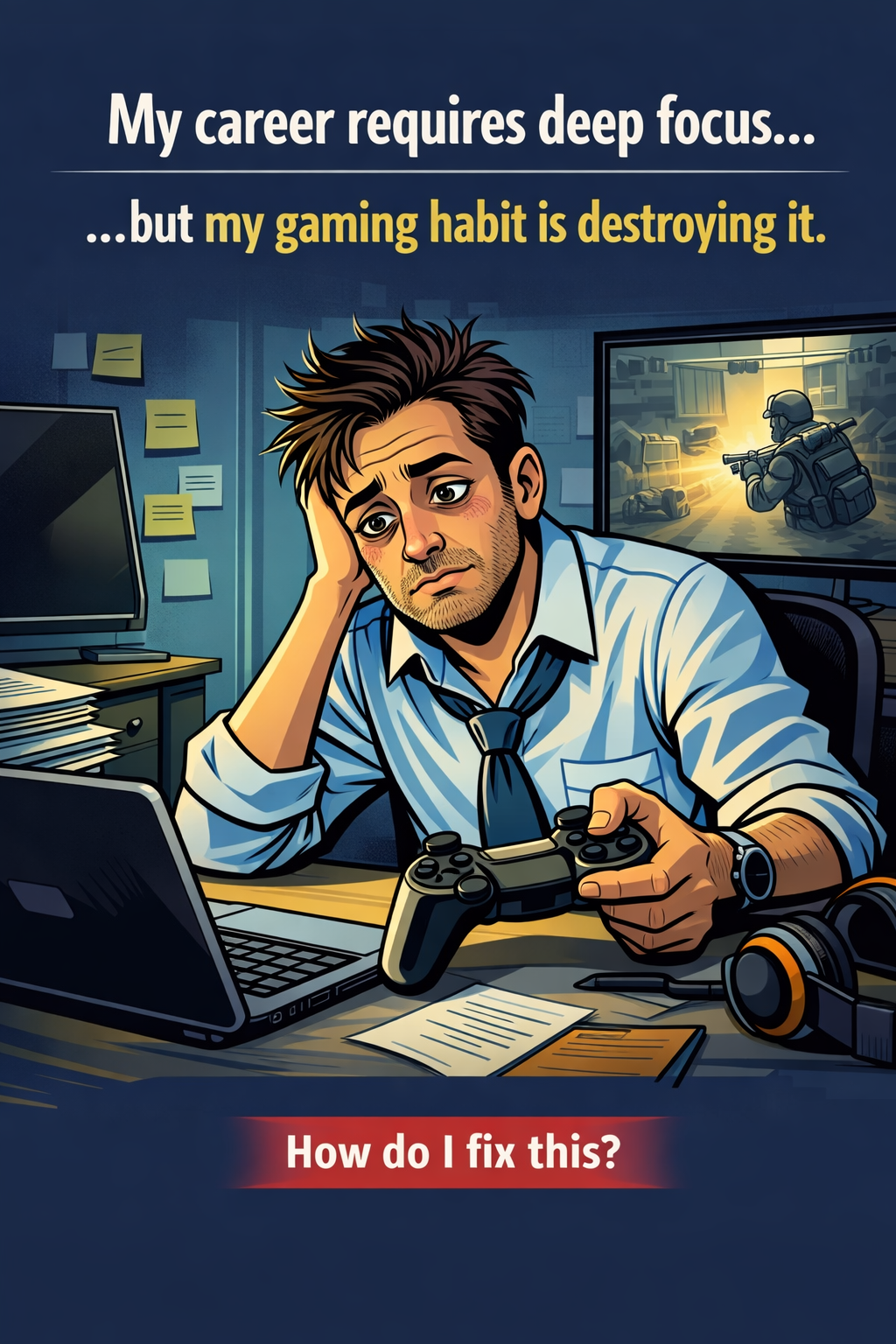
"I'm standing at a crossroads," someone wrote. "My career requires deep focus, but my gaming habit is destroying it."
They described playing Raid: Shadow Legends - one of those mobile games designed around clicking "auto" every 1-5 seconds. They knew it was fragmenting their attention. They knew it was hurting their work. But here's the line that everyone in the comments sailed right past:
"The thought of quitting makes me feel incredibly empty - like life lacks meaning without it."
Thirty-plus people jumped in with advice. Delete the game. Hit the gym. Dopamine detox. Cold turkey. Use gaming as a reward for productivity.
Every. Single. Response. Missed the point.
The Advice Isn't Wrong. It's Impossible.
Here's what I've learned after 50 years building coping mechanisms for my own ADHD brain: the advice isn't bad. It's designed for people who aren't already running on fumes.
"Delete the game cold turkey" requires willpower. Willpower is a capacity resource. This person just told you they can't focus for more than 60 seconds. They don't have willpower to spare.
"Replace gaming with exercise" sounds logical. But exercise initiation requires more mental energy than opening an app already on your phone. You're asking someone drowning to swim to a farther shore.
"Use gaming as a reward after work" requires executive function - sequencing tasks, delaying gratification, self-monitoring. Executive function is the first thing to collapse when you're depleted.
Every piece of advice in that thread assumed the person had capacity they'd already told everyone they didn't have.
That's the Green Zone Trap. And 44% of professionals are caught in it every single day according to Gallup's workplace research.
What's Actually Happening Here
This person isn't lazy. They're not weak. They're not "addicted to gaming" in the way most people mean it.
They're in what I'd call a depleted state — 🔴 Red Zone, maybe sliding toward ⚫ Can't-Even - running on such low capacity that their brain has latched onto the one thing that still provides any neurological reward at all.
And unfortunately, they picked a game engineered to keep them there.
Raid: Shadow Legends didn't become a billion-dollar game by accident. The 1-5 second click loops, the auto-play interruptions, the constant micro-rewards — these mechanics were designed by people who've spent millions studying how to hijack exhausted brains. The game doesn't fill you up. It keeps you on life support.
The Closed Loop
The cruel irony: the more you play, the less capacity you have. The less capacity you have, the more you need the game. It's not a hobby. It's a closed loop.
And here's the part that actually breaks my heart: This person knows something is wrong. They correctly identified that the game is "fragmenting their attention." They understand the mechanism. But they've internalized it as a personal failure — proof that they can't "handle adult life."
The shame is making everything worse.
Why Shame Accelerates the Collapse
When you're already depleted and you add shame to the mix, something predictable happens: you lose even more capacity.
Shame is expensive. It takes mental energy to carry. It triggers your threat response. It makes your world smaller as you hide the things you're ashamed of. And it drives you toward numbing behaviors, not away from them.
"I feel weak for not being able to balance both."
That sentence is doing more damage than the game itself. Because now every time they click "auto," they're not just fragmenting their attention - they're confirming a story about their own inadequacy. The game becomes evidence of their brokenness.
No one builds sustainable change from that foundation.
77% of workers have experienced burnout at their current job, per Deloitte research. Most of them are probably telling themselves a version of this same story. If this resonates, exploring motivation and emotional resilience might be a useful next step.
What Would Actually Help
If I could talk to this person directly, I wouldn't tell them to delete the game. Not yet. Here's what I'd say instead:
Stop calling it a balance problem
You're not failing to balance gaming and work. You're depleted, and you found the one thing that numbs the depletion. That's not weakness. That's your nervous system doing its job — finding something that provides relief. The problem isn't that you found relief. The problem is that this particular relief is making things worse.
Run one experiment
Don't quit gaming. Just switch to a different game for one day — something with no time pressure, no click loops, no mechanics designed to interrupt you. Stardew Valley. A single-player RPG you can pause forever. Factorio, if you want something that actually engages problem-solving. See how you feel at the end of that day. Not "more productive" — just less fragmented.
Notice what fills versus what numbs
This is the distinction that changes everything. Numbing feels like relief in the moment but leaves you emptier. Filling might require more activation energy, but you end with more than you started.
Address the capacity issue directly
The focus problem isn't going to be solved by removing the game. The game is a symptom. Something is draining you — maybe work, maybe life circumstances, maybe an unaddressed attention issue, maybe all of these. Until you address the drain, you'll just find another numbing behavior to replace this one. This is where focus and self-management skills become essential.
The Uncomfortable Truth About Productivity Advice
Most productivity advice is written by 🟢 Green Zone people, for Green Zone people.
It assumes you slept well. It assumes you're not carrying chronic stress. It assumes your executive function is online. It assumes you have capacity to spare for implementing the advice.
For everyone else — the exhausted, the overwhelmed, the people white-knuckling through their days — the advice isn't just unhelpful. It's harmful. Because when it doesn't work, you don't blame the advice. You blame yourself.
You add "can't even follow simple productivity tips" to your list of failures. The shame compounds. The depletion deepens.
This is why Capacity Intelligence™ matters. Not knowing what you should do when you're at your best. Knowing what's possible from where you actually are right now.
The person on Reddit doesn't need to delete their game and start going to the gym. They need to find one small thing that actually restores them instead of just numbing them. They need to stop adding shame to an already empty tank. They need to understand that they're not broken — they're running a good operating system with the battery at 3%.
You don't fix a 3% battery by downloading a productivity app. You plug in the charger.
Ready to Understand Your Real Capacity?
Stop forcing yourself to work from a zone you're not actually in. Learn to recognize where you are and what's actually possible from there.