
Gen Z Isn't Fragile. They're Just The First Ones Honest About Running On Empty.
44% of employees report daily workplace stress. The other 56% are either lying, in denial, or have figured out some secret I desperately want to know.
It's 10:43 PM and I'm writing about Gen Z burnout while experiencing what I can only describe as Yellow Zone brain fog. Which feels appropriate.
There's this narrative, right? Gen Z can't handle work. They're soft. They need constant validation. They expect too much.
44% of employees report daily workplace stress. Gallup says that's a record high. The other 56% are either lying, in denial, or have figured out some secret I desperately want to know.
Gen Z isn't failing at work. They're running out of capacity inside systems that pretend capacity is infinite. And honestly? That's not weakness. That's just math.
The Part Where I Explain What I Mean By Capacity
Okay so. Capacity is your actual available bandwidth. Mental, emotional, physical. It fluctuates. Hour to hour sometimes.
When it drops low enough, predictable things happen: thinking gets fuzzy, decisions feel impossible, you read the same email four times, and motivation just... leaves.
We call that capacity collapse. The Zones Framework™ gives it structure:
The Four Zones
- 🟢 Green Zone: Clear thinking, empathy available, can actually learn things
- 🟡 Yellow Zone: High effort, diminishing returns, stretched
- 🔴 Red Zone: Survival mode, just trying not to make mistakes
- ⚫ Can't-Even🪫: System offline, "what's for lunch" feels like calculus
Burnout isn't a character flaw. It's what happens when demands consistently exceed available capacity. Which brings me back to Gen Z.
Why They're Hitting The Wall Earlier
Gen Z entered the workforce under conditions that keep people out of Green Zone basically constantly:
Pandemic disruption. Fragmented hybrid work nobody knows how to do well. Minimal informal learning because you can't learn culture over Zoom. Constant digital interruption. Rising cost of living with unstable payoffs. Early exposure to AI making their future feel genuinely uncertain.
In capacity terms: Many Gen Z workers never got to stabilize in Green Zone. They started careers already in Yellow—stretched, effortful—and slipped into Red before they had time to build recovery skills or any kind of buffer.
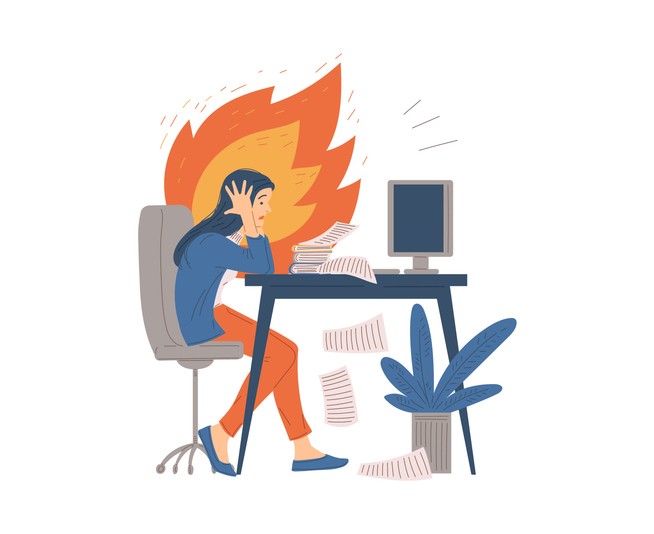
That's not fragility. That's a system running people hot from day one and then acting surprised when they overheat.
76% of workers report experiencing burnout. That's across all generations. Gen Z and Millennials show the highest levels, but this isn't a generational problem. It's a capacity problem that lands hardest on whoever has the least protection. If you're struggling with the weight of it all, building motivation and emotional resilience becomes essential—not as another demand, but as protection.
"But How Can You Be Burned Out At 23?"
I hear this a lot. Usually from people who think burnout is about years served.
It's not. It's about rate of depletion versus rate of recovery.
If you're operating under constant ambiguity, juggling financial stress, context-switching all day, expected to self-regulate without support, given minimal control or feedback...
Your capacity drains faster than it can recover. The math doesn't care how long you've been working.
Mileage doesn't matter when capacity never replenishes.
Low engagement costs the global economy $8.8 trillion annually. That's trillion with a T. That's the cost of asking Yellow Zone people to do Green Zone work and then blaming them when it doesn't happen.
What Looks Like Weakness Is Actually Early Pattern Recognition
Here's something I've noticed. Gen Z is more likely to say:
"This doesn't feel sustainable."
"I can't think clearly anymore."
"Something's off."
Previous generations—my generation—often normalized Red Zone living and paid for it later. Health problems. Burnout at 45. Disengagement nobody talks about.
Gen Z is naming the capacity problem sooner. They don't have all the tools yet. But they're noticing the signal.
That's not fragility. That's early operationalized self-awareness.
They're recognizing their zone before the crash instead of after. Which is literally what Capacity Intelligence™ asks people to do.
The System Problem (Not The Gen Z Problem)
Most workplaces are designed around a false assumption: People operate in Green Zone by default.
They don't. Real humans move through zones all day. Sometimes hour by hour.
When organizations ignore this:
- Learning fails (can't learn in Red Zone)
- Leadership falters (depleted managers can't support anyone)
- Engagement drops (why try when you're running on fumes)
- Burnout rises (obviously)
The Real Numbers
77% of workers globally are disengaged. Seventy-seven percent. Only 23% are actually engaged.
A system that collapses Gen Z capacity will eventually collapse everyone's. They're just the early warning system.
What Changes This
The workplace performance industry has a fundamental design flaw: it assumes consistent capacity.
Morning routines that take 90 minutes of focus. Meditation apps that need sustained attention. Time management systems requiring executive function to implement. Emotional regulation techniques that cost cognitive resources.
All Green Zone solutions for Yellow/Red Zone problems.
Capacity Intelligence™ Is Different
It's the ability to:
This isn't about lowering standards. It's about making performance possible again.
Design for Can't-Even Zone and scale up → tools work for everyone.
Design for Green Zone and scale down → tools work for nobody under stress.
That's why the framework is neurodivergent-first by design. What neurodivergent people experience as Tuesday, neurotypical people experience during burnout. And when stress starts following you home, these same principles apply to protecting your boundaries.
The Part Where I Realize This Post Got Long
I started writing this in Yellow Zone and I'm definitely sliding toward Red now. Quality's probably degrading. Paragraphs getting shorter.
That's a capacity signal. Not failure. Information.
If I were following my own advice I'd stop here and do a 30-second reset before pushing through. Cold water on wrists, three deep breaths, maybe walk to the kitchen.
Actually. Hold on.
[30 seconds later]
Okay. Still Yellow but less muddy. Can finish this.
The Bottom Line
Gen Z isn't burning out because they're weak.
They're burning out because capacity is being ignored. Because systems are misaligned with how humans actually work. Because the cost lands hardest on whoever has the least protection and the least power to change anything.
Gen Z isn't the problem. They're the canary in the coal mine.
And if organizations could stop blaming them for noticing the problem and start actually building capacity-aware systems, work might function again. For everyone.
Every $1 invested in mental health intervention returns $4 in productivity. WHO says that. But what you really get back isn't just productivity—it's access to skills people already have but can't reach under stress.
That's the real ROI. Skills they already have. Access they don't.
If Any Of This Resonated
You don't need to be okay to start. That's kind of the whole point.
Try a 30-Minute Reset
Free, works at 3 AM, doesn't require you to be okay
Learn the Zones Framework™
Or just type "reset" when you need it. That works too.
Written in Yellow Zone, edited in Green Zone the next morning. You can probably tell which parts are which.