
Your Social Life

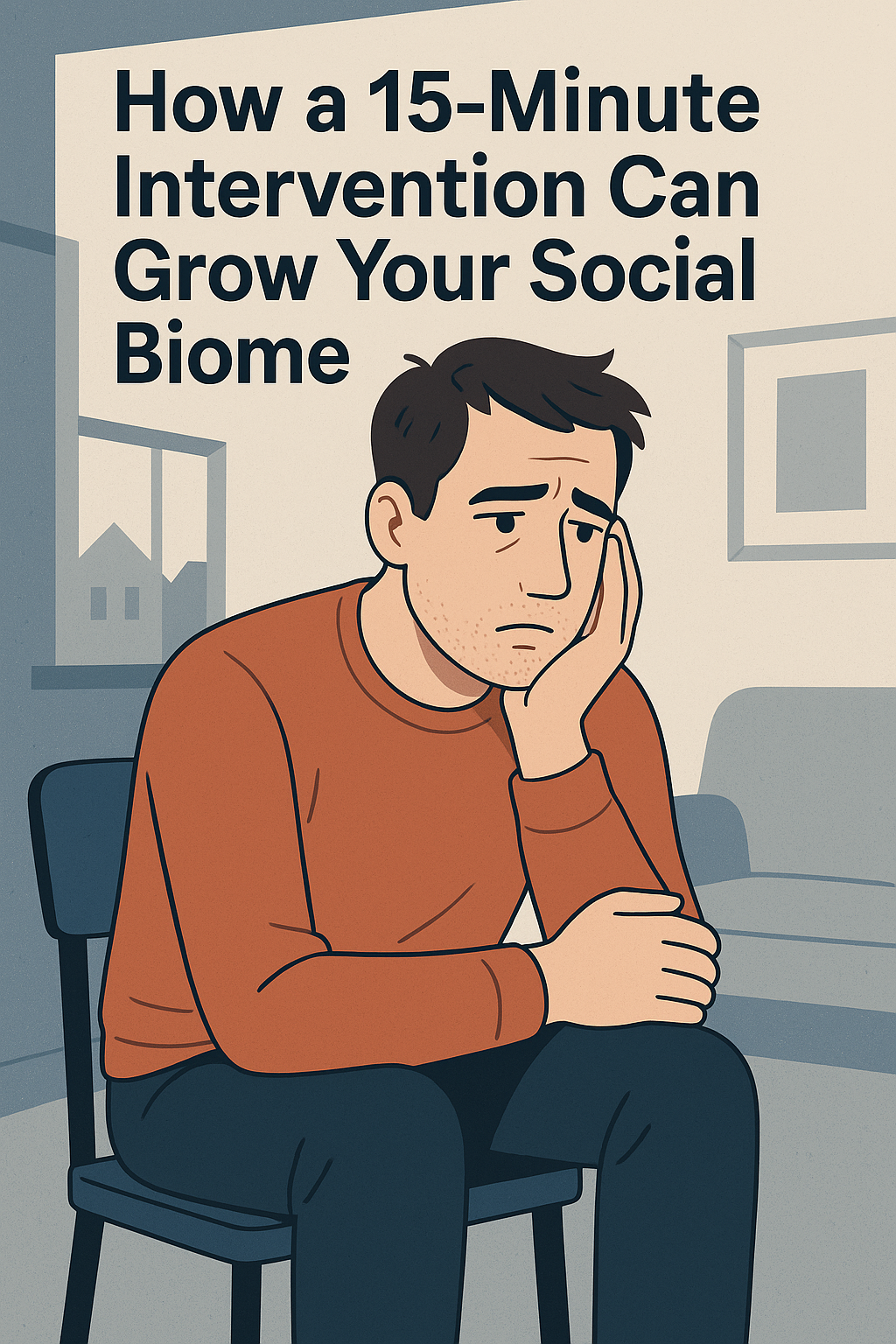
lonely isolating man

I've Been Ghosting My Work Friend's Lunch Invite for Three Weeks

Maya from RevOps sent "Lunch Thu?" on Aug 12 at 10:14 AM.

I typed "Totally—" three times. Never hit send. Now it's December 3rd and I'm eating another sad desk salad pretending to be "slammed."

The stupid thing? I actually like Maya. She's the only person who laughs at my jokes about our garbage CRM. But I wanted to suggest the perfect spot and time, then overthought it, then it got weird, and now here we are.

Start Your Free Session → Level Up My Career →

Why Your Work Relationships Feel Like They're Dying

I was awake at 3:07 a.m. (always 3:07, never 3:00) reading about this thing researchers call social ecosystems. Basically they figured out your relationships at work are like... okay this sounds dumb but hear me out... like a garden that needs different types of plants to survive.

Turns out you need a mix of people at work to not lose your mind:

  • Actual friends (the Maya types)
  • Casual "how was your weekend" people
  • That security guard who knows your name
  • Even the fish microwaver (why do they always exist?)

I learned this the hard way when I worked remote for six months and only talked to my cat. Started narrating everything. "Making coffee. Coffee hot. Hot coffee good." My partner gave me concerned looks. Turns out you need actual coworkers to stay normal.

Apparently talking to actual humans is a life skill. Who knew.

The Thing That Helped

So there's this AI coach that taught me something stupidly simple. When my chest gets tight and I'm about to bail on plans, I press the center of my sternum for ten seconds while breathing out slow.

Sounds fake but it interrupts the spiral. Works maybe 70% of the time, which beats my previous strategy of hiding in the bathroom pretending to take a call.

The coach also made me face this uncomfortable truth: I'm avoiding people because I feel awkward about previously avoiding them. It's the dumbest cycle. Like:

  1. Miss one lunch because legitimately busy
  2. Miss another because now it feels weird
  3. They stop asking
  4. Convince yourself they hate you
  5. Eat desk salads forever

Actually wait, that's too organized. Real version:

Work gets insane. You skip lunch. Then again. Soon you're that person eating hummus at their desk scrolling LinkedIn while the lunch crew walks past. They asked twice more after I bailed. I said "crazy week, next time!"

There was no next time.

What nobody tells you about workplace loneliness: everyone else looks like they have their work friendships figured out.

They're laughing in the kitchen. Going to happy hours. Having those easy Monday morning "how was your weekend" chats.

Meanwhile you're reheating leftovers alone, wondering when you became the office hermit.

What I didn't realize until recently: Maya was eating yogurt parfaits at her desk too. For THREE MONTHS. We were both sitting 50 feet apart, feeling weird about reaching out, eating sad desk meals.

The research I found at 3:07 AM said something like most professionals want more workplace connections but don't know how to build them. I'd give you the exact stat but honestly I was pretty tired and it might have been 87% or 94% or who knows.

Point is: we're all sitting at our desks wanting friends but feeling too awkward to try.

The Stupidly Simple Plan That Worked

Week 1

Asked the security guard about his weekend. He told me about his grandson's birthday party for like ten minutes. I know nothing about five-year-olds but I nodded a lot. Felt like a human again.

Week 2

Finally sent Maya one Slack: "miss our lunches! tacos at Lito's tuesday?" with a taco emoji.

She immediately responded: "OMG YES FINALLY 12:15?"

Panicked. Did the chest press thing. Went anyway.

Week 3

We bitched about the new expense system for 45 minutes straight. She admitted she'd been eating desk yogurt since September. I told her about my desk salad shame. We laughed until my stomach hurt.

Remembered why work friends matter—they GET the specific hell of your workplace.

Week 4

Made it weird by suggesting recurring Tuesday lunches. She said "thank god someone finally suggested structure." Now we have a standing lunch thing and I eat vegetables with another human present.

The part where I admit this is still hard: I still panic sometimes. Last Tuesday I almost cancelled because I convinced myself I had nothing interesting to say. Did the sternum thing. Showed up. We talked about how the printer is possessed by demons for 40 minutes.

Your work relationships don't need to be perfect. Mine definitely aren't.

Sometimes I still eat at my desk. I still feel awkward at team happy hours. I definitely ghosted the office book club WhatsApp.

But I'm trying? And I have this chest pressure thing now for when anxiety hits. And Maya and I have this running joke about the CRM that makes Mondays slightly less terrible.

Just Send the Damn Message

If you're reading this at 3 AM while dreading tomorrow's office interactions, here's your homework:

Pick one work person. Send them literally anything:

  • "coffee thursday?"
  • "miss our chats"
  • A meme about that meeting everyone hated
  • "hey—lunch at [place] tue or thu? 12:15?"

That's it. That's the start.

They'll probably say yes immediately because they're also tired of eating alone while pretending to read important emails.

Maya's Slack sat unopened for 113 days. Now it's standing taco Tuesdays.

That's it. Don't overthink it. Just hit send.
Start Your Free Session →

Start Free 30-Minute Reset 

Life Skills - Emotional Intelligence - Soft Skills

The Emergent Skills Program (Yeah, There's Actually a Method to This)

Look, I get it. Another program. Another system. But here's the thing — these 10 pillars? They're literally everything that's been kicking my ass for years, organized into something that actually makes sense. Especially when you're stuck in 🟡 Yellow Zone at 2 PM wondering why basic tasks feel like calculus.

Here's what nobody tells you: tools require resources you don't always have. That's not a character flaw. That's capacity depletion. And it's why we built everything around Capacity Intelligence™ — the ability to recognize what you actually have to work with and match tools accordingly.

Thirty minutes to stop the spiral. Thirty days to start the fix. Stick around longer if you want to actually master it. Works even when you're 🔴 Red Zone. Maybe especially then.

So I discovered something at 3 AM last Tuesday. Every single panic spiral, every frozen presentation moment, every "why can't I just DO THE THING" — it all fits into one of these 10 categories. And apparently LinkedIn says these are the exact skills that get people promoted? Wild.

The kicker: We use AI coaches exclusively. No awkward video calls with Brad the life coach at 7 AM. Just you, your brain, and an AI that remembers your specific flavor of panic. Plus it scales to whatever Zone you're in — full version when you're 🟢 Green, tiny version when you're Red and just trying not to cry in the bathroom.

That's Capacity Intelligence™ in action: recognizing your actual resources in real-time and using capacity-matched tools instead of forcing Green Zone solutions on a Red Zone brain.

OK So Here's What Nobody Tells You

Every single one of these skills? Connected. Fix your sleep, suddenly you can focus. Manage stress, confidence goes up. It's like your brain has been playing life on hard mode and someone finally showed you the settings menu.

The real secret? All these skills are about moving up through the Zones. Spending more time in 🟢 Green, less time in 🔴 Red, knowing what to do when you're stuck in 🟡 Yellow.

That's Capacity Intelligence™: operationalized self-awareness. Not just watching yourself struggle — doing something about it.

The Zones Framework™ — Your Capacity Intelligence™ Operating Manual

Here's what most productivity advice gets wrong: it assumes you're always at peak capacity. Morning routines, meditation apps, time management systems — all designed for Green Zone brains with cognitive resources to spare.

But 44% of professionals report daily stress at work. That means nearly half the workforce is regularly operating in Yellow or Red Zone. Tools designed for Green Zone fail exactly when you need them.

  • 🟢 Green Zone (7-9): Capacity mode — focus, empathy, creativity all online. Full tools work here.
  • 🟡 Yellow Zone (4-6): Strain mode — high effort, diminishing returns. Need simpler, right-sized tools.
  • 🔴 Red Zone (1-3): Survival mode — executive function offline, body-first tools only.
  • Can't-Even Zone (0🪫): Shutdown — system offline. Rest is the only intervention.

Every tool in Emergent Skills scales to your Zone. Because "just do better" doesn't work when your nervous system's in survival mode. That's not motivation failure — that's asking Yellow/Red Zone people to use Green Zone solutions. Capacity Intelligence™ breaks the cycle.

What Is Capacity Intelligence™?

It's the meta-skill that makes every other skill accessible. The ability to:

  1. Recognize your actual resources in real-time (Zone awareness)
  2. Match tools to your current state, not where you "should" be
  3. Measure if it worked (the feedback loop everyone skips)

This isn't self-awareness. It's operationalized self-awareness — observation + strategic action + validation. Not a thermometer (tells you the temperature). A thermostat (tells you the temperature AND does something about it).

The Emotional Intelligence Part

  • Finally understanding WTF you're feeling. Red? Yellow? Green? Changes everything. That's Zone awareness.
  • Not letting emotions hijack your whole day. Recognizing Red Zone spirals before they eat your afternoon.
  • Reading rooms without being creepy. Sensing other people's Zones equals social intelligence.
  • Navigating office politics like an adult. Requires Yellow/Green minimum.

The Career ROI Part

  • Showing up consistently. Bare minimum, still counts. Yellow Zone reliability beats Red Zone heroics.
  • Speaking without your voice shaking. Yellow/Green vocal control equals executive presence.
  • Being the calm one when shit hits fan. Staying Green while everyone else goes Red. That's Capacity Intelligence™.
  • Actually collaborating, not just cc'ing.

The Science-y Part

  • Your patterns aren't your personality. They're just Red Zone survival habits that stuck.
  • Interrupting spirals before they start. Catching Yellow before it crashes into Red. Operationalized self-awareness.
  • Techniques based on actual research. Polyvagal theory equals Zones Framework™ in fancy language.
  • Building new neural pathways. Teaching your nervous system Green exists.

McKinsey says improving workplace health could unlock $3.7–11.7 trillion in global value. For you? More energy, better focus, being the one who gets tapped for opportunities while everyone else is burning out.

You're in Green/Yellow while the competition's stuck in Red. That's not talent. That's Capacity Intelligence™.

The AI coach doesn't judge when you practice the same anxiety technique 47 times at 3 AM. No awkward "how does that make you feel" conversations. Just you, figuring out how to stop self-sabotaging, one 30-minute session at a time.

And it scales to your Zone. Full coaching in Green, bite-sized basics in Yellow, survival mode scripts in Red. Because you can't "think positive" your way out of a nervous system state, but you can give it capacity-matched tools.

Pick Your Biggest Problem & Start Fixing It

Thirty minutes to stop the spiral. Thirty days to start the fix. Stick around longer to master it. 
(Works in any Zone. Especially the bad ones.)

Learn the Zones Framework™ →  |  Explore Capacity Intelligence™ →  |  See the Research →

Start Free 30-Minute Reset