
Fortune Says Professionals Can't Think Anymore. They're Half Right.
The real crisis isn't a "skills gap." It's a capacity collapse—and nobody has a name for it yet.
I read the Fortune headline three times before it registered.
Not because the words were complex. Because I was in 🟡Yellow Zone - functioning, technically, but my working memory kept dropping the thread. Which is kind of the point of everything that follows.
The article, published December 12, 2025, reported something that made corporate leaders very uncomfortable: executives fear professionals can no longer think critically in an AI-accelerated workplace.
The Protiviti/NC State survey behind it—1,540 board members and C-suite executives across the globe—ranked talent challenges as a persistent top-tier risk. Not because people lack credentials. Not because training budgets are thin. But because, somehow, smart professionals seem unable to deploy the judgment, learning capacity, and strategic thinking their roles demand.
And honestly? They're not wrong about the observation.
They're just wrong about the cause.
The Part Nobody's Naming
"Knowledge is sort of now free in some ways. Thinking now has to really kick in."
That's Dr. Mark Beasley, professor at NC State, who's been running these surveys for 14 years. When Fortune asked if he was worried about a "thinking gap," he said yes. As a university professor, yes he was.
What nobody asked—what nobody seems to be asking—is why.
The explanation everyone's defaulting to is a skills gap. Training deficiency. Generational softness. Whatever lets you blame the individual.
But that doesn't track.
The people being described aren't entry-level. They're mid-career professionals—educated, experienced, capable—doing exactly what they've always done. Just under radically different conditions.
44% of professionals report daily workplace stress—a record high, according to Gallup's 2024 global data. 76% say stress negatively affects their mental or physical health. 77% of workers worldwide are disengaged.
These aren't people who never learned to think. These are people whose capacity to think has been systematically depleted by the conditions under which they're expected to perform.
Big difference.
What Capacity Depletion Actually Is (And Why Everyone's Missing It)
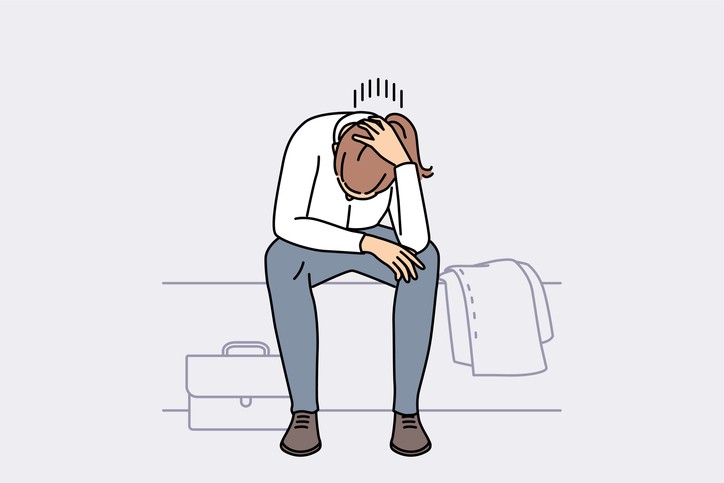
Let me get specific.
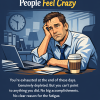
Capacity depletion isn't burnout, though they're related. It's the state where your cognitive resources—working memory, executive function, emotional regulation—are running at deficit. Where the brain can't reliably access skills that are technically present.
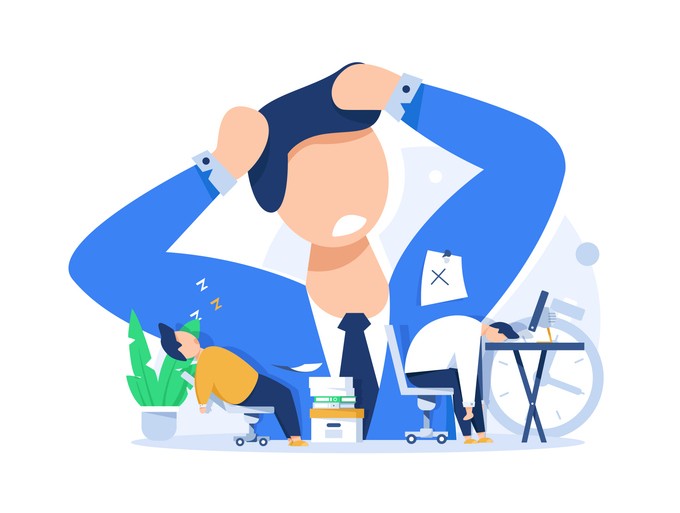
You know how to think strategically. You've done it a thousand times. But at 3 PM on Tuesday, after six hours of context-switching between Slack, email, meetings, and whatever AI tool your company just deployed without training—you can't access that skill.
Not because you forgot how. Because the resources required to execute it aren't available.
The Protiviti survey actually captures this without naming it. When asked about AI priorities, 29% of executives cited "equipping our workforce to realize AI's value proposition" as a top concern. 31% cited integration challenges. 28% cited "inability to deploy AI at a competitive pace."
Read that again: Executives are worried their people can't absorb, integrate, and deploy new capabilities fast enough. But nobody's asking whether the humans have the cognitive capacity to do so.
They're just adding more tools, more training, more expectations—to people who are already running on fumes.
The Hidden Cost
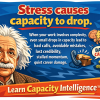
Low engagement costs the global economy $8.8 trillion annually. That's not a training problem. That's a capacity crisis. If you're feeling the weight of workplace demands crushing your ability to function, you're not alone—and understanding how stress depletes your capacity is the first step toward reclaiming it.
The 🟢Green Zone Trap (Why Workplace Training Fails)
Here's the thing nobody tells you:
Every workplace development solution is designed for 🟢Green Zone.
🟢Green Zone is when you're rested, resourced, and ready to learn. When executive function is online. When you can absorb a 90-minute training module and actually retain something.
But most professionals don't operate in 🟢Green Zone. They're in 🟡Yellow Zone - high effort, diminishing returns. Functional but stretched. Still hitting deadlines, but every task takes twice the cognitive energy it should.
And regularly, they're in 🔴Red Zone - survival mode, body-first, where strategic thinking isn't just difficult, it's physiologically unavailable. The prefrontal cortex literally downregulates under chronic stress. You're not choosing not to think critically. The hardware isn't running that program right now.
So when Fortune quotes executives worrying that "the path from entry-level to middle management has been disrupted," they're describing a real phenomenon. AI is automating the grunt work that used to build expertise through repetition.
But the deeper disruption isn't about automation. It's about the conditions under which people are expected to develop higher-order capabilities while their capacity to do so is being actively degraded.
You can't learn strategic thinking in 🔴Red Zone. You can't integrate new AI tools in ⚫Can't-Even Zone🪫. And asking depleted people to perform at peak capacity without ever addressing the depletion—that's not a skills gap. That's a design flaw.
The Missing Framework: Capacity Intelligence™
I built Mind Hack Lab because I watched myself fail to use tools I knew I had.
Not tools I hadn't learned. Tools I'd used successfully hundreds of times—emotional regulation techniques, strategic planning frameworks, communication skills. Techniques that worked beautifully in 🟢Green Zone and became completely inaccessible the moment I needed them most.
What I realized: skills are state-dependent. Having a skill is not the same as being able to use it under pressure.
Capacity Intelligence™
Capacity Intelligence™ is the ability to:
Recognize
Your actual cognitive resources in real-time (not where you "should" be)
Match
Tools to your current state, not ideal conditions
Measure
If it worked—the feedback loop everyone skips
This isn't self-awareness. It's operationalized self-awareness™ - observation plus strategic action plus validation.
And it's what's missing from every executive conversation about talent readiness.
The Protiviti report identifies "human capital management and workforce skilling" as a top investment priority. Great. But no amount of skilling works if people can't access those skills when it matters.
The Critical Difference
Training adds tools. Capacity Intelligence™ restores access to tools you already have. This is why building emotional resilience must come before—not after—upskilling initiatives.
Why This Matters Now
The articles were right about one thing: AI is increasing risk.
Not because it replaces human thinking—but because it demands more of it. Faster. With higher stakes. In environments specifically designed to fragment attention and deplete cognitive resources.
"If AI is sort of replacing the entry-level typical positions, and I need people sort of in the middle, how do I prepare the future middle if I don't give them that ability at the base?"
— Julia Coronado, quoted in Fortune
Good question. Better question: How do you prepare anyone if you're burning out their cognitive infrastructure before they can develop?
Organizations are responding to the talent crisis by adding more requirements to a system already running at deficit. More AI tools to learn. More decisions to make faster. More upskilling programs that assume Green Zone capacity to absorb them.
The survey found "the biggest risk organizations face is just being stagnant." True. But the second biggest risk? Demanding innovation from people whose capacity to innovate has been systematically depleted—and then blaming them when it doesn't appear.
What an Actual Solution Looks Like
Mind Hack Lab was built for this exact gap.
We start where nobody else does—with the assumption that capacity is variable, that most people are operating in 🟡Yellow or 🔴Red Zone most of the time, and that any tool worth having needs to work under those conditions.
That's why we begin with recovery protocols, not lessons. Why the Capacity Coach prioritizes when to intervene, not just what to say. Why skill-building happens after access is restored—not before.
This isn't about motivating people harder. It's not abstract resilience training. It's a practical operating system for staying functional, learning effectively, and making good decisions in the conditions people actually work in.
Every $1 invested in mental health intervention returns $4 in productivity, according to WHO. But what you actually get back is access—to skills you already have, to judgment that's technically present, to strategic thinking that only comes online when the system has capacity to run it.
The Uncomfortable Truth
I don't believe professionals are losing their intelligence.
I believe they're being asked to perform as if capacity were infinite, when it isn't. And I believe the institutional response—more training, more tools, more expectations—is making the problem worse.
The Fortune 500's fear about thinking gaps isn't unfounded. Something is breaking down. But it's not intelligence. It's not capability. It's not the people.
It's the invisible constraint that nobody's naming: human cognitive capacity is finite, and modern work has been optimized to exceed it.
Capacity Intelligence™ makes that constraint visible. And once you can see it, you can work with it instead of burning out against it.
That's not motivational fluff. That's the missing layer between "professionals can't think" and an actual solution.
Start Here
You don't need more tools. You need access to the ones you already have.
- 30-Minute Crisis Reset → Free. Works at 3 AM. No 🟢Green Zone required.
- Learn The Zones Framework™ → The foundation for Capacity Intelligence™
- Full Subscription → All 10 Life Skills Pillars + AI coaching
Or just type 'reset' when you need it.