
The Hiring Question Nobody's Asking: Can You Handle What's Coming Next?

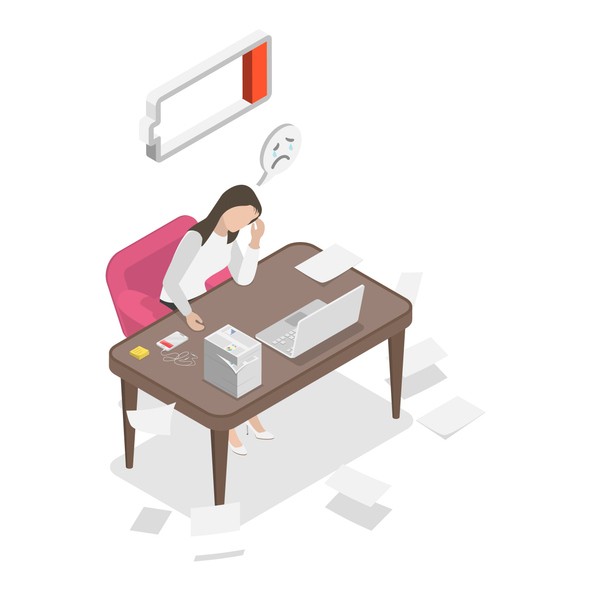
failing professional - capacity drops

Stop Asking "Have You Done This Before?"

It's Not Even the Right Question Anymore

Experience tells you where someone has been. Attributes tell you how they tend to think. But neither reveals whether any of that is actually accessible right now.

I was reading a Forbes piece about attribute-first hiring and it made a point I've been circling for months but couldn't land.

Here's the traditional talent question: Have you done this before?

And here's the slightly better version everyone's migrating to: Do you have the right attributes?

But neither of them actually works. And I finally figured out why.

When the "Right Person" Still Fails

I've been in meetings where someone gets promoted because they crushed it in a previous role. They had the experience. They had the adaptability. They interviewed well. Everyone agreed: this person has what it takes.

Six months later they're burned out, their team's imploding, and HR's doing damage control.

What happened?

They had the attributes. They had the track record. What they didn't have was capacity.

The Missing Variable Nobody's Measuring

Attributes are capacity-dependent.

Adaptability doesn't work when you're running on four hours of sleep and three back-to-back crises. Curiosity collapses when your working memory is full. Emotional regulation? Please. Mine disappears somewhere around 2pm on Wednesdays.

The Numbers That Should Concern Us

Gallup says 77% of the global workforce is disengaged. That's not a motivation problem. That's a capacity problem. You're asking 🟡Yellow Zone people to perform at 🟢Green Zone levels and then wondering why the numbers aren't moving.

That $8.8 trillion in lost productivity everyone keeps citing? That's not lazy workers. That's depleted workers pretending they're not depleted because admitting it feels like failure.

Why Experience Stopped Being Enough

The traditional question—"Have you done this before?"—made sense when work was predictable. When you could learn something once and ride that expertise for a decade.

That world is gone. Strategies expire mid-quarter. Tools change while you're still learning the old ones. Job descriptions get rewritten faster than anyone can keep up with them.

Experience tells you what someone accomplished under yesterday's conditions. It tells you almost nothing about what they can handle tomorrow.

So companies got smarter. They started looking for attributes instead. Adaptability. Curiosity. Judgment. Collaboration. The soft skills. The power skills. The "enduring human capabilities" that McKinsey keeps writing about.

And that's better. It is. But it's not enough.

The Flawed Assumption Behind Attribute Hiring

Here's what attribute-first thinking assumes:

  • If someone has adaptability, they can access it whenever needed.
  • If someone has emotional regulation, it's always available.
  • If someone has good judgment, it works under pressure.

That's... not how humans work.

I know adaptability is one of my strengths. I've been adaptable my whole career. But last month when three projects crashed simultaneously and I hadn't slept properly in a week? My "adaptability" looked a lot like panicked firefighting and snapping at people in Slack.

The attribute was there. The capacity to access it wasn't.

44% of professionals report daily workplace stress—that's a record high. 76% have experienced burnout. And those people aren't somehow personality-deficient. They're not missing attributes. They're capacity-depleted. When you're running on empty, even your strongest skills become inaccessible—which is exactly why building emotional resilience matters as much as building competence.

The Better Questions to Ask

Not "Have you done this before?" (Experience decays too fast.)

Not just "Do you have the right attributes?" (Attributes require capacity to express.)

Try this sequence instead:

What capacity state is this person in right now?

Are they in 🟢Green Zone (resourced and ready), 🟡Yellow Zone (managing but stretched), or 🔴Red Zone (running on fumes)?

What demands are we about to place on them?

New projects, additional responsibilities, stretch assignments—what's the actual load we're adding?

Do we need to help them recover capacity before expecting adaptation?

Sometimes the best performance intervention is rest, not training.

Are we matching our expectations to their actual state?

Or to some idealized version of it?

What Changes When You Add Capacity to the Equation

This isn't about lowering standards. It's about being realistic about human operating systems.

High-potential employees stop "mysteriously" burning out

Because someone noticed they were depleted before the crash.

Development programs actually stick

Because you delivered them when people had the capacity to learn. Most workplace training assumes you show up at peak capacity—but that's rarely who's in the room.

Leaders learn when to push and when to stabilize

Because they learned to read the room's actual state, not its calendar.

Performance issues get addressed earlier—without blame

Because "underperformance" often means "capacity mismatch" and you can do something about that. Understanding how to manage stress and maintain work-life balance becomes a leadership skill, not just a personal one.

The Question That Actually Matters

Experience tells you where someone has been.

Attributes tell you how they tend to think.

Capacity tells you whether any of that is actually accessible right now.

The future of work isn't about finding people with the most impressive track records or the perfect competency profiles. It's about organizations that understand human capacity fluctuates. That attributes only express when there's enough in the tank. That adaptability has to be supported, not just assumed.

Not "Have you done this before?" The real question is: "Can you handle what's coming next?" And then actually caring about the honest answer.

That's Capacity Intelligence™

And nobody's teaching it yet—until now. The Zones Framework™ gives you a practical way to recognize capacity states and match your approach accordingly.
Learn The Zones Framework™

Start Free 30-Minute Reset 

Life Skills - Emotional Intelligence - Soft Skills

The Emergent Skills Program (Yeah, There's Actually a Method to This)

Look, I get it. Another program. Another system. But here's the thing — these 10 pillars? They're literally everything that's been kicking my ass for years, organized into something that actually makes sense. Especially when you're stuck in 🟡 Yellow Zone at 2 PM wondering why basic tasks feel like calculus.

Here's what nobody tells you: tools require resources you don't always have. That's not a character flaw. That's capacity depletion. And it's why we built everything around Capacity Intelligence™ — the ability to recognize what you actually have to work with and match tools accordingly.

Thirty minutes to stop the spiral. Thirty days to start the fix. Stick around longer if you want to actually master it. Works even when you're 🔴 Red Zone. Maybe especially then.

So I discovered something at 3 AM last Tuesday. Every single panic spiral, every frozen presentation moment, every "why can't I just DO THE THING" — it all fits into one of these 10 categories. And apparently LinkedIn says these are the exact skills that get people promoted? Wild.

The kicker: We use AI coaches exclusively. No awkward video calls with Brad the life coach at 7 AM. Just you, your brain, and an AI that remembers your specific flavor of panic. Plus it scales to whatever Zone you're in — full version when you're 🟢 Green, tiny version when you're Red and just trying not to cry in the bathroom.

That's Capacity Intelligence™ in action: recognizing your actual resources in real-time and using capacity-matched tools instead of forcing Green Zone solutions on a Red Zone brain.

OK So Here's What Nobody Tells You

Every single one of these skills? Connected. Fix your sleep, suddenly you can focus. Manage stress, confidence goes up. It's like your brain has been playing life on hard mode and someone finally showed you the settings menu.

The real secret? All these skills are about moving up through the Zones. Spending more time in 🟢 Green, less time in 🔴 Red, knowing what to do when you're stuck in 🟡 Yellow.

That's Capacity Intelligence™: operationalized self-awareness. Not just watching yourself struggle — doing something about it.

The Zones Framework™ — Your Capacity Intelligence™ Operating Manual

Here's what most productivity advice gets wrong: it assumes you're always at peak capacity. Morning routines, meditation apps, time management systems — all designed for Green Zone brains with cognitive resources to spare.

But 44% of professionals report daily stress at work. That means nearly half the workforce is regularly operating in Yellow or Red Zone. Tools designed for Green Zone fail exactly when you need them.

  • 🟢 Green Zone (7-9): Capacity mode — focus, empathy, creativity all online. Full tools work here.
  • 🟡 Yellow Zone (4-6): Strain mode — high effort, diminishing returns. Need simpler, right-sized tools.
  • 🔴 Red Zone (1-3): Survival mode — executive function offline, body-first tools only.
  • Can't-Even Zone (0🪫): Shutdown — system offline. Rest is the only intervention.

Every tool in Emergent Skills scales to your Zone. Because "just do better" doesn't work when your nervous system's in survival mode. That's not motivation failure — that's asking Yellow/Red Zone people to use Green Zone solutions. Capacity Intelligence™ breaks the cycle.

What Is Capacity Intelligence™?

It's the meta-skill that makes every other skill accessible. The ability to:

  1. Recognize your actual resources in real-time (Zone awareness)
  2. Match tools to your current state, not where you "should" be
  3. Measure if it worked (the feedback loop everyone skips)

This isn't self-awareness. It's operationalized self-awareness — observation + strategic action + validation. Not a thermometer (tells you the temperature). A thermostat (tells you the temperature AND does something about it).

The Emotional Intelligence Part

  • Finally understanding WTF you're feeling. Red? Yellow? Green? Changes everything. That's Zone awareness.
  • Not letting emotions hijack your whole day. Recognizing Red Zone spirals before they eat your afternoon.
  • Reading rooms without being creepy. Sensing other people's Zones equals social intelligence.
  • Navigating office politics like an adult. Requires Yellow/Green minimum.

The Career ROI Part

  • Showing up consistently. Bare minimum, still counts. Yellow Zone reliability beats Red Zone heroics.
  • Speaking without your voice shaking. Yellow/Green vocal control equals executive presence.
  • Being the calm one when shit hits fan. Staying Green while everyone else goes Red. That's Capacity Intelligence™.
  • Actually collaborating, not just cc'ing.

The Science-y Part

  • Your patterns aren't your personality. They're just Red Zone survival habits that stuck.
  • Interrupting spirals before they start. Catching Yellow before it crashes into Red. Operationalized self-awareness.
  • Techniques based on actual research. Polyvagal theory equals Zones Framework™ in fancy language.
  • Building new neural pathways. Teaching your nervous system Green exists.

McKinsey says improving workplace health could unlock $3.7–11.7 trillion in global value. For you? More energy, better focus, being the one who gets tapped for opportunities while everyone else is burning out.

You're in Green/Yellow while the competition's stuck in Red. That's not talent. That's Capacity Intelligence™.

The AI coach doesn't judge when you practice the same anxiety technique 47 times at 3 AM. No awkward "how does that make you feel" conversations. Just you, figuring out how to stop self-sabotaging, one 30-minute session at a time.

And it scales to your Zone. Full coaching in Green, bite-sized basics in Yellow, survival mode scripts in Red. Because you can't "think positive" your way out of a nervous system state, but you can give it capacity-matched tools.

Pick Your Biggest Problem & Start Fixing It

Thirty minutes to stop the spiral. Thirty days to start the fix. Stick around longer to master it. 
(Works in any Zone. Especially the bad ones.)

Learn the Zones Framework™ →  |  Explore Capacity Intelligence™ →  |  See the Research →

Start Free 30-Minute Reset