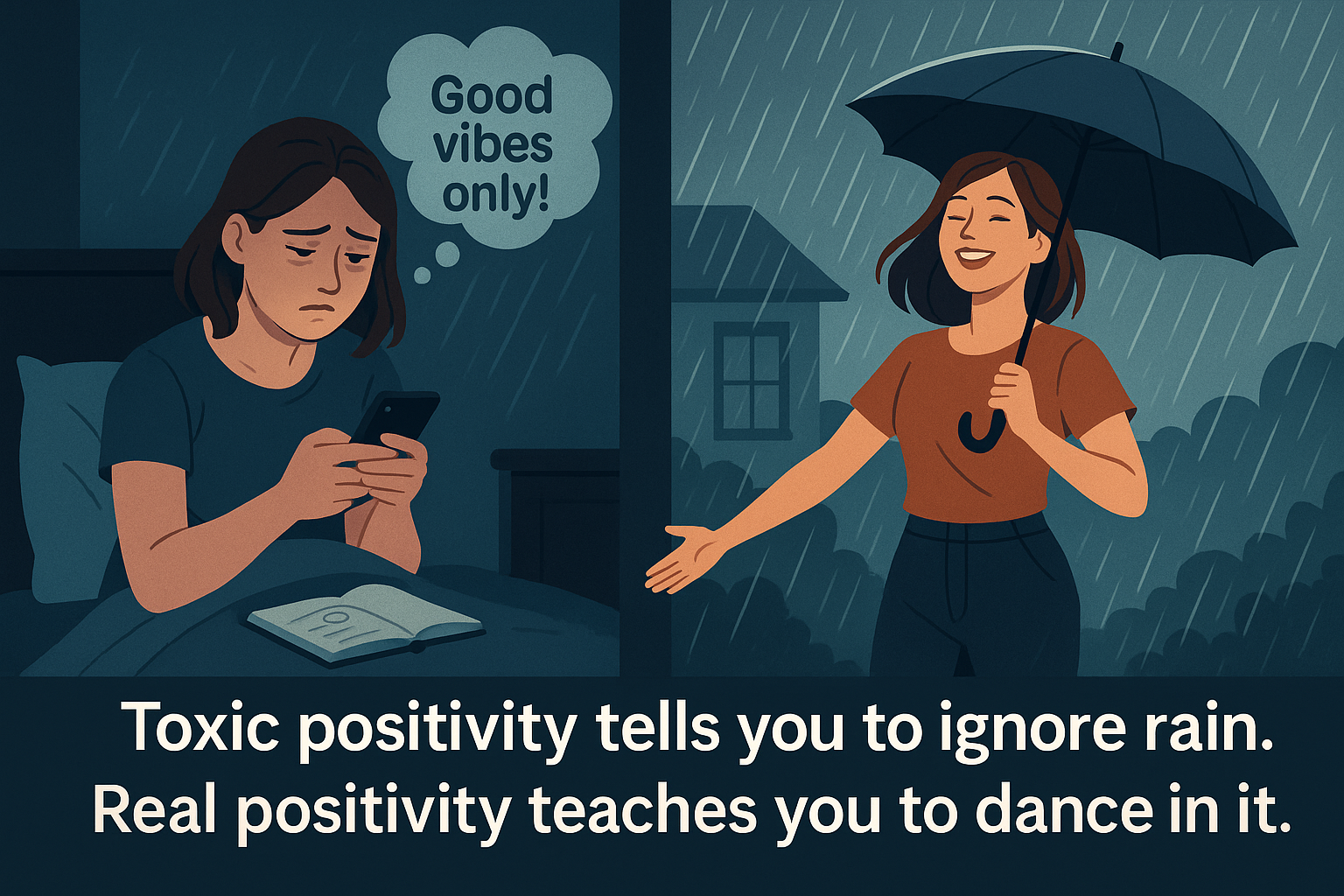
Positivity Quotes for Work

positivity quotes for work

The Night I Almost Threw My Laptop at a Motivational Poster

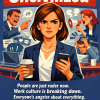
4:47 PM on a Thursday. Jessica from HR is explaining how we all need to "radiate positive energy" while I'm sitting there on my fourth coffee, haven't slept properly in weeks, and my biggest win that day was not crying in the parking garage.

"Just choose happiness!" she chirped, holding up a poster with a sunset and the word BELIEVE in Comic Sans.

I wanted to believe alright. Believe I could teleport out of that conference room.

That's when it hit me—this whole fake positivity thing wasn't just annoying. It was actively making everything worse. Because while I'm pretending to be a walking ray of sunshine, my Emotional Mastery & Self-Forgiveness pillar is cracking under the weight of all that pretending.

Demented Mannequins, All of Us

Here's what kills me about the whole "good vibes only" workplace culture: it turns us all into demented mannequins. Your boss dumps three projects on you at 4:47 PM? Smile! Coworker steals your idea in the all-hands? Stay positive! The printer jams for the 97th time? You're blessed to have a printer!

I tried it. Really tried. Said "Happy Monday!" with enthusiasm I didn't feel. Posted motivational quotes in Slack (still cringe about that). Smiled through meetings where I wanted to flip tables.

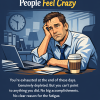
Nothing happened. Except now I was exhausted AND fake. Like wearing a mask made of concrete while running a marathon.

That Thing I Do in the Bathroom Now

Remember that meeting with Jessica? While she was talking about radiating joy or whatever, I discovered something that actually worked. Not positive thinking—just a reality check.

When everything feels like it's on fire and you're about to send that email you'll regret:

  • Step away. Bathroom break, water refill, stare at the parking lot—whatever.
  • Name three things that are actually true right now. Not what might happen, not what Karen might think. Just facts. Like: "I have a deadline. I'm tired. The coffee is cold."
  • Pick ONE thing I can control in the next hour.

No apps. No breathing exercises that make coworkers think you're having a breakdown. Just a reset that reminds my brain not everything is an emergency.

Started calling it emotional granularity—getting specific about what's actually happening in my head. Am I angry? Disappointed? Anxious? Usually all three, but knowing that helps more than any motivational poster.

Remember When I Forgot How to Speak?

Everyone talks about resilience like it's about becoming bulletproof. But I learned what it actually means after completely blanking during a presentation to the C-suite. Not forgot-a-word blanking. Full-on, mouth-open, no-words-coming-out blanking.

Old me would've spiraled for weeks. New me? Still spiraled, but for like two days. Progress.

The difference was learning actual tools from the Confidence & Calm Under Pressure module. The If-Then Meeting Plan saved me—basically pre-planning what to do when your brain decides to take a vacation mid-sentence.

Resilience isn't about not feeling things. It's about bouncing back when you do. Each awkward meeting, each missed deadline, each time you recover (even badly), you're building that muscle.

Three Things I Wish Someone Had Told Me Earlier

1. Setting boundaries without sounding like an asshole

"No" is a complete sentence, but sometimes you need more words at work. My go-to: "I can do that, but something else will need to move. What should I deprioritize?"

Watch how fast people reconsider whether that "urgent" request is actually urgent.

2. Being human at work (but not TOO human)

When I finally admitted I was struggling with constant video calls, turns out everyone else was too. We went camera-optional for internal meetings. Productivity went up. Who knew not staring at your own face for 6 hours helped morale?

But there's a line. You can say "rough morning" without explaining your entire therapy session, you know?

3. Good enough is actually good enough

That report you've revised 47 times? Send it.

I used to spend 20 minutes on every email. Now? Nobody cares about semicolon placement, Sharon.

2 AM Google Searches and Other Low Points

I was literally googling "how to not cry at work" at 2 AM when I found Emergent Skills. Skeptical about the "30 minutes" thing—sounded like more corporate wellness BS.

But it wasn't about positive thinking or manifesting success. It was actual tools. Like that chest-pressure technique that stops panic spirals. Or pattern recognition that helped me realize I only freak out when Brad from sales is in meetings (still investigating the Brad thing).

The 2-Minute Reframe became my secret weapon. Not forcing positivity—just shifting perspective enough to function.

Gallup says we're losing $8.8 trillion globally to disengagement and burnout. That's like... bigger than Germany's entire economy. And we're trying to fix it with Comic Sans posters.

So Here's the Thing

Real positivity isn't pretending everything's fine. It's having tools for when it's not. It's saying "this sucks" while finding a way forward. It's supporting each other through actual work life, not the LinkedIn version.

Next time someone tells you to "stay positive," remember: you don't need fake sunshine. You need real tools for when your boss is unreasonable, deadlines are impossible, and the coffee machine breaks on Monday.

Because work is hard enough without pretending it's not. The best positivity acknowledges the struggle and gives you ways to deal.

And if all else fails? There's always the bathroom cry break. Sometimes that's a life skill too.

Start Your Free 30-Minte Reset →

👉Even if 30 minutes doesn’t clear everything, you’ll leave with a tool you can use right away — and that’s progress.
Start Free 30-Minute Reset 

Life Skills - Emotional Intelligence - Soft Skills

The Emergent Skills Program (Yeah, There's Actually a Method to This)

Look, I get it. Another program. Another system. But here's the thing — these 10 pillars? They're literally everything that's been kicking my ass for years, organized into something that actually makes sense. Especially when you're stuck in 🟡 Yellow Zone at 2 PM wondering why basic tasks feel like calculus.

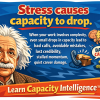
Here's what nobody tells you: tools require resources you don't always have. That's not a character flaw. That's capacity depletion. And it's why we built everything around Capacity Intelligence™ — the ability to recognize what you actually have to work with and match tools accordingly.

Thirty minutes to stop the spiral. Thirty days to start the fix. Stick around longer if you want to actually master it. Works even when you're 🔴 Red Zone. Maybe especially then.

So I discovered something at 3 AM last Tuesday. Every single panic spiral, every frozen presentation moment, every "why can't I just DO THE THING" — it all fits into one of these 10 categories. And apparently LinkedIn says these are the exact skills that get people promoted? Wild.

The kicker: We use AI coaches exclusively. No awkward video calls with Brad the life coach at 7 AM. Just you, your brain, and an AI that remembers your specific flavor of panic. Plus it scales to whatever Zone you're in — full version when you're 🟢 Green, tiny version when you're Red and just trying not to cry in the bathroom.

That's Capacity Intelligence™ in action: recognizing your actual resources in real-time and using capacity-matched tools instead of forcing Green Zone solutions on a Red Zone brain.

OK So Here's What Nobody Tells You

Every single one of these skills? Connected. Fix your sleep, suddenly you can focus. Manage stress, confidence goes up. It's like your brain has been playing life on hard mode and someone finally showed you the settings menu.

The real secret? All these skills are about moving up through the Zones. Spending more time in 🟢 Green, less time in 🔴 Red, knowing what to do when you're stuck in 🟡 Yellow.

That's Capacity Intelligence™: operationalized self-awareness. Not just watching yourself struggle — doing something about it.

The Zones Framework™ — Your Capacity Intelligence™ Operating Manual

Here's what most productivity advice gets wrong: it assumes you're always at peak capacity. Morning routines, meditation apps, time management systems — all designed for Green Zone brains with cognitive resources to spare.

But 44% of professionals report daily stress at work. That means nearly half the workforce is regularly operating in Yellow or Red Zone. Tools designed for Green Zone fail exactly when you need them.

  • 🟢 Green Zone (7-9): Capacity mode — focus, empathy, creativity all online. Full tools work here.
  • 🟡 Yellow Zone (4-6): Strain mode — high effort, diminishing returns. Need simpler, right-sized tools.
  • 🔴 Red Zone (1-3): Survival mode — executive function offline, body-first tools only.
  • Can't-Even Zone (0🪫): Shutdown — system offline. Rest is the only intervention.

Every tool in Emergent Skills scales to your Zone. Because "just do better" doesn't work when your nervous system's in survival mode. That's not motivation failure — that's asking Yellow/Red Zone people to use Green Zone solutions. Capacity Intelligence™ breaks the cycle.

What Is Capacity Intelligence™?

It's the meta-skill that makes every other skill accessible. The ability to:

  1. Recognize your actual resources in real-time (Zone awareness)
  2. Match tools to your current state, not where you "should" be
  3. Measure if it worked (the feedback loop everyone skips)

This isn't self-awareness. It's operationalized self-awareness — observation + strategic action + validation. Not a thermometer (tells you the temperature). A thermostat (tells you the temperature AND does something about it).

The Emotional Intelligence Part

  • Finally understanding WTF you're feeling. Red? Yellow? Green? Changes everything. That's Zone awareness.
  • Not letting emotions hijack your whole day. Recognizing Red Zone spirals before they eat your afternoon.
  • Reading rooms without being creepy. Sensing other people's Zones equals social intelligence.
  • Navigating office politics like an adult. Requires Yellow/Green minimum.

The Career ROI Part

  • Showing up consistently. Bare minimum, still counts. Yellow Zone reliability beats Red Zone heroics.
  • Speaking without your voice shaking. Yellow/Green vocal control equals executive presence.
  • Being the calm one when shit hits fan. Staying Green while everyone else goes Red. That's Capacity Intelligence™.
  • Actually collaborating, not just cc'ing.

The Science-y Part

  • Your patterns aren't your personality. They're just Red Zone survival habits that stuck.
  • Interrupting spirals before they start. Catching Yellow before it crashes into Red. Operationalized self-awareness.
  • Techniques based on actual research. Polyvagal theory equals Zones Framework™ in fancy language.
  • Building new neural pathways. Teaching your nervous system Green exists.

McKinsey says improving workplace health could unlock $3.7–11.7 trillion in global value. For you? More energy, better focus, being the one who gets tapped for opportunities while everyone else is burning out.

You're in Green/Yellow while the competition's stuck in Red. That's not talent. That's Capacity Intelligence™.

The AI coach doesn't judge when you practice the same anxiety technique 47 times at 3 AM. No awkward "how does that make you feel" conversations. Just you, figuring out how to stop self-sabotaging, one 30-minute session at a time.

And it scales to your Zone. Full coaching in Green, bite-sized basics in Yellow, survival mode scripts in Red. Because you can't "think positive" your way out of a nervous system state, but you can give it capacity-matched tools.

Pick Your Biggest Problem & Start Fixing It

Thirty minutes to stop the spiral. Thirty days to start the fix. Stick around longer to master it. 
(Works in any Zone. Especially the bad ones.)

Learn the Zones Framework™ →  |  Explore Capacity Intelligence™ →  |  See the Research →

Start Free 30-Minute Reset