What is innovation in business? An operations take.
AI Doesn't Remove Innovation Bottlenecks. It Moves Them.
When idea generation gets faster but judgment and market learning do not, the constraint moves downstream.
Within a week, research moves faster. Brainstorming produces more options. A concept that used to take days to draft is ready before lunch.
It feels like acceleration, and for a few weeks everyone treats it that way.
Then the review queue grows. Leaders receive more polished proposals than they can examine carefully. Meetings fill with choices that sound equally convincing. Customer feedback is summarized faster, but the team still cannot agree on what deserves action.
The first instinct is to blame the reviewers for moving too slowly. The actual problem started earlier than that.
The company has more output, not necessarily more innovation.
AI widened the entrance to a work path that was already narrow.
That is the important lesson in the Harvard Business Review article "The Innovation Problems AI Can't Solve", based on a Harvard Business School working paper by Julian De Freitas, Ayelet Israeli, Gideon Nave, Artem Timoshenko, and Olivier Toubia. The authors examine four stages of innovation: ideation, screening, consumer insight, and market learning. Their argument is not that AI has little value, but that careless use of it can amplify the human tendencies that already constrain each stage.
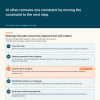
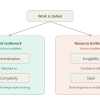
From an operations perspective, there is another way to state the problem:
Ideation
Faster ideation can produce more familiar ideas
Generative AI is exceptionally good at producing plausible answers quickly. Plausible, however, is not the same as original.
An unstructured brainstorming prompt tends to produce ideas near familiar patterns in its training data. Once people see those ideas, the suggestions can anchor the rest of the conversation. The team may generate more concepts while exploring a narrower part of the opportunity.
The operating mistake is letting AI speak first.
People closest to the work should first record what they have observed, where the current approach fails, and which assumptions may no longer hold. AI can then be used to challenge that thinking: look for distant analogies, reverse assumptions, identify neglected users, or deliberately create options unlike the first set.
Screening
More ideas can overload screening
Every additional idea eventually becomes someone's decision.
AI can create proposals much faster than managers, review boards, or investment committees can judge them. When the queue grows, reviewers become more likely to use shortcuts. Fluency, confidence, and presentation quality begin to stand in for evidence.
That is dangerous because AI produces fluency by default. A weak concept can arrive in a strong suit.
This is where idea volume becomes decision density and manager load. The organization has increased the number of candidates without increasing reliable review capacity. The same leaders become the point of convergence for more choices, and the apparent acceleration upstream becomes delay downstream.
This is a screening design problem. Put every concept into the same evidence format. Separate novelty, usefulness, strategic fit, testability, and supporting evidence. Limit how many ideas enter active review at once. Do not allow polish to decide which idea receives attention.
Customer contact
What a transcript cannot tell you
Customers are not always able to describe a need for something they have never experienced.
AI can analyze interviews, support tickets, reviews, and survey responses at a scale no human team could match. That makes it valuable for finding patterns in what customers have already expressed.
But a model trained on recorded human output has a basic limitation: a need that has not yet been articulated may not exist in the language it is searching. Breakthrough insights often appear first in behavior, workarounds, hesitation, or the gap between what people say and what they actually do.
That evidence comes from contact with reality. Watch someone attempt the task. Put a rough prototype in front of them. Notice where they stop, improvise, or ignore the feature the team thought would matter.
Market learning
More listening does not mean better priorities
After launch, AI can summarize thousands of reviews, tickets, calls, and social posts. The hard part comes next: deciding which signals deserve action.
Each source is already a distorted sample. Reviews often overrepresent strong reactions. Support tickets overrepresent failures. Social media overrepresents vocal users. A clean AI summary can hide those differences and give biased inputs the appearance of balanced evidence.
There is also a familiar human risk: teams can use a large body of feedback to find support for what they already believe.
Before reviewing an AI synthesis, leaders should state the question, identify which evidence would change the decision, and distinguish signal sources. Then they can use a small market test to resolve the most important uncertainty.
AI can lower the cost of listening, but someone still has to decide what is worth hearing.
Forfeited upside
More signal does not fix a broken route
AI can increase the number of promising signals entering the organization without improving the route that turns them into action. Some are blocked by unclear ownership, approval delays, excess work in progress, or repeated review. Others reach capable people when accumulated demand has reduced their access to judgment, synthesis, and initiative.
That lost future value is what Emergent Skills calls Forfeited Upside: credible customer signals, strategic work, and promising ideas that never receive a workable route and a fair test. It is not the imagined value of every idea the company chose not to pursue.
Diagnosis
The bottleneck is human, but it is not merely a people problem
The HBR authors describe most innovation bottlenecks as human problems. At the level of psychology, that is fair. People anchor on familiar ideas. Attention is limited. Reviewers use shortcuts. Customers cannot always articulate emerging needs. Teams defend prior beliefs.
Inside an organization, however, those limitations do not operate alone. The work path determines whether they become chronic constraints.
Consider the conditions a company creates:
- AI gives the first answer before anyone frames the problem independently.
- Review boards receive more proposals without clearer decision rules.
- One manager owns too many approvals.
- High-stakes choices are pushed into the end of meeting-heavy days.
- Customer contact is replaced by dashboards and summaries.
- Small experiments wait behind the same approval process as large investments.
These are not defects in the people doing the work: they are routing decisions.
This is usually where a team stops blaming the reviewers and starts asking why the queue formed in the first place. That question is less comfortable than it sounds. It means the process needs to change, not just the people running it, and that is a harder case to make to a review board than to one manager.
The loop can then tighten. A congested work path gives people more inputs to process. Loaded people rely on faster shortcuts. Weak choices create reversals and rework. That rework adds more congestion to the path.
Bad work paths wear people down, and worn-down people make the work path worse.
Redesign
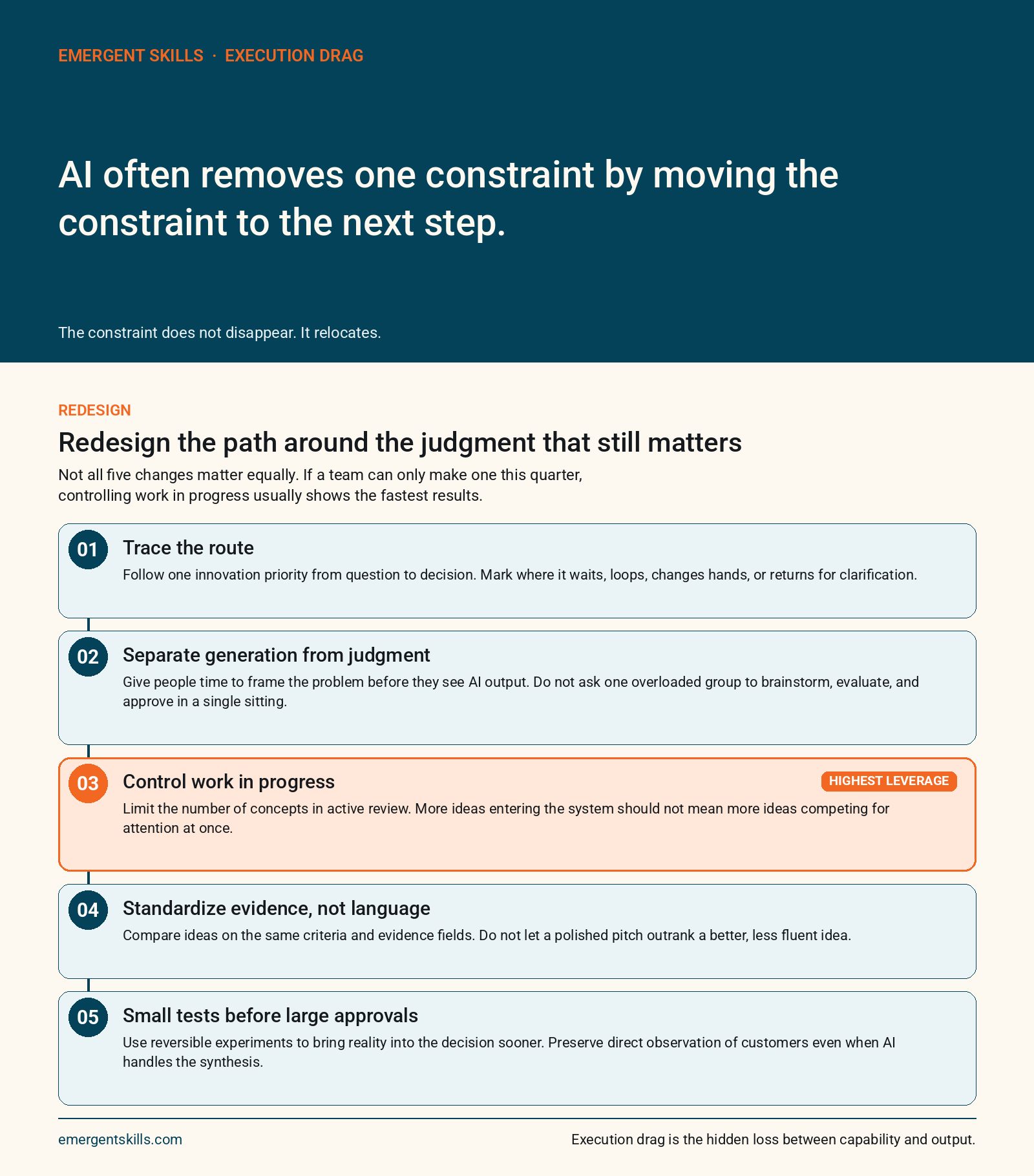
Redesign the path around the judgment that still matters
Leaders do not need to slow AI adoption, just stop treating its output as the finish line.
Start with five operating changes. Not all five matter equally. If a team can only change one thing this quarter, controlling work in progress usually shows the fastest results.
Trace one innovation priority from question to decision.
Mark where it waits, loops, changes hands, or returns for clarification.
Separate generation from judgment.
Give people time to frame the problem before they see AI output. Do not ask the same overloaded group to brainstorm, evaluate, and approve in one sitting.
Control work in progress.
Limit the number of concepts in active review. More ideas entering the system should not mean more ideas competing for attention at the same time.
Standardize evidence, not language.
Compare ideas using the same criteria and evidence fields. Make it harder for a polished pitch to outrank a better but less fluent idea.
Put small tests before large approvals.
Use reversible experiments to bring reality into the decision sooner. Preserve direct observation of customers, even when AI handles the synthesis.
Then measure what matters. Count the time from idea to test. Track decision latency, reversals, rework, and how long concepts sit in queues.
If output rises while time to test, decision delay, and rework stay the same or get worse, AI has accelerated activity, not innovation.
Where to start
Start with the priority that should have moved by now
The practical question is not how much AI a team is using, but where the work stopped moving after they added it.
Choose one innovation or AI priority that should be further along. Reconstruct the path. Look for the queue that grew, the decision that keeps returning, the manager everything waits for, or the customer evidence the team never gathered. If the path does not explain the stall, say so. Do not force the diagnosis.
If it does, change one routing rule for 14 days and watch what happens.
AI should not replace the judgment that makes work valuable. Most teams will not know whether it did until they trace one priority and watch where it stops.
Start with the Stalled Priority Snapshot
The Emergent Skills Stalled Priority Snapshot applies this approach to one live priority. In 90 minutes, the people who move, approve, or unblock the work reconstruct its actual route and define one 14-day routing experiment. If the path does not support the diagnosis, the readout says so.