
The Exhaustion That Comes From Nothing Happening
Why you're depleted at the end of "easy" days - and what your nervous system is actually doing
It's Tuesday afternoon. Inbox open, nothing urgent. No red flags, no fires, no actual crisis.
Still can't relax.
Jaw's doing that thing again where it's clenched and I don't remember clenching it. Third coffee was a mistake - heart's faster but I'm not more alert. Just more... ready. For what, I don't know.
Honestly, I've been sitting here for twenty minutes trying to figure out why I feel like I ran a marathon when all I did was answer emails. That's what I'm writing about. That exact thing.
Writing this at 🟡Yellow Zone 5, which is probably why this keeps drifting.
Here's what I keep noticing - in myself, in the people I work with, in almost every conversation about work stress lately: the hardest days aren't the crisis days. They're the waiting days.
The days where nothing is technically wrong but you can't stop scanning the horizon. Email tab open in case something comes in. Slack notifications on because what if. Phone face-up on the desk because you never know.
Part of your brain is always listening. Always on standby. Like a smoke alarm that never stops checking for smoke.
This isn't about being busy. It's about being ready to be busy. Constantly. For hours. Even when nothing happens.
The Science Has a Name for This
There's a term researchers use for this: attentional residue.
The basic idea: when your attention gets pulled in multiple directions - or might get pulled at any moment - part of it stays stretched across all those possibilities. You're never fully here because you're also partly over there. Watching the inbox. Half-listening for the Teams ping. Waiting for the thing that might need you.
A recent Forbes piece compared it to new parenthood - that low-grade vigilance where part of your brain never fully disengages, even when the baby's asleep. Even when nothing's wrong.
That's not a metaphor. That's what it actually does to your nervous system.
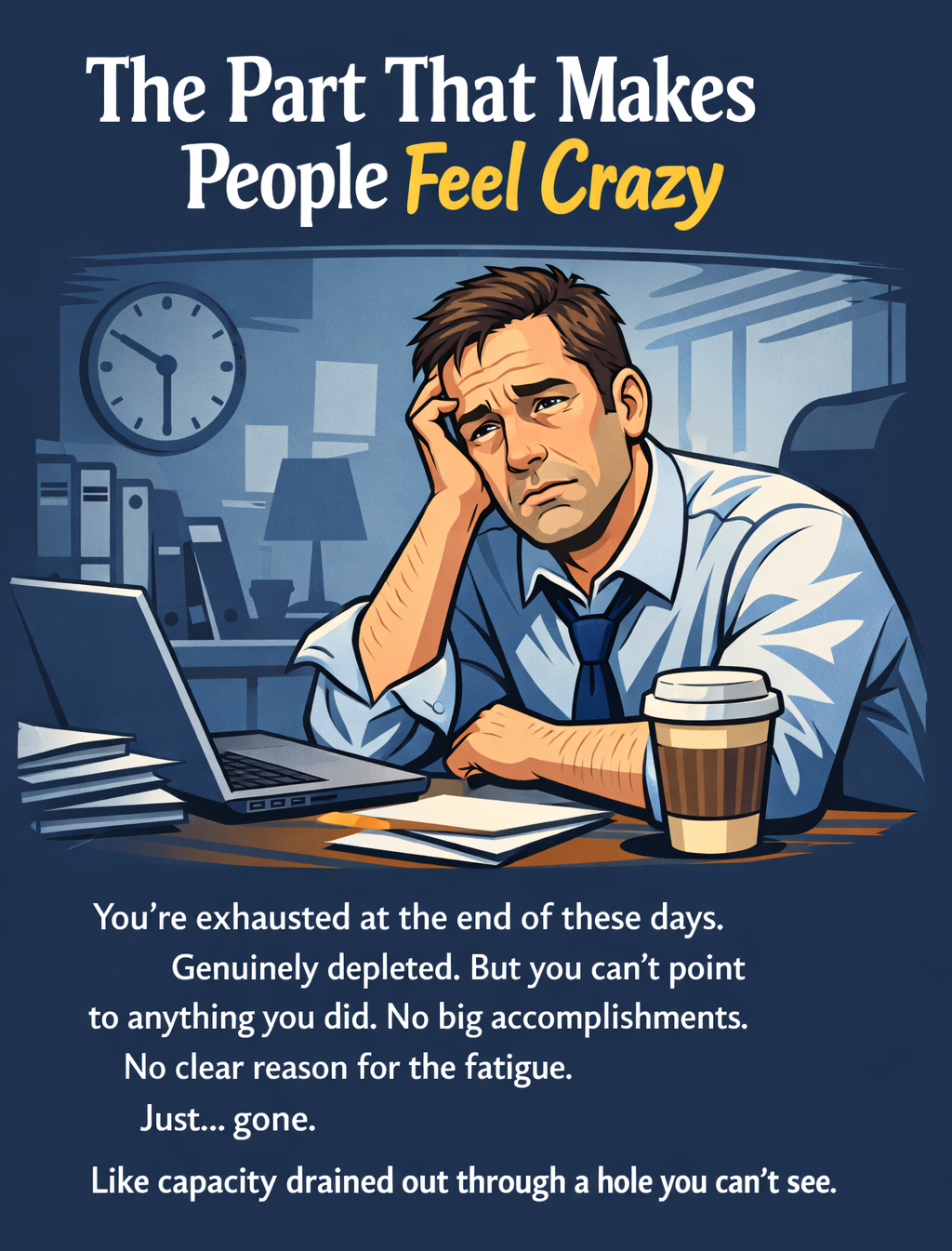
The Part That Makes People Feel Crazy
You're exhausted at the end of these days. Genuinely depleted. But you can't point to anything you did. No big accomplishments. No clear reason for the fatigue. Just... gone. Like capacity drained out through a hole you can't see.
Two Ways to Read This
The old interpretation: lazy. Not focused. Bad at time management. Should be able to handle this.
The Capacity Intelligence™ Read
Your system spent the whole day in vigilance mode. It burned through resources preparing for threats that mostly didn't materialize. That's not laziness. That's metabolically expensive.
You already know how to focus. You already know how to be productive. Stress isn't deleting those skills - it's blocking access to them. And chronic 🟡Yellow Zone drains resources faster than you can notice, because nothing looks like an emergency.
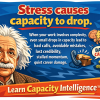
This is the core insight behind Capacity Intelligence™: your skills don't disappear under stress. They become capacity-dependent. And chronic vigilance depletes capacity without leaving obvious evidence.
Capacity collapse 🪫 doesn't always look dramatic. Sometimes it just looks like being tired for no reason.
One Small Thing That Sometimes Helps
Switching to shorter paragraphs here because longer ones aren't happening.
Decide in advance when you'll check.
Not "I'll check less." Not "I should set better boundaries." Just: pick three times today. Morning, midday, end of day. Or whatever makes sense for your actual job.
This isn't about optimization. It's about telling your nervous system that you're not on call for the next 45 minutes. That it can stand down. That the scan can pause.
It doesn't work every time. Some jobs genuinely require constant availability. But a lot of jobs have trained us into constant availability when they don't actually need it.
You know if yours is which.
The goal isn't perfect boundaries. It's giving your system permission to stop scanning - even briefly.
If chronic vigilance is your default mode, you might also find the Stress Mastery pillar useful - it's specifically designed for the kind of sustained stress that doesn't announce itself as a crisis.
There's a cleaner version of this post. It's not this one.
If any of this felt familiar, The Zones Framework™ page has more on how 🟡Yellow Zone operates and why chronic vigilance depletes resources differently than acute stress.
This is more common than people admit.
Start Where You Actually Are
Our free Full Reset is designed for exactly this state - when you're depleted but can't point to why. No prep required. No optimal conditions needed.