
Burned Out?
Master stress and reclaim your work-life balance
Life skills to handle everyday stress and overwhelm—in 30 minutes
At 4:12 p.m. yesterday, my Slack popped with "quick sync?" from my boss. My chest immediately tightened—same reaction as last Tuesday's "urgent" that turned into a 3-hour scope creep session. I'm typing this at 11 p.m. because that "quick sync" became four new deliverables due Monday.
You've been promoted. Congratulations. Now you're drowning in work that used to be handled by three people because "you're so capable." Or you're staring at your laptop at 9 PM pretending to work while doom-scrolling because your brain checked out hours ago. Or maybe you just canceled dinner plans for the third week straight because of "urgent" projects that never end.
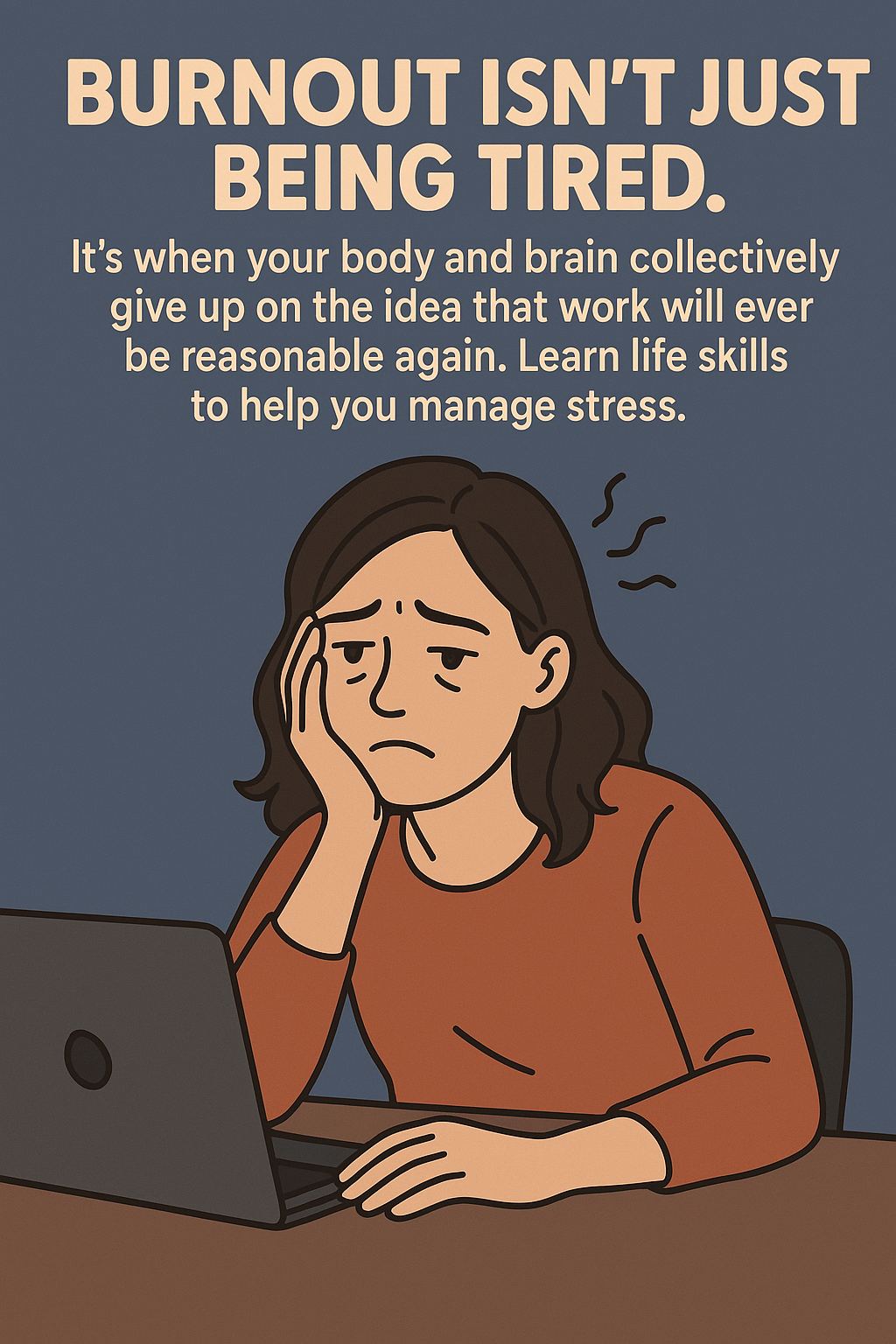
Burnout isn't just being tired. It's when your Stress Mastery & Work-Life Balance pillar cracks—and your body and brain collectively give up on the idea that work will ever be reasonable again.
$12k–$47k
A single missed client handoff costs in rework, delays, and reputation damage
That stress-induced mistake compounds fast. Meanwhile, Gallup 2023 shows burnout drains $8.8 trillion globally.
What's Really Happening
Your nervous system treats a midnight "urgent" email like a survival threat: same hormones, same fight-or-flight, but you can't fight your quarterly review or flee your mortgage. So you grind, then you crack.
It's not just you. LinkedIn's 2025 Workplace Learning Report shows that skills-based development is now the top priority for retaining talent—because people are burning out faster than companies can replace them.
A low-cognitive task that used to take 10 hours can be squeezed into two. The time shrinks; the stress doesn't.
Immediate Relief in 30 Minutes
Traditional stress tips aren't built for back-to-back meetings and Slack pings. Emergent Skills teaches life skills you can use in real time when your system is already fried.
Session 1 Walkthrough: Boundary Script Protocol
00:00–02:00 — Name your breaking point. Mine was "yes to everything = working til midnight."
02:00–08:00 — Learn the Yes-With-Tradeoff template: "I can take on X, which means Y gets pushed to [date]. Does that work?"
08:00–15:00 — Practice with your actual nightmare scenario (Brad's "quick favors")
15:00–25:00 — Role-play until it feels natural, not robotic
25:00–30:00 — Lock in your personal script + emergency fallback
"Stopped saying yes to 7 out of 10 random asks in week 1. My calendar actually has white space now." — Sarah K., Product Manager
This is skills training, not medical or mental-health treatment. Just practical techniques that work when you're already underwater.
Which Pillar Is Cracked?
Quick assessment: What hits hardest right now?
Your 30-Day Path
Week 1: Stop the Bleeding
Master crisis-mode techniques. Sleep through the night. Stop saying yes to everything.
Week 2: Find the Pattern
Maybe your stress is really about imposter syndrome. Maybe it's poor boundaries. The Capacity Coach helps you spot what's actually broken.
Week 3-4: Rebuild Stronger
Layer in complementary skills from other pillars. If stress broke first, confidence often needs work too. Build a complete toolkit.
Start With Whatever's Breaking You Right Now
If you're reading this during a meeting you're not listening to, you need this.
If you've answered "busy" to "how are you?" for six months straight, you need this.
Just 30 minutes. Because that's what you actually have.