
The Things We Say at Work (And What They Really Mean)
This is capacity drift.
Most of us don't walk into the office and say, "I'm on the edge of burnout." Instead, we dress it up in workplace-neutral language. These phrases sound professional. Safe. But underneath, they're signals.
Each phrase we use is a breadcrumb—a quiet code masking stress, self-doubt, overwhelm, or loneliness.
The good news: each phrase maps to a zone and life skill pathway—a practical reset you can use in the middle of work chaos. Let's decode what you're really saying when you speak "workplace."
Zone key: 🟢 Green full capacity · 🟡 Yellow high effort, low margin · 🔴 Red system overloaded · ⚫ Can't-Even shut down
Performance collapses when capacity collapses.
1. "No worries, I'll figure it out" 🟡 Yellow signal
When Anxiety Speaks Through Professional Calm
Other phrases:
- "I'll circle back later."
- "I'll let you know when I'm ready."
- "I've got it under control."
What it often means: Freezing inside while buying time; presentation or visibility threat feels like a test.
Skill pathway: Confidence & Calm Under Pressure (grounding before you speak, unhook from worry, convert nerves to focus).
Try a free Full Reset →
2. "I just can't get going today" 🟡 Yellow / 🔴 Red
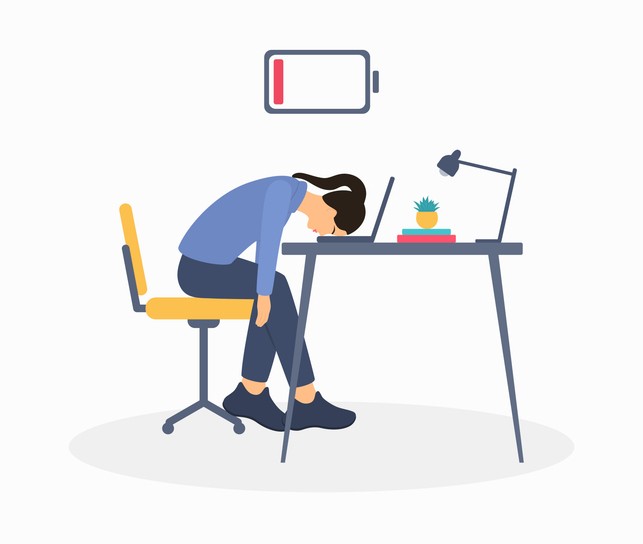
When Depression Drains Your Professional Battery
Other phrases:
- "Everything feels like too much."
- "I'll get through it somehow."
- "I don't feel like myself lately."
What it often means: Low energy, high friction; momentum collapsed.
Skill pathway: Motivation & Emotional Resilience (micro-goals, energy rituals, reframing dips as signals).
Start with a 2-minute win →
3. "Just another busy week" 🟡 Yellow baseline
When Stress Becomes Your Normal
Other phrases:
- "It's crunch time, I'll push through."
- "Vacation? Maybe next quarter."
- "That's just the nature of the job."
What it often means: Borrowing tomorrow's energy; evenings/weekends evaporate.
Skill pathway: Stress Mastery & Work-Life Balance (fast interrupts, durable boundaries, between-meeting resets).
Do a 60-second micro-break →
4. "I barely slept, but I'm fine" 🟡 Yellow
When Exhaustion Becomes Your Badge of Honor
Other phrases:
- "My brain just won't shut off."
- "I'll catch up on the weekend."
- "Coffee is my breakfast."
What it often means: Survival mode sold as productivity; sleep deprioritized.
Skill pathway: Rest & Recovery Mastery (wind-downs that work, sleep-friendly routines, stress release for rest).
Tonight's 5-minute wind-down →
5. "Sorry if this is a stupid question..." 🟡 Yellow
When Self-Doubt Shrinks Your Voice
Other phrases:
- "I don't want to let anyone down."
- "I should have done better."
- "I'm not sure I belong here."
What it often means: Imposter narratives driving over-apology and silence.
Skill pathway: Confidence & Self-Worth Building (compassionate self-talk, micro-evidence, power practices).
Collect 3 pieces of evidence →
Notice Something?
Most phrases here signal 🟡 Yellow or 🔴 Red capacity. If you saw yourself more than once, you're not "handling it"—you're normalizing compromised capacity.
That's not a moral failing. It's what happens when workplaces expect 🟢 Green-zone output while running people at 🟡/🔴 baselines.
The thing nobody tells you: You can't optimize your way out of the wrong capacity level. Use tools matched to the zone you're actually in.
The cost nobody measures: Every phrase on this page represents a professional operating below their capability, making decisions with fewer cognitive resources than the situation demands. Multiply that across a team, a department, a company. The cost is already there. You're just not calling it capacity.
The Zones Framework™ gives shared language and zone-matched interventions. Check out the self-awareness ladder.
6. "Still finalizing a few details..." 🟡 Yellow
When Procrastination Becomes Your Protection
Other phrases:
- "Let's push the deadline a bit."
- "I'll get to it after this other thing."
- "I just need more time to think it through."
What it often means: Perfectionism stalls starting; fear of visible work.
Skill pathway: Productivity & Achievement Skills (bias breakers, "start anywhere" hacks, rapid prioritization).
Do the 10-minute rule →
7. "So many fires today, I can't focus" 🟡 Yellow
When Your Brain Has Too Many Tabs Open
Other phrases:
- "Ping me again if I forget."
- "It's on my list somewhere..."
- "I'll multitask to get it all done."
What it often means: Attention fragmentation; context switching taxing capacity.
Skill pathway: Focus & Self-Management Skills (attention funnels, task anchors, digital hygiene).
Pick a single task anchor →
8. "I just need to power through this" 🟡 Yellow / 🔴 Red
When Life Changes But Work Doesn't Stop
Other phrases:
- "Time heals, right?"
- "I don't want to be a burden."
- "I'll deal with it later."
What it often means: Carrying grief/transition without bridges; masking to stay "professional."
Skill pathway: Resilience Through Life Transitions (micro-processing, safe support, meaning-making).
Do a 3-line bridge →
9. "I should have known better" 🟡 Yellow
When Emotions Get Labeled as Weaknesses
Other phrases:
- "I lost my cool, but it's fine."
- "It's my fault things slipped."
- "I just need to toughen up."
What it often means: Bottled anger/guilt draining capacity and clarity.
Skill pathway: Emotional Mastery & Self-Forgiveness (anger regulation without suppression, guilt release, boundary language).
Name → breathe → rewrite →
10. "I'm fine, just busy" 🟡 Yellow
When Connection Feels Too Vulnerable
Other phrases:
- "No, it's nothing."
- "I'd rather not get into it."
- "Let's just move on."
What it often means: Withdrawing when connection would help; safety calculus blocks sharing.
Skill pathway: Connection & Communication Skills (professional warmth, safe vulnerability, boundary-honoring talk).
Send a 1-line check-in →
Bonus Phrases: Quick Decode
"It's fine, I'll stay late." 🟡 Overcommitting to prove worth → burnout risk. Cost: The hours disappear. The resentment doesn't.
"I'll take care of it." 🟡 Invisible load; saying no feels unsafe. Cost: One person becomes the single point of failure nobody planned for.
"I just want to get it right." 🟡 Perfection stall → no progress. Cost: Perfectionism at depleted capacity doesn't produce better work. It produces no work.
"It's probably nothing." 🟡 Minimizing needs; signal ignored. Cost: Every ignored signal is a louder crisis later.
"I'll be okay once this project is over." 🟡 Deferring well-being; chronic cycle. Cost: There's always a next project. The recovery that gets deferred becomes the recovery that never happens.
"I don't even care anymore." 🔴 Red Emotional shutdown; disengagement as self-protection. Cost: This person has already left. They just haven't told anyone yet.
"I can't do this." ⚫ Can't-Even System shutdown; capacity at zero. Cost: This isn't a phrase that needs a productivity hack. It needs immediate support. Most workplaces have no protocol for it.
A Human Note
You don't need to "fix" yourself to earn rest, confidence, or connection. These phrases aren't failures—they're clues.
Follow the clue to a matched skill and your capacity comes back online.